
Wire Mesh Pre-Shipment Inspection Checklist for Importers
Updated Jun 24, 2026
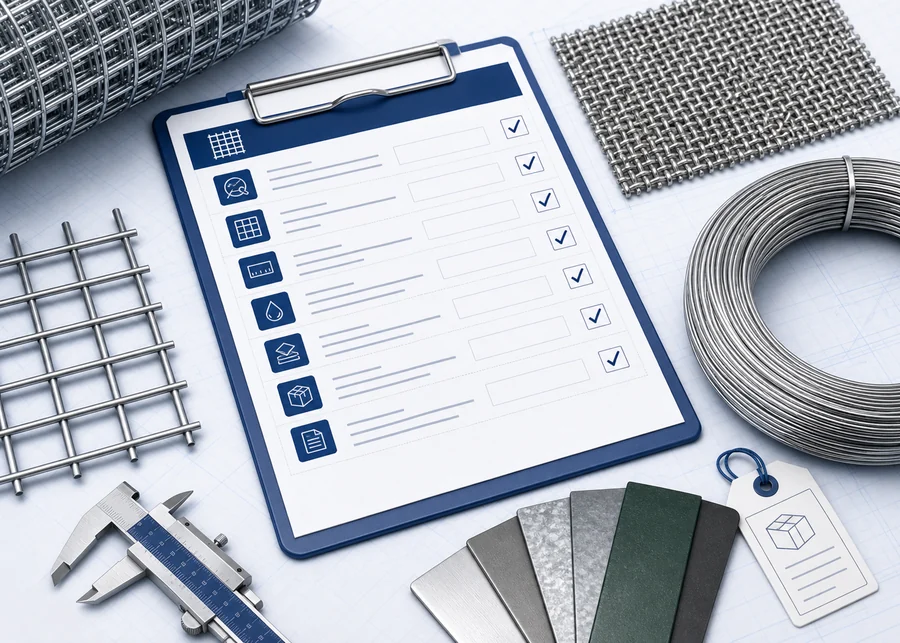
A practical pre-shipment checklist for importers reviewing wire mesh product identity, dimensions, coating, packing, labels, loading readiness and documents before release.
Table of contents
For overseas buyers, the final period before a wire mesh order leaves the factory is a practical control point. The products may already be packed, the balance payment may be pending, and the container booking may be close. A pre-shipment review helps the buyer confirm whether product identity, dimensions, surface condition, packing, labels, loading readiness and documents are aligned before release.
This review is not the same as a formal third-party inspection. Photos, QC notes and factory reports can support the buyer's decision, but they do not replace an in-person inspection when a project, tender or internal quality policy requires one. The goal is to catch visible mismatches and document issues early enough for the supplier and buyer to respond before goods are sealed in the container.
Use this checklist when reviewing standard wire mesh, fence panel, roll mesh, gabion or related wire mesh product orders before shipment.

Confirm product identity before detailed checks
The first question is simple: are the goods in the warehouse the same product described in the purchase order and approved sample record?
For wire mesh orders, product identity can include:
- product type, such as welded mesh, roll mesh, fence panel, hexagonal mesh, chain link fence or gabion mesh;
- base material, such as low-carbon steel, stainless steel, galvanized wire, aluminum or other agreed material;
- surface finish, such as electro galvanized, hot-dip galvanized, PVC coated or powder coated;
- color, especially when a RAL color or approved sample was confirmed before production;
- roll, panel, bundle or pallet format;
- accessory items that belong to the order.
The buyer should compare the visible goods with the order specification, approved sample photos, drawing, label record or previous shipment reference. This step helps avoid a situation where the right quantity is packed but the wrong finish, size or product format is shipped.
If several SKUs look similar, ask the supplier to show each SKU separately in the photo set. A single wide warehouse photo may prove that products exist, but it may not confirm the difference between similar mesh openings, wire diameters or coating colors.
Check dimensions and specification consistency
After product identity is confirmed, the review should move to dimensions. The exact fields depend on the product type, but most wire mesh orders need a combination of mesh opening, wire diameter, width, length, panel size, roll length and quantity checks.
Useful checks include:
- measuring mesh opening in the agreed direction or pattern;
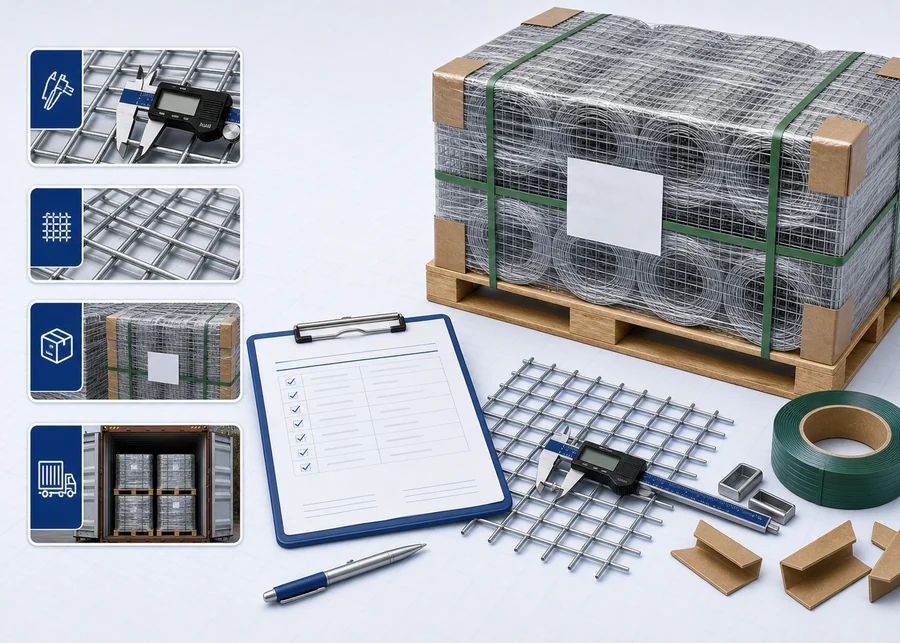
- checking wire diameter with a caliper at representative points;
- comparing panel height and width, or roll width and roll length, against the purchase order;
- confirming edge condition, selvage, folded edge or frame dimensions when applicable;
- counting rolls, panels, bundles, cartons or pallets against the packing list.
For a more detailed visual approach, the related guide on wire diameter and mesh opening QC photos explains what buyers can look for in measurement images.

Measurements should be taken in a way that represents the shipment, not only one convenient piece. The buyer and supplier can agree which rolls, panels or bundles should be checked based on order size, product risk and past order history. Avoid treating one photo as proof for the whole order when the shipment includes multiple specifications.
Review surface and coating condition
Surface review helps the buyer spot visible issues before shipment. This is especially important for galvanized, PVC-coated or powder-coated mesh, where appearance and coating continuity matter to the buyer's market or project.
The review can cover:
- coating uniformity, including bare spots, heavy buildup, discoloration or obvious uneven finish;
- weld point condition for welded wire mesh and welded panels;
- surface scratches, dents, crushed rolls or bent panel edges;
- loose wires, broken welds or distorted mesh openings;
- color consistency for coated products.
Lighting matters. A close-up photo under poor light may hide coating issues, while a wide photo from the wrong angle may not show weld points or cut edges clearly. Ask for a mix of overview and close-up photos when the surface finish is important.
The wording of the review should remain practical. A photo review can identify visible defects, but it cannot confirm every coating property, material composition or mechanical performance unless the order includes specific testing and documented results.
Inspect packing, labels and pallet condition
Packing is part of the product, not an afterthought. Even if the mesh itself is correct, weak packing can create receiving problems, surface scratches, mixed SKUs or transit damage.
Pre-shipment packing checks should cover:
- wrapping material, such as plastic film, paper, woven bag, carton or moisture-resistant packaging;
- strapping tightness and strap position;
- edge protection for panels, frames and coated products;
- pallet condition, including broken boards, unstable stacking or protruding nails;
- package grouping by SKU, size, coating or unloading priority;
- label placement and readability.
The buyer should also compare label information with the packing list. Labels do not need to expose private buyer information in public photos, but the actual shipment should have enough information for the receiving team to match each package with the order.

If the order involves private labels, buyer SKUs, barcodes or confidential shipping marks, public marketing photos should hide those details. Internal approval photos can show more information when both sides agree, but public website images should stay neutral.
Confirm loading readiness before the container is sealed
Loading readiness connects the packing review with shipment release. Before loading, the buyer can ask the supplier to confirm the container condition, package sequence and final loading photo record.
A practical loading photo set may include:
- empty container interior;
- first packages loaded;
- mid-loading view;
- final loaded container before closing;
- container door and seal photo when available;
- container number and seal number record for document matching.
The related guide on wire mesh container loading photos explains how loading images can support the shipment record.

Container checks should stay realistic. Loading photos can show visible package placement and container condition at that moment, but they do not guarantee that no transit issue will occur. They are useful because they create a record before goods leave the factory.
Match documents with the physical shipment
Document review is the final link between the physical shipment and the importer's receiving process. A document package may vary by destination, product type and buyer requirement, so it should be confirmed before shipment rather than assumed.
Common document checks include:
- commercial invoice: product descriptions, quantities, prices and buyer information;
- packing list: package count, gross weight, net weight, dimensions and line-item consistency;
- bill of lading details when available;
- certificate of origin when required;
- material, coating, test or quality documents when the purchase order requires them;
- pallet fumigation or wood packing documents when applicable.
The guide on wire mesh quality certificates and test documents explains how buyers can separate routine export documents from order-specific quality documents.
Descriptions should match across the purchase order, invoice, packing list and labels. Small wording differences may be acceptable in some cases, but unclear product names, wrong quantities or mismatched package counts can cause receiving or customs questions.
Proof-ready answer: A practical wire mesh pre-shipment review should connect product identity, measured specification, visible surface condition, packing records, label photos, weight or package-count checks where relevant, and document names. This gives importers a usable release record, but it does not replace a formal third-party inspection, laboratory test, engineer approval or destination receiving check when those are required.
Practical pre-shipment inspection checklist
Use this table as a working structure before shipment release. It should be adapted to the actual product, destination and buyer requirement.
| Check area | What to verify | Useful proof | Buyer action if unclear |
|---|---|---|---|
| Product identity | Product type, material, coating, color, roll or panel format | SKU photo, product overview, approved sample reference | Ask for separate photos by SKU or product line |
| Dimensions | Mesh opening, wire diameter, roll size, panel size, edge condition | Caliper photo, tape photo, drawing comparison | Request additional measurements from different packages |
| Surface condition | Coating uniformity, weld points, scratches, bent edges, visible damage | Close-up photos in good light | Ask for rework, replacement or written explanation before release |
| Quantity and package count | Rolls, panels, bundles, cartons, pallets and accessories | Packing list, package overview photos | Compare with purchase order and packing list |
| Packing integrity | Wrapping, straps, pallet condition, edge protection, package grouping | Packing photos and pallet photos | Ask for repacking or label adjustment if needed |
| Labels and marks | SKU, specification, package number, destination marks where required | Label close-up with private data protected | Correct labels before loading |
| Loading readiness | Container condition, loading sequence, final loaded view, seal record | Loading photos and seal photo | Hold release until missing loading proof is provided |
| Documents | Invoice, packing list, bill of lading details, certificates when required | Draft document package | Correct mismatches before final shipment release |
Pre-shipment review vs formal inspection vs no review
The buyer should choose the review level according to order value, product risk, supplier history and internal quality policy.
| Aspect | Buyer or factory pre-shipment review | Formal third-party inspection | No review before shipment |
|---|---|---|---|
| Scope | Checklist-based product, packing, label, loading and document review | Independent inspection according to agreed inspection scope | No structured review before release |
| Evidence | Photos, measurements, packing list and QC notes | Formal inspection report and sampling record | Issues are found after arrival |
| Strength | Practical for repeat orders and standard shipments | Stronger independence for first orders, high-value projects or strict buyers | Saves time before shipment |
| Limitation | Photos and factory records do not replace on-site inspection | Sampling still may not check every unit | Higher risk of late discovery |
| Best use | Routine export orders with known suppliers and clear specs | New supplier, tender order, strict quality requirement or buyer policy | Not recommended when shipment value or risk is meaningful |
This comparison should not be read as a promise that one review type is always sufficient. Buyers should decide based on the specific order, destination and risk tolerance.
Questions to ask before authorizing shipment release
Before approving a wire mesh shipment, importers can ask:
- Have all SKUs been shown separately in the photo record?
- Which dimensions were checked, and against which specification or drawing?
- Are visible surface and coating conditions acceptable for this order?
- Does the packing list match the physical package count?
- Are labels readable and consistent with the order?
- Are accessories counted and linked to the correct product line?
- Is the container clean, dry and ready for loading?
- Will the final loading photos show the container number and seal when available?
- Which export and quality documents are included for this shipment?
- Are any missing items or corrections still open before release?
These questions help both sides make the shipment release decision more concrete. They also give the receiving team a clearer record when the goods arrive.
Frequently asked questions
Is a pre-shipment review the same as third-party inspection?
No. A pre-shipment review is usually a checklist-based review using photos, measurements, packing information and document checks from the buyer, supplier or factory QC team. A formal third-party inspection is performed by an independent inspection company according to an agreed inspection scope. Both can be useful, but they should not be described as the same service.
Can photos replace an in-person inspection?
No. Photos can support remote review by showing visible product, packing, label and loading conditions. They cannot confirm every hidden defect, material property or handling condition. If the buyer's order requires formal inspection, testing or strict sampling, those requirements should be agreed separately.
How many rolls or panels should be measured?
There is no single number that fits every order. The buyer and supplier should agree a practical sample scope based on product type, order size, number of SKUs, past quality history and the buyer's risk tolerance. The important point is to check representative goods instead of relying on one convenient measurement.
What should buyers do if a problem is found before shipment?
The buyer should describe the issue clearly, share the related photo or measurement, and ask the supplier for a correction plan before release. Depending on the issue, the solution may be relabeling, repacking, replacing damaged pieces, adding missing accessories or correcting documents.
Which documents should be checked before release?
The basic document set often includes commercial invoice, packing list and shipping document details. Certificates, test reports, certificate of origin or wood packing documents depend on the destination, buyer requirement and product type. Buyers should confirm the list with their forwarder or customs broker before shipment.
Should the container itself be checked?
Yes, when container loading is arranged by the supplier or forwarder. The buyer can request photos showing that the container is clean, dry and suitable for loading. This does not eliminate transit risk, but it creates a visible record before the goods leave the factory.
Prepare a pre-shipment review request
A useful pre-shipment review request should include the purchase order, product specification, approved sample or drawing, packing requirement, label requirement, document list and photo checklist. If the order includes several SKUs, separate them clearly before asking for final proof.
ANJIA GROUP can review wire mesh order details, packing requirements and shipment-proof needs for order-specific discussion. Send your specification list and pre-shipment review requirements through the ANJIA inquiry page before shipment planning is finalized.
About ANJIA GROUP
ANJIA GROUP supplies wire mesh, fencing and related industrial products for global B2B buyers. Contact our team to discuss product specifications, matching accessories and export packing.
Discuss your sourcing requirements
Send your product requirements and any relevant drawings to our team.
Get a Free Business Quote Wire Mesh and Fence Products
 Wire Mesh Products
 Factory, QC & Packing Reference Pack
 Wire Mesh RFQ Checklist