
How ANJIA Organizes Wire Mesh Quality Certificates and Test Documents
Updated Jun 29, 2026
A practical guide for importers reviewing ISO certificates, audit reports, material test records, coating checks, packing lists and loading documents for wire mesh orders.
Table of contents
Quality certificates and test documents help importers evaluate a wire mesh supplier, prepare project submittals and keep shipment records clear. They are useful, but only when the buyer understands what each document covers and when it applies.
At ANJIA GROUP, documentation support is handled by product type, destination market, order specification and buyer requirement. Not every certificate applies to every product, and not every formal test report is issued for every shipment by default. A practical document request should therefore be discussed during inquiry or order confirmation, not after the goods are already packed.
This guide explains the common document types buyers ask about, how they are used, and what to confirm before asking for quotation support.

ISO certificate copies for supplier qualification
ISO certificates are usually used during supplier evaluation and pre-qualification. They show that the relevant company management system has been assessed against recognized quality or environmental management standards.
For wire mesh importers, ISO certificate copies can support questions such as:
- whether the supplier has a documented management system;
- whether the certificate is current and issued to the relevant company entity;
- whether the certificate scope is related to the product being sourced;
- whether the certificate is needed for supplier approval, project files or internal purchasing records.
ISO certificates are important supplier-level documents. They do not certify every roll, panel or pallet in a shipment. Buyers should use them together with product specifications, production checks, packing records and order-specific test documents when those are required.
Third-party audit reports
Some buyers also request third-party audit records, such as SGS or TUV Rheinland supplier assessment documents, when evaluating a new manufacturer. These reports can give an independent view of factory facilities, production capability and quality management practices at the time of audit.
Audit reports are point-in-time assessments. They should be read with the report date, scope and issuing organization in mind. If a buyer needs the latest available audit information, the request should be raised early so the sales and documentation team can confirm which current copies are available for supplier qualification.
For buyers comparing wire mesh suppliers in China, a third-party audit document can be useful, but it should not replace product-level checks. The buyer should still confirm material, wire diameter, mesh opening, coating, packing and shipment documentation for the actual order.
CE, RoHS and market-specific references
CE, RoHS and other compliance references depend on the product category, destination market and applicable regulation. This is an area where buyers should avoid generic assumptions.
For example, some fencing or construction-related products may require specific compliance discussion for European markets. Coated wire mesh or screen products may trigger RoHS-related questions in regulated markets. But not every wire mesh product falls under the same directive, and not every destination market asks for the same document set.
The safest process is to confirm:
- product type and intended use;
- destination country or region;
- buyer's required regulation or project clause;
- whether a certificate copy, declaration, test report or third-party laboratory report is needed;
- whether the document must be included in quotation, pre-shipment files or final shipping documents.
ANJIA can review the request and confirm which references are relevant and available for the specific order. Buyers should not assume that one certificate covers every product or every market.
Material test reports and coating records
Material test reports help buyers review whether the wire, surface treatment or finished product aligns with the agreed specification. The exact format depends on the product and the buyer's requirement.
For galvanized welded wire mesh, fencing panels or similar products, buyers may ask for records related to:
- wire diameter checks;
- mesh opening or panel size checks;
- tensile or elongation references when applicable;
- zinc coating or surface treatment checks;
- material grade or wire source references;
- sample or batch identification.
Some records come from in-house quality checks. Formal laboratory reports or third-party test reports may require additional coordination, sample submission, cost and lead time. If laboratory-certified testing is required, the buyer should state this before order confirmation so the testing path can be arranged during production.
Avoid writing a general coating value into the inquiry unless it is part of the actual specification. The target coating basis, testing method and acceptable documentation should be agreed before production.

Packing documents and loading records
Quality documentation does not stop at product testing. Importers also need shipment documents that connect the packed goods with the order and receiving plan.
Common packing-related records include:
- packing list with product descriptions, quantities, carton or pallet details and weights;
- commercial invoice and shipment document references;
- carton, roll, bundle or pallet labels;
- packing photos for roll wrapping, panel bundles, cartons, pallets and accessory bags;
- container loading overview photos when loading proof is requested;
- loading plan or container arrangement notes when needed for larger shipments.
These documents help buyers check whether the physical shipment matches the order and whether receiving teams can identify the goods after arrival. For a practical example of photo-based shipment proof, see the ANJIA guide to wire mesh export packing photos.

Match documents to the actual order
The most useful documentation package is not the longest one. It is the one that matches the buyer's product, market and risk level.
A simple welded mesh order for general use may only need supplier qualification documents, order photos, packing list and basic QC records. A project order for fencing products may require additional specification checks, coating records, project submittal documents or third-party inspection coordination. A stainless steel mesh order for a sensitive application may need material grade confirmation or laboratory testing.
Before quotation, buyers should tell the supplier:
- which documents are mandatory;
- which documents are preferred but not mandatory;
- whether third-party testing or inspection is required;
- whether document copies must show a specific company name, product description or project reference;
- whether the documents are for customs, project submittal, internal approval or receiving control.
This helps the supplier price, schedule and prepare the order correctly.
Separate document purpose before requesting certificates
Quality documents should be requested according to their purpose. Some documents help with supplier qualification, some support order traceability, and some are tied to product testing or project submission. Asking for every possible certificate can slow the quotation without improving the buyer's real decision.
The practical approach is to classify documents before quotation. If the buyer needs routine export records, the supplier can usually plan them with packing and loading. If the buyer needs material, coating or third-party test documents, the requirement should be written into the RFQ or purchase order before production. If the buyer needs a document for a project owner, the exact name, scope, entity and language should be confirmed early.
| Document purpose | Useful examples | Buyer caution |
|---|---|---|
| Supplier qualification | Company profile, ISO certificate copy, audit reference when available. | Check entity name, scope, date and whether the document applies to the supplier being used. |
| Order traceability | Packing list, loading record, product photos, label photos and package count. | These records support shipment review but do not prove material grade by themselves. |
| Product quality support | Material test report, coating record, inspection report or third-party test when required. | Confirm whether the document is order-specific or only a general reference. |
| Project or market submission | CE/RoHS reference, certificate of origin, wood packing document or buyer-specified form. | Do not assume availability; confirm destination and project wording before order. |
This boundary protects both sides. It helps the buyer request useful proof without treating a general certificate as a universal guarantee for every product, coating, destination or project requirement.
Document reference table
| Document type | What it supports | Typical use | Buyer note |
|---|---|---|---|
| ISO certificate copy | Supplier management system | Supplier qualification | Check entity, scope and validity |
| Third-party audit report | Factory assessment at audit time | Supplier pre-qualification | Check date, scope and latest available copy |
| CE or market reference | Market or project compliance discussion | Applicable product categories | Confirm regulation and product scope first |
| RoHS-related document | Hazardous substance restriction discussion | Regulated markets or coated products | Confirm whether it applies to the product |
| Material test report | Wire, material or physical property reference | Order-specific quality review | Define test type before order confirmation |
| Coating check record | Zinc or surface treatment reference | Galvanized or coated products | Agree target basis and test method |
| Inspection record | In-house production or QC check | Production follow-up | Match with order item and sample point |
| Packing list | Shipment contents and weights | Customs and receiving | Match labels, quantities and packing photos |
| Packing photos | Visual shipment proof | Pre-shipment review | Define photo types before packing |
| Loading photos or plan | Container preparation reference | Shipment proof and receiving planning | Request before loading starts |
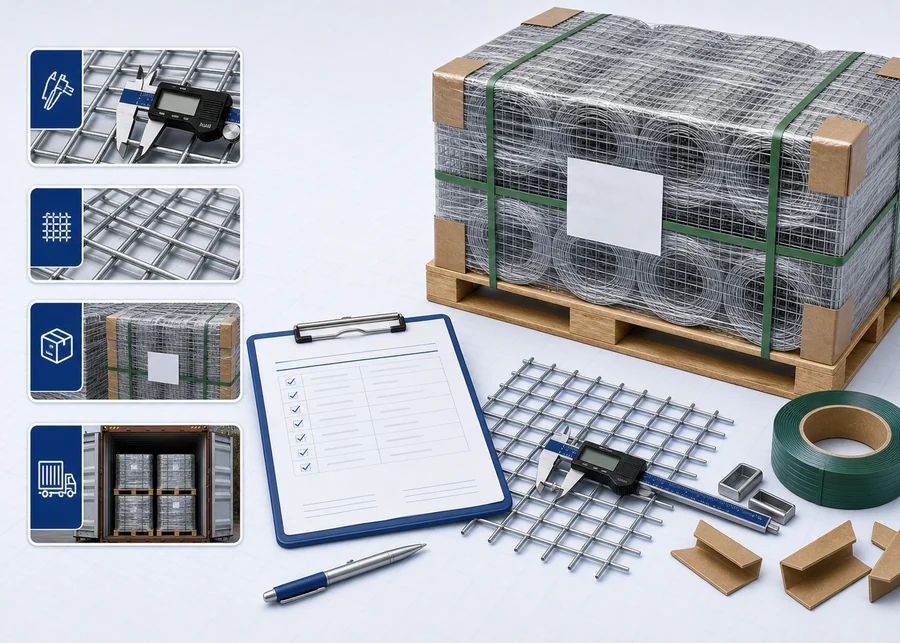
For a broader visual reference, buyers can also review ANJIA's wire mesh quality documentation system, which includes the Factory, QC & Packing Reference Pack for supplier review and RFQ preparation.
How buyers should request documents
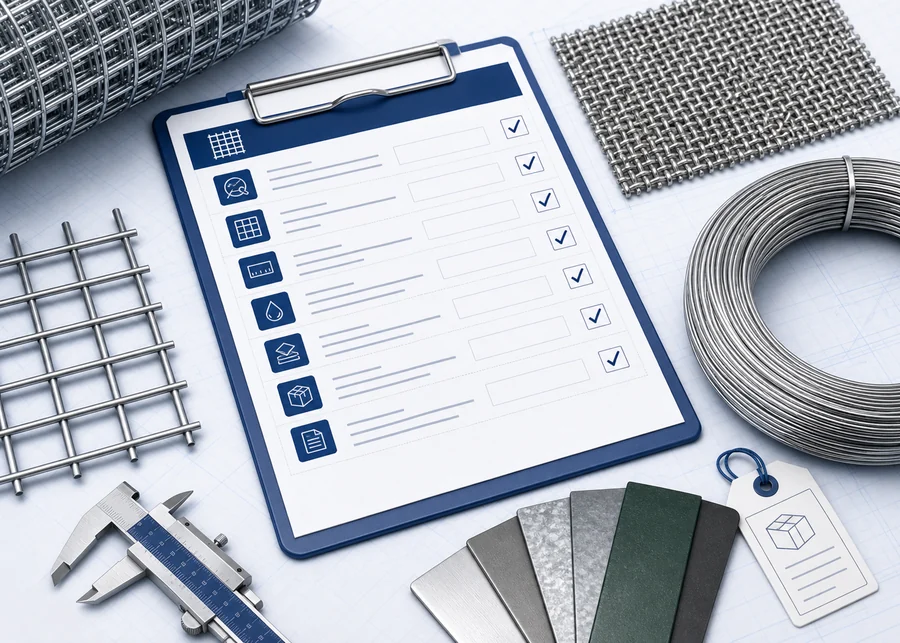
A clear document request saves time for both sides. Instead of asking for "all certificates," buyers should list the exact documents needed and explain why they are required.
A practical request may include:
- product name and specification;
- destination market;
- project or customer documentation requirements;
- required certificates or test reports;
- whether third-party inspection is needed;
- preferred document format or language;
- deadline for document review;
- whether documents should be attached to quotation, proforma invoice or shipment files.
For wider supplier-proof context, buyers can also review how ANJIA uses factory video references and raw material pre-production checks before production.
FAQ
Are ISO certificates included with every shipment?
ISO certificate copies are usually provided on request for supplier evaluation, project records or order documentation. They are not the same as product-level inspection reports and do not certify every shipment item.
Can ANJIA arrange third-party inspection or testing?
When the order requires third-party inspection or laboratory testing, ANJIA can coordinate based on the buyer's requested scope, agency, sampling plan and timing. Cost, lead time and reporting format should be confirmed before production or before final inspection.
Do material test reports come with every order by default?
Not always. In-house QC records may be available for normal order follow-up, while formal laboratory reports or third-party test reports should be requested in advance. The buyer should specify the required test type and reporting format.
Does CE or RoHS apply to all wire mesh products?
No. Applicability depends on the product, material, surface treatment, destination market and intended use. Buyers should confirm the exact market requirement before asking the supplier to prepare compliance references.
What documents should a first-time buyer request?
A first-time buyer can start with supplier qualification documents, product specification confirmation, key QC records, packing list and packing photos. Additional reports, certificates or third-party inspection can be added when the product or destination market requires them.
Build document requirements into the RFQ
Quality certificates and test documents work best when they are planned early. Add documentation requirements to the RFQ or purchase order so the supplier can confirm availability, timing and cost before production starts.
If you are preparing a wire mesh order, send ANJIA GROUP the product specification, destination market, intended use, required certificate names, testing needs and packing document requirements. The team can review which documents are applicable and prepare the quotation accordingly.
About ANJIA GROUP
ANJIA GROUP supplies wire mesh, fencing and related industrial products for global B2B buyers. Contact our team to discuss product specifications, matching accessories and export packing.
Discuss your sourcing requirements
Send your product requirements and any relevant drawings to our team.
Get a Free Business Quote Wire Mesh and Fence Products
 Wire Mesh Products
 Factory, QC & Packing Reference Pack
 Wire Mesh RFQ Checklist