
Farm Fence Cost Planning for Livestock: Roll Length, Wire Gauge, Gates and Terrain

Updated Jun 25, 2026
A buyer guide explaining how tension, coating and roll consistency affect fixed knot livestock fence lifecycle cost and bulk sourcing decisions.
Table of contents
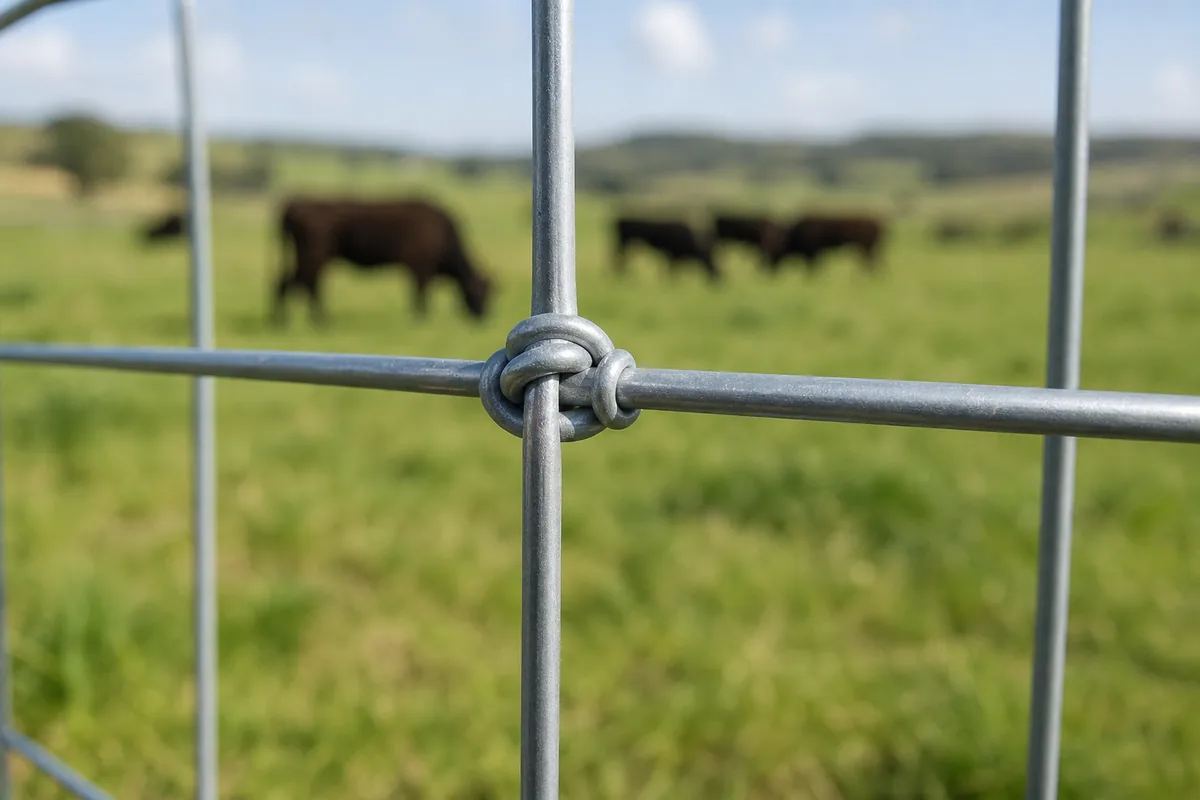
Most livestock fencing purchase decisions are made on price per roll. This is a costly mistake. The true expense of agricultural fencing reveals itself over 10 to 25 years in re-tensioning labor, premature rust repair, uneven mesh replacement, and the cascading costs of animal escapes caused by fence failure.
This guide dissects the three technical variables that dominate fixed knot fence lifecycle cost: wire tension, coating quality, and roll-to-roll consistency. It also gives procurement professionals a framework for evaluating total cost of ownership when sourcing livestock fencing materials at scale.
The Three Cost Drivers Most Buyers Overlook
Livestock fencing is infrastructure that must perform continuously under tension, weather, animal pressure, and terrain stress. Unlike commodity wire products, the performance gap between a well-specified fixed knot fence and a poorly manufactured one compounds annually.
1. Wire Tension and High-Tensile vs. Soft Wire
Fixed knot fence can be manufactured with either high-tensile wire, typically around 800-1,100 MPa, or softer low-tensile wire, often around 350-550 MPa. The difference is not academic. It defines the fence's ability to resist sagging, animal impact, and temperature-driven expansion over decades.
High-tensile fixed knot wire maintains installed tension within 5-8% of specification over a 15-year period when properly installed. Low-tensile alternatives may lose 15-25% of tension within the first 3 years, requiring manual re-tensioning at intervals that add maintenance labor cost.
When evaluating agricultural farm fencing suppliers, always request tensile strength test certificates and verify minimum breaking load values. Reputable manufacturers provide relevant test data with each shipment when the specification requires it.
2. Coating Quality: Zinc Thickness Is Not Optional
Galvanization is one of the most important variables in fixed knot fence longevity. Coating specifications vary dramatically across manufacturers, and the difference between adequate and inadequate zinc coating is measured in micrometers, invisible to the naked eye but decisive for service life.
| Coating Class | Zinc Thickness | Zinc Weight | Expected Lifespan (Temperate) | Expected Lifespan (Coastal/Tropical) |
|---|---|---|---|---|
| Electro-galvanized | 3-8μm | 8-15 g/m² | 2-4 years | 1-2 years |
| Class 1 Hot-Dip | 20-40μm | 100-200 g/m² | 8-12 years | 5-8 years |
| Class 3 Hot-Dip | 65-85μm | 300-400 g/m² | 15-25 years | 10-15 years |
| PVC over Hot-Dip | 65μm zinc + 0.3mm PVC | 300+ g/m² + polymer | 20-30 years | 15-20 years |
The cost difference between Class 1 and Class 3 hot-dipped galvanized fixed knot wire is typically 12-18% per roll. The lifespan difference can be much larger. For permanent livestock installations, Class 3 coating should be treated as a serious baseline discussion, especially for container-load orders.
PVC-coated options add a polymer sheath over the zinc layer, blocking UV degradation and chemical corrosion. This is strongly recommended for coastal operations, tropical climates, or installations near saltwater or agricultural chemical spray zones.
3. Roll Consistency: The Hidden Installation Cost
Roll-to-roll consistency is the most overlooked quality factor in bulk fence procurement. Uniform wire diameter, mesh spacing, roll length, and tension across an entire order all affect installation speed and long-term fence appearance.
Installation slowdown. When roll lengths vary by more than 2-3%, installers may need to cut and splice mid-run, adding labor time and creating weak points.
Mesh spacing drift. Graduated mesh fixed knot fence depends on precise vertical stay wire spacing. If spacing drifts from specification, bottom mesh openings may become unsuitable for smaller livestock.
Tension mismatch. When wire gauge varies between rolls, even slightly, tension distribution becomes uneven across the fence line. Some sections carry disproportionate load and sag faster.
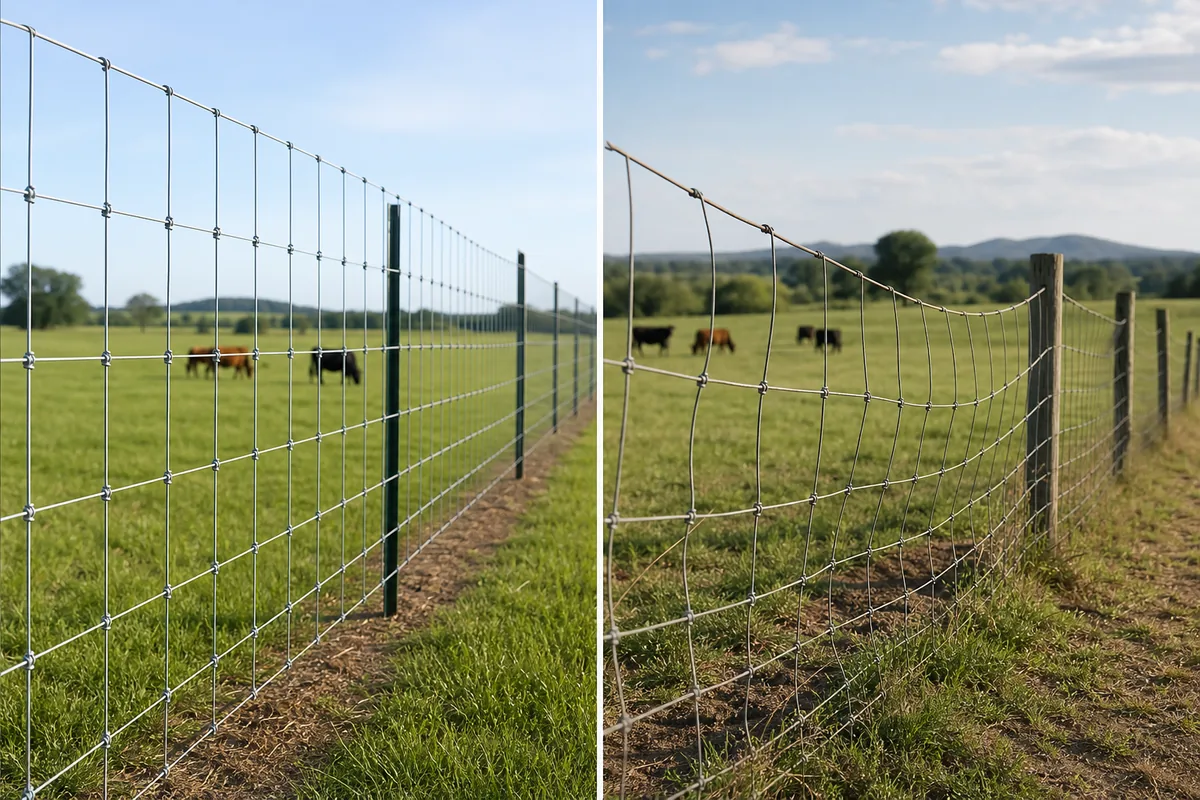
Fixed Knot vs. Hinge Joint vs. S-Knot: Technical Comparison
Understanding where fixed knot sits in the woven wire fence landscape is essential for making the right specification choice.
| Feature | Fixed Knot | Hinge Joint | S-Knot |
|---|---|---|---|
| Knot structure | Wire wraps tightly around both stay and line wires | Stay wires hinged between line wires | Knot pressed smooth against wire |
| Tension retention | Excellent | Good | Very good |
| Animal impact resistance | High: knot grips wire under pressure | Medium: hinge allows some slippage | High: smooth knot distributes force |
| Predator resistance | Good | Lower | Good |
| Installation effort | Moderate | Lower | Moderate |
| Best for | Cattle, deer, mixed livestock, high-predator zones | Sheep, general farm boundary | Cattle, horses, mixed livestock |
For operations managing cattle alongside smaller livestock, fixed knot woven wire fencing provides the strongest combination of tension stability, animal containment, and predator deterrence. The higher initial cost per meter is often offset by lower lifetime maintenance expenditure.
Total Lifecycle Cost Framework: A Buyer's Calculation Model
Procurement professionals should evaluate fixed knot fence on a 20-year total cost basis rather than per-meter purchase price. The following model illustrates the cost difference.
| Cost Component | Fixed Knot (Class 3 Galv, High-Tensile) | Hinge Joint (Class 1 Galv, Low-Tensile) |
|---|---|---|
| Material cost | $6,000-$8,000 | $3,600-$5,000 |
| Installation labor | $3,000-$4,000 | $2,800-$3,500 |
| Re-tensioning | $0 | $1,200-$2,400 |
| Section replacement | $0 | $800-$1,600 |
| Inspection labor | $600 | $1,200 |
| 20-year total | $9,600-$12,600 | $8,400-$13,700 |
The premium fixed knot specification delivers comparable or lower annual cost while reducing the operational disruption of fence repairs during critical livestock seasons.
Frequently Asked Questions
What is the difference between fixed knot and hinge joint fence for cattle?
Fixed knot fence wraps the stay wire tightly around both horizontal line wires at each intersection, creating a rigid joint that resists slippage under animal impact. Hinge joint fence allows the stay wire to pivot between line wires, providing more flexibility but less tension retention over time.
How do I verify zinc coating thickness on fixed knot fence wire?
Request a coating thickness test certificate from the manufacturer showing zinc weight in g/m² or thickness in micrometers. If the project requires higher corrosion resistance, confirm the coating class before comparing prices.
What is the MOQ for ordering fixed knot fence from China in container loads?
Most established manufacturers handle container-load orders and may also support mixed containers with fence rolls, posts, gates, barbed wire and accessories. The exact MOQ should be confirmed against the specification and loading plan.
Can fixed knot fence be used for deer exclusion?
Yes, but height specifications must be adjusted. Deer farming or crop protection normally requires taller fence heights and proper tension planning. Buyers should confirm site requirements before placing the order.
How does PVC coating compare to galvanized-only for fixed knot fence in tropical climates?
In tropical or coastal environments with high humidity, salt spray and UV exposure, PVC coating over hot-dipped galvanized wire can improve corrosion resistance and extend usable service life compared with galvanized-only options.
About ANJIA GROUP
ANJIA GROUP supplies wire mesh, fencing and related industrial products for global B2B buyers. Contact our team to discuss product specifications, matching accessories and export packing.
Discuss your sourcing requirements
Send your product requirements and any relevant drawings to our team.
Get a Free Business Quote Fence Products
 Security Fence
 Fence Coating & Exposure Zone Selector
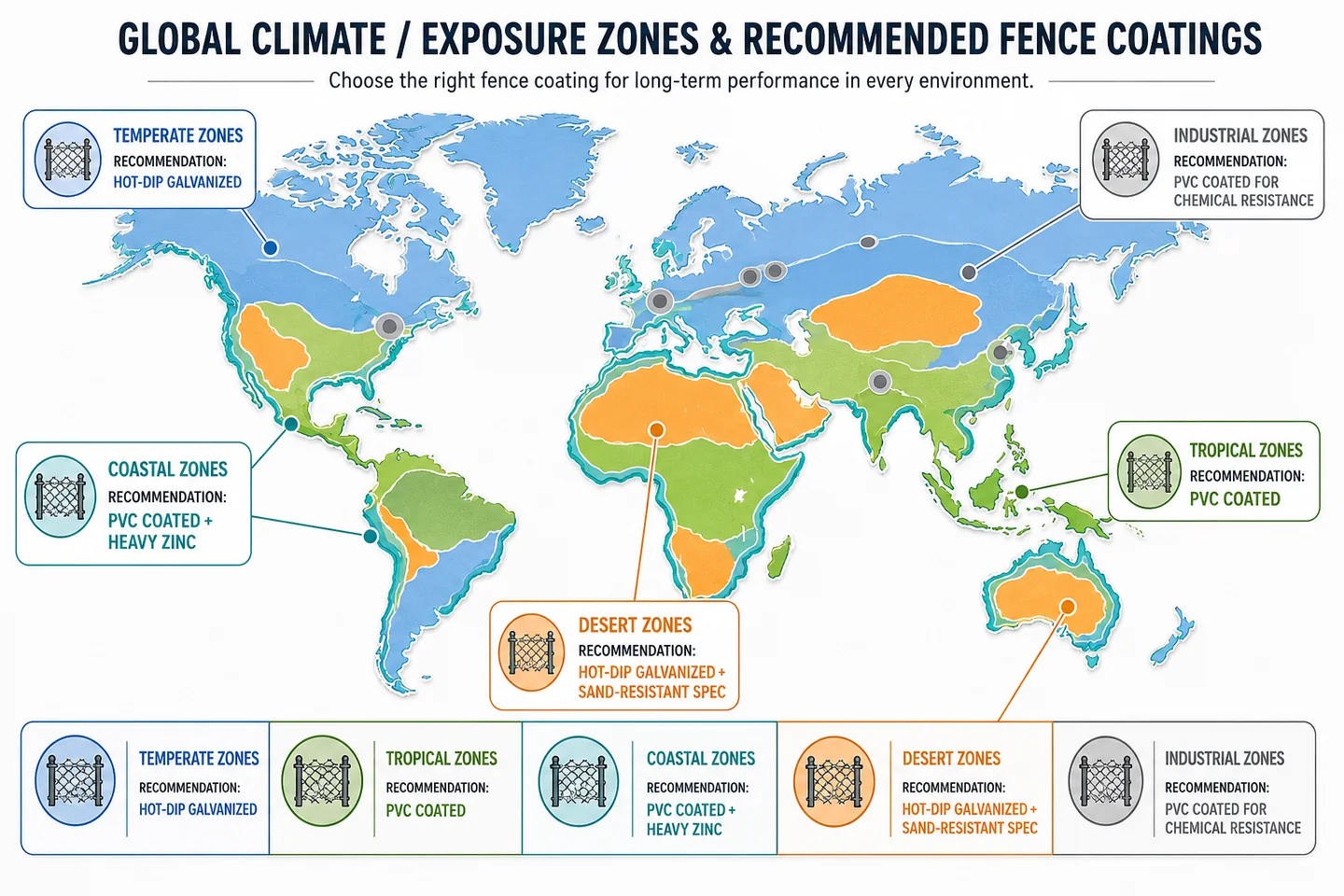 Galvanized vs PVC Coated Wire Mesh Guide