Chain Link Fence Applications: Sports Fields, Construction Sites, Farms and Perimeters
Updated Jun 28, 2026
A practical guide to chain link fence applications, covering sports fields, construction sites, farm boundaries, commercial perimeters and RFQ details.
Table of contents

Chain link fence is used across many project types because the woven diamond mesh is flexible, visible, economical to transport and practical for long perimeter runs. For importers, distributors and project buyers, the important question is not only whether chain link fence is available. The better question is which application the fence will serve, and what specification should be confirmed before quotation.
This application guide covers common chain link fence uses in sports fields, construction sites, farm boundaries, industrial perimeters, residential projects and infrastructure work. It also explains the main RFQ details buyers should prepare before contacting a chain link fence supplier.
This article is a sourcing reference, not a substitute for local engineering documents, installation rules or project safety review. Final fence height, post design, gate layout and security requirements should be confirmed by the project owner or responsible local reviewer.
Why application matters before choosing chain link fence
Chain link fence is also called diamond mesh fence, cyclone fence or wire netting in some markets. It is made by weaving steel wire into a continuous diamond pattern, then supplying the mesh in rolls for installation with posts, rails, tension wire, tie wire and related accessories.
The same product family can serve very different jobs. A sports field enclosure may need ball containment and a clean PVC coated appearance. A farm boundary may need economical roll packing and flexible installation on uneven ground. A construction site may care more about fast perimeter separation and accessory supply. A commercial buyer may need a complete fence package with posts, gates and topping options.
For that reason, chain link fence should be quoted by application, not by product name alone. The buyer should define the end use before comparing mesh size, wire diameter, fence height, surface treatment and accessories.
Main chain link fence application areas
Sports fields and recreational facilities
Sports facilities are one of the clearest use cases for chain link fence. Tennis courts, baseball fields, football pitches, school playgrounds and multi-use recreation areas often use chain link mesh because it gives visibility while helping separate the playing area from spectators and nearby walkways.
For this application, buyers usually discuss mesh opening, wire diameter, fence height, post spacing, top rail, gate position and coating color. Green and black PVC coated chain link fence are common because they fit outdoor environments and reduce the visual weight of the fence. For related perimeter needs around the same facility, buyers may also compare other fence systems so that coating, color and packing can be planned together.
Construction sites and temporary perimeters
Construction projects often need clear, fast perimeter separation. Chain link fence can be used for semi-permanent site boundaries, storage zones, utility areas or temporary separation where the project wants roll-packed mesh rather than framed panels.
For short-term and movable jobs, purpose-built temporary fence systems may be more practical because panels, bases and clamps are designed for repeated relocation. Chain link fence is stronger as a roll-installed perimeter when the site expects a longer use period or has posts already planned.
The RFQ should state whether the buyer needs mesh only, mesh with posts, or a complete fence package with gates, tension bars, tie wire, post caps and other accessories.
Farm boundaries and livestock areas
Agricultural buyers use chain link fence for farm boundaries, animal pens, poultry areas, garden protection and crop separation. The woven structure is useful on uneven terrain because the mesh can follow site contours more easily than rigid panel systems.
For livestock and farm use, buyers should confirm animal type, fence height, mesh opening, wire diameter, post type and surface treatment. Small animal areas may need smaller mesh openings, while larger boundary projects may prioritize long roll length, economical packing and coating suitable for outdoor exposure.
Commercial and industrial perimeters
Warehouses, logistics parks, factories and utility sites often use chain link fence for general perimeter separation. The open mesh allows visibility for patrols and cameras, while the fence line marks the controlled area.
Some projects combine chain link fence with other security fence products at gates or sensitive zones. This can help buyers use chain link for long perimeter runs while choosing welded panels or other systems where appearance, stiffness or project-specific security design is required.
For industrial applications, buyers should avoid vague requests such as "send chain link fence price." A practical RFQ should include fence height, mesh opening, wire diameter, surface treatment, post specification, gate requirement, topping requirement if any, packing method and destination.
Residential and community boundaries
Chain link fence is widely used for residential side boundaries, gardens, schools, community areas and simple property separation. It is usually chosen when the buyer wants a practical boundary with visibility and moderate material cost.
For residential and community projects, appearance matters more than in many industrial jobs. PVC coated chain link fence in green or black is common, and buyers may pair it with more decorative fence panels at entrance areas. For comparison, see ANJIA's product paths for chain link fence and 3D welded mesh fence.
Infrastructure, road and project perimeters
Road, rail, airport support zones, utility corridors and other infrastructure projects may use chain link fence where long runs, visibility and fast installation are important. These projects should be document-led. Buyers should follow drawings, local requirements and responsible project review instead of assuming one universal specification.
When infrastructure buyers send inquiries, drawings, fence schedules, finish requirements, post details, gate requirements and packing rules are more useful than a general product name.

Specification factors by application
The table below is a practical discussion reference for RFQs. It is not a universal standard. Final values should follow the buyer's project documents, local requirements and confirmed order specification.
| Application | Common buyer focus | Specification points to confirm |
|---|---|---|
| Sports fields | visibility, ball containment, clean appearance | mesh opening, wire diameter, fence height, top rail, gate layout, PVC coating color |
| Construction sites | fast separation, site boundary, accessory supply | mesh roll size, post type, tie wire, tension wire, gate and whether temporary panels are a better fit |
| Farm and livestock areas | terrain flexibility, animal type, outdoor exposure | animal type, mesh opening, fence height, wire diameter, post spacing and finish |
| Commercial perimeter | long fence runs, clear boundary, controlled access | complete system, posts, gates, topping option, finish, packing and drawings |
| Residential boundary | appearance, visibility, garden fit | PVC coating color, height, post style, gate details and accessory package |
| Infrastructure projects | long runs, drawings, project documents | drawings, fence schedule, finish requirement, post design and packing rules |
Surface treatment and coating choices
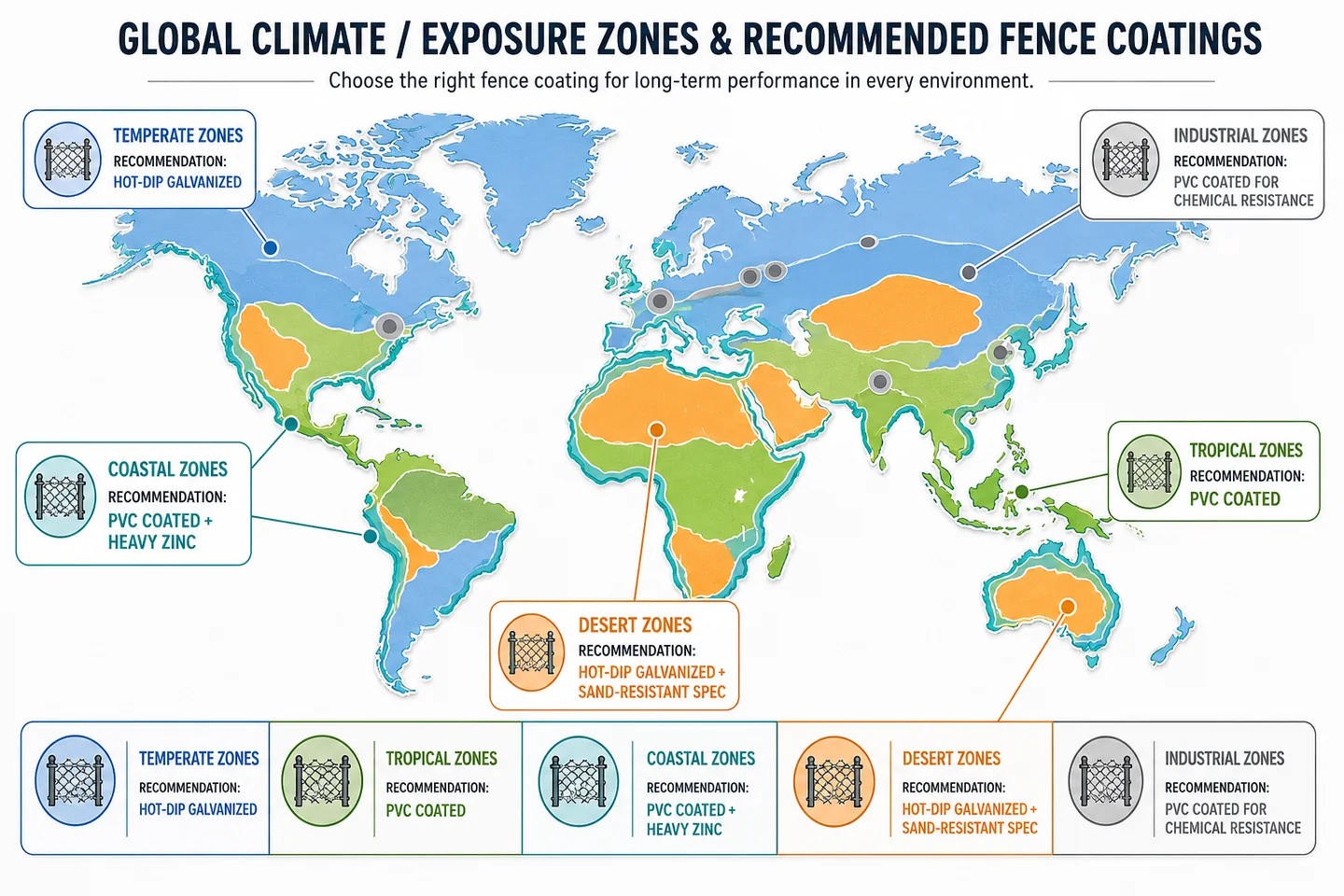
Surface treatment should match the market, environment and expected replacement cycle. The common export options are electro galvanized, hot-dipped galvanized and PVC coated over a galvanized core.
Electro galvanized chain link fence is usually chosen for cost-sensitive or short-use applications. Hot-dipped galvanized chain link fence is commonly discussed for outdoor perimeters where stronger corrosion protection is required. PVC coated chain link fence is often selected when the buyer wants color, a cleaner appearance or additional coating protection for outdoor exposure.
Because climate, zinc coating, PVC thickness, storage, installation and maintenance all affect performance, buyers should avoid relying on one fixed service-life number. A better RFQ asks the supplier to confirm the coating structure, wire diameter before and after coating, color, roll packing and the exposure environment.
Chain link fence vs welded mesh fence and temporary fence
Importers often compare chain link fence with welded mesh fence and temporary fence. Each product family has a different sourcing logic.
| Product type | Where it often fits | Buyer should check |
|---|---|---|
| Chain link fence | sports fields, farms, long perimeters, general commercial boundaries | roll size, mesh opening, wire diameter, posts, rails, tension parts and coating |
| Welded mesh fence | residential, commercial, garden, decorative or panel-based fence projects | panel size, wire diameter, bends, posts, clamps, coating and color |
| Temporary fence | construction sites, events and movable separation | frame tube, panel size, mesh, feet, clamps, braces, repeat-use expectation and loading plan |
For a product comparison article, see welded wire mesh fence vs chain link fence. If the buyer already knows chain link is the right product family, the next step is to prepare a specification list and send it through the inquiry page.
Export procurement and packing considerations
Chain link fence is normally packed in rolls. Roll packing makes it practical for export shipments, but buyers still need to define how the order should be organized.
Important procurement questions include:
- Is the order mesh only or a complete fence package?
- What roll height, roll length, mesh opening and wire diameter are required?
- Are posts, rails, tension wire, tie wire, tension bars, post caps, gates or other fittings included?
- Should accessories be packed together with mesh rolls or separated by item?
- Does the buyer need labels, bundle marks, packing photos or loading photos?
- Are there color, coating, bundle weight or pallet requirements?
For distributors, mixed container planning may be useful when the market needs several heights, coatings or accessory packages. However, loading quantity and production timing should be confirmed case by case after the final specification is fixed.
Quality control checklist for chain link fence buyers
Before confirming a shipment, importers can review these practical quality points:
- Wire diameter before and after coating, if PVC coated.
- Mesh opening consistency across the roll.
- Roll height and roll length.
- Edge style and roll end condition.
- Galvanizing or coating structure against the order requirement.
- PVC coating color and adhesion, if applicable.
- Accessory quantity, including tie wire, tension bars, caps, clamps or gates.
- Packing protection for sea shipment.
- Labels, marks and packing list consistency.
- Inspection photos or third-party inspection requirements, if requested by the buyer.
If a project requires a specific test method, tolerance or local standard, the buyer should include that document in the RFQ and purchase order. The supplier should not be expected to infer compliance requirements from the product name alone.
RFQ checklist
To receive a more accurate quotation, prepare the following details:
- Application or project type.
- Mesh opening.
- Wire diameter and whether the value is before or after coating.
- Fence height and roll length.
- Surface treatment and color.
- Post type, top rail, tension wire and fittings.
- Gate requirement, if any.
- Quantity and packing method.
- Destination and preferred shipping terms.
- Drawings, photos or project documents when available.
For broader category sourcing, buyers can also review fence products and the chain link fence buying guide.
FAQ
What are the most common chain link fence applications?
Common applications include sports fields, construction site perimeters, farm boundaries, livestock areas, residential boundaries, commercial perimeters and infrastructure corridors. The right specification depends on the site and project documents.
Is chain link fence better than welded mesh fence?
Neither is universally better. Chain link fence is often practical for flexible roll-installed perimeters and long runs. Welded mesh fence is often chosen when the buyer wants rigid panels, a cleaner appearance or a panel-and-post system. The decision should follow application, budget, appearance and installation plan.
Can chain link fence be used for temporary construction sites?
Yes, chain link fence can be used for construction site separation, especially when posts and a longer-use perimeter are planned. For movable or repeated-use site fencing, temporary fence panels may be more practical.
Which surface treatment should buyers choose?
Electro galvanized, hot-dipped galvanized and PVC coated options are all used in export markets. The choice should reflect climate, exposure, appearance, color needs, budget and expected use period. Buyers should confirm coating details rather than rely on one fixed service-life number.
What should be included in a chain link fence inquiry?
Include application, mesh opening, wire diameter, fence height, roll length, surface treatment, color, posts, fittings, gate requirement, packing, quantity, destination and any drawings or photos.
Conclusion
Chain link fence remains a practical fencing option because one product family can serve many applications, from sports fields and farms to construction sites and industrial perimeters. The best sourcing result comes from matching the specification to the use case.
Before comparing price, buyers should define the application, mesh, wire, coating, height, posts, fittings, packing and destination. Clear details help the supplier quote the right chain link fence package and help the buyer avoid comparing mismatched products.
About ANJIA GROUP
ANJIA GROUP supplies wire mesh, fencing and related industrial products for global B2B buyers. Contact our team to discuss product specifications, matching accessories and export packing.
Discuss your sourcing requirements
Send your product requirements and any relevant drawings to our team.
Get a Free Business Quote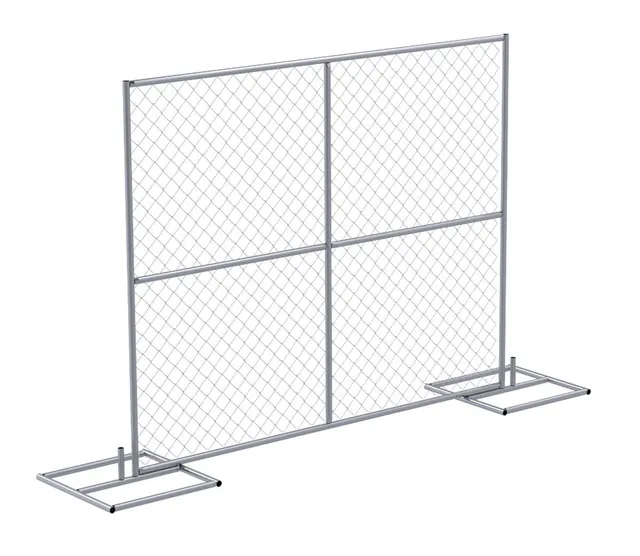 Chain Link Fence
 Fence Post
 Fence Coating & Exposure Zone Selector
 Galvanized vs PVC Coated Wire Mesh Guide