Sourcing Knowledge
A coating specification reference before fence and wire mesh RFQ
Galvanized and PVC coated wire mesh are not interchangeable price labels. For importers, construction companies, distributors and project procurement teams, the RFQ should separate zinc coating mass, galvanizing route, PVC thickness, color, exposure zone, salt spray requirement, local standard and packing protection before quotation. The ranges below are sourcing references only. Final coating route, service expectation, test method, compliance document and production feasibility should still be confirmed against the project drawing, destination market and ANJIA order review.
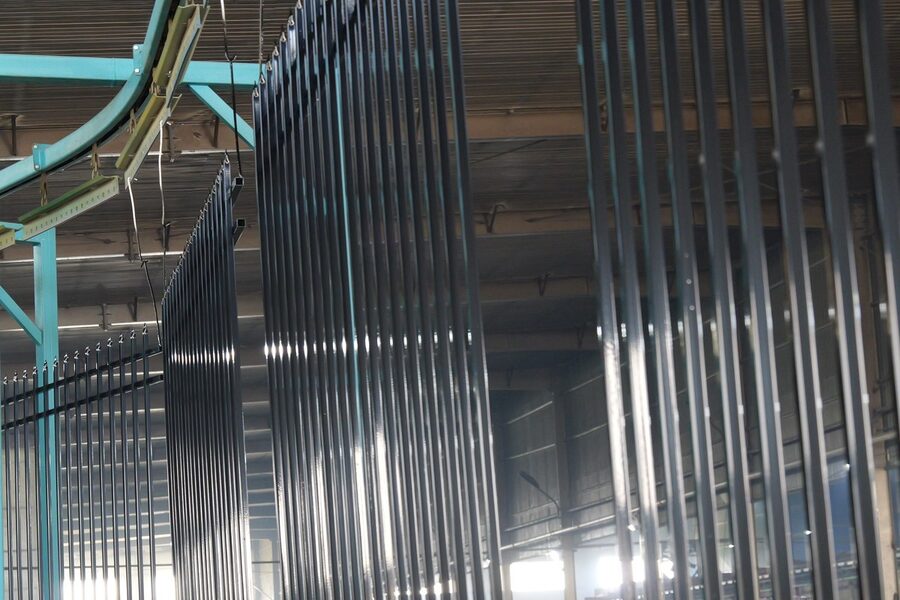
Match exposure, coating system and RFQ wording.
Hot-dip galvanized
PVC coated
Heavy zinc + PVC
Galvanized + UV note
Special review
Citation-ready answer
How should buyers compare galvanized and PVC coated wire mesh?
Galvanized and PVC coated wire mesh should be compared by exposure, base wire, zinc coating mass, PVC thickness, color, handling risk, packing and the project standard, not by color name alone. Electro galvanized wire may be discussed for lighter indoor or low-exposure uses, while hot-dip galvanized or heavy zinc coating is usually a stronger starting point for outdoor fence and wire mesh RFQs. PVC coated mesh adds a colored barrier layer, but the core wire diameter, after-coating diameter, base galvanizing and UV or abrasion requirements still need confirmation. Project documents may reference ASTM, EN/ISO, AS/NZS, ABNT or owner specifications, and those standards are not automatically interchangeable. Buyers should send the exact drawing note when available. Salt spray hours can support quality comparison under a stated method, but they should not be converted directly into guaranteed outdoor service years.
Use this answer as a coating RFQ reference. Final coating route, standard equivalence, inspection method, service expectation and compliance approval must follow the project document and supplier review.
Coating factors
What changes the coating decision before quotation?
A coating choice should start from exposure, project standard and measurable coating values, not only from price or color. If a value is uncertain, mark it as To be confirmed instead of turning the coating into a fixed specification.
Zinc coating mass
Electro galvanized, commercial galvanized and heavy hot-dip galvanized routes can differ by zinc layer, corrosion discussion and inspection basis.
PVC thickness
For PVC coated fence, quote both core wire diameter and finished outside diameter; color alone is not enough.
Exposure and testing
Salt spray hours, humidity, coastal distance, UV and industrial chemicals should be stated as test or review items, not guessed.
Project standards
Australian, European, US or local drawings may override a normal factory recommendation. Send exact standard notes with the RFQ.
Comparison
Hot-dip galvanized, electro galvanized and PVC coated wire mesh compared
The table is a sourcing reference for first quotation discussion. It should not replace drawings, project standards, local compliance review or order-specific coating confirmation.
| Finish direction | Best use before RFQ | Main advantage | Main caution | RFQ detail to confirm |
|---|---|---|---|---|
| Electro galvanized | Indoor, dry warehouse, light outdoor or budget-sensitive mesh where heavy corrosion exposure is not expected. | Clean appearance and lower-cost coating discussion for many light-duty products. | Usually not the first choice for harsh outdoor, coastal or chemical exposure unless the buyer accepts the limitation. | Base wire, zinc layer expectation, passivation, use environment and packing method. |
| Hot-dip galvanized wire | Outdoor fence, welded mesh panel, chain link fence, farm fence or wire products needing stronger galvanized protection. | Practical outdoor coating route for many perimeter and construction applications. | Surface look, zinc layer, weld point treatment and applicable standard should be confirmed before order. | Galvanized before or after welding, zinc layer, standard note and destination environment. |
| Galvanized plus PVC coated | Fence projects needing visible color, additional barrier coating, humid outdoor use or distributor appearance consistency. | Color, appearance and a protective outer layer can support project or distributor requirements. | PVC thickness, color, adhesion, UV exposure, rubbing risk and base wire route need confirmation. | Galvanized core, finished diameter, PVC thickness, RAL color, coating sequence and packing protection. |
| Special review finish | Seafront, chemical, wastewater, high-UV, animal waste or strict project-standard environments. | Allows ANJIA to review whether a normal galvanized or PVC direction is enough before quoting. | Do not auto-select a finish when exposure details, documents or project standards are unclear. | Exposure details, standard requirement, test request, photos, drawings and maintenance assumptions. |
Specification ranges
Zinc coating, PVC thickness and salt spray values to confirm
The values below are practical RFQ discussion ranges, not guaranteed service-life promises. Actual performance changes with base steel, coating process, cut edges, weld points, transport damage, UV, moisture, salinity, chemical exposure, installation and maintenance.
| Coating basis | Common RFQ range to discuss | Salt spray discussion | Field-life discussion | What to send ANJIA |
|---|---|---|---|---|
| Light electro galvanized wire | Often discussed around 8-25 g/m2 zinc for indoor or low-exposure mesh, depending on product and supplier route. | Some buyers ask for 24-96 hours neutral salt spray. The acceptance point must define white rust, red rust or rating method. | Short outdoor life in exposed sites; often treated as indoor, dry storage or temporary-use discussion. | Expected zinc mass, passivation, indoor/outdoor use, packing and whether salt spray is required. |
| Commercial hot-dip galvanized wire | Often discussed around 40-100 g/m2 zinc for general fence or mesh RFQs where moderate outdoor use is expected. | 96-240 hours may appear in quotation discussions, but the project specification should define the test method and pass/fail rule. | Moderate outdoor discussion in non-severe environments; coastal, tropical or industrial sites need heavier review. | Zinc mass, wire diameter, whether galvanizing occurs before weaving/welding, and destination exposure. |
| Heavy galvanized wire or post-fabrication galvanizing | Heavy galvanized wire may be discussed at 100-240+ g/m2. Fabricated posts or frames may be specified by coating thickness under a hot-dip standard. | 240-500+ hours can be requested, but salt spray should not be used alone to predict natural outdoor life. | Longer outdoor discussion than light zinc, but service expectation still depends on environment category and coating damage. | Exact standard, coating class or mass, drawing notes, inspection method and whether cut/weld areas need treatment. |
| Galvanized plus PVC coated wire | State core wire and finished diameter, for example 2.5 mm core / 3.5 mm outside diameter. PVC radial thickness is commonly discussed around 0.4-1.0 mm. | 500-1000 hours may be used in some project discussions, but adhesion, UV aging, bending and impact may matter as much as salt spray. | Can support longer outdoor and color-stable discussion when the base zinc, PVC compound, UV package and handling protection are suitable. | Core wire diameter, outside diameter, PVC thickness, RAL color, UV note, adhesion/test requirement and packing protection. |
Salt spray standards such as ISO 9227 and ASTM B117 describe controlled laboratory test environments. They do not turn test hours into a direct outdoor service-life guarantee.
Project standards
Different countries may require different coating standards
For project procurement, the drawing or tender document can be more important than a generic supplier recommendation. The same fence may be quoted under ASTM, EN/ISO, AS/NZS, ABNT or owner-specific project standards, and those references can change zinc coating mass, coating thickness, PVC class, salt spray request, inspection documents and packing protection. The buyer should send the exact standard number, revision year, drawing note and acceptance requirement instead of summarizing it as “galvanized” or “PVC coated”.
Australia and New Zealand
Project notes may reference AS 1725.1 for chain link fabric security fencing, AS 2423 for coated steel wire fencing products, and AS/NZS 4680 for hot-dip galvanized coatings on fabricated steel.
RFQ wording rule
Copy the drawing note exactly, including coating standard, post or wire specification, tie wire, barbed wire, cap, weld repair, color and inspection notes. If the standard is old or unclear, mark it for confirmation.
Supplier review rule
ANJIA should review whether the requested coating route is available for the product form, whether test documents can be supplied, and whether packing can protect the coating during container shipment.
| Region or project market | Standards often seen in project RFQs | What they can change | How to write the RFQ |
|---|---|---|---|
| North America | ASTM and AASHTO references are common. Chain link RFQs may cite ASTM A392 for zinc-coated fabric, ASTM F668 for polymer-coated fabric, ASTM F1043 for industrial fence framework, ASTM F1083 for hot-dip galvanized fence pipe, and ASTM A123/A123M for fabricated hot-dip galvanized articles. | May define zinc-coated fabric type, framework coating, post pipe requirement, PVC/polymer coating class, hardware coating and inch-pound inspection language. | Send the ASTM clause, fabric gauge or wire diameter, mesh size, coating class, framework pipe spec, color and whether AASHTO or owner specs apply. |
| Europe and UK | EN/ISO references are common. Buyers may see ISO 1461 or EN ISO 1461 for fabricated hot-dip galvanized articles, EN 10244-2 for zinc or zinc alloy coatings on steel wire, EN 10245-2 for PVC finished steel wire, EN 10223-6 for chain link fencing, and EN 13438 for powder organic coatings on galvanized steel construction articles. | May separate wire coating mass, fabricated article coating thickness, PVC wire tests, chain link fabric dimensions, powder coating on galvanized steel and CE/project documentation expectations. | State whether the requirement applies to wire, woven fabric, welded panel, post, frame, clamp or powder-coated finished article. Do not use one EN number for every component. |
| Middle East and Gulf projects | Many infrastructure, utility, oil and gas, port and perimeter projects use ASTM, BS EN, ISO or owner specifications together. Corrosivity language may reference ISO 9223, ISO 12944-style C4/C5/CX environments, ASTM B117 salt spray, or project-specific coastal, desert, UV and industrial exposure clauses. | Can push the RFQ toward heavier zinc, galvanized plus PVC or duplex coating, UV-resistant color coating, special packing, sand-abrasion notes and stricter inspection documents. | Send the location, coast distance, desert/sand exposure, chemical exposure, UV requirement, owner specification and whether equivalent ASTM/EN/ISO standards are accepted. |
| South America | Large mining, port, utility and public works projects may use ASTM, ISO, EN or local national standards. In Brazil, hot-dip galvanizing may reference ABNT NBR 6323 and related coating mass, thickness, adhesion or uniformity test methods. | Can change whether coating is stated in g/m2, microns, local standard clauses or international equivalent standards, and whether Portuguese or Spanish documentation is required. | Send the exact local standard name, language, revision, inspection certificate request and whether ASTM/ISO/EN equivalents can be accepted by the project owner. |
| Australia and New Zealand | Fence drawings may cite AS 1725.1, AS 2423, AS/NZS 4680 and project-specific notes for posts, chain wire, barbed wire, tie wire, end caps, weld repair and galvanized steel components. | Can define chain link fabric requirements, coated steel wire requirements, hot-dip galvanized fabricated steel requirements and exact notes for posts and fittings. | Paste the drawing note into the RFQ and attach the drawing. Ask ANJIA to separate chain wire, posts, rails, fittings, caps and wire ties in the quotation review. |
Regional standards are not automatically interchangeable. ASTM, EN/ISO, AS/NZS and ABNT references can be treated as equivalent only when the project owner, engineer or buyer specification explicitly allows it.
Global specification logic
Why global standards change zinc and PVC requirements
Global project standards usually differ in scope and measurement method. Some standards describe wire coating mass, some describe fabricated article coating thickness, some describe PVC coated chain link fabric, and some classify exposure environments. A clear RFQ should identify which component and which standard each requirement belongs to.
Unit system
North American projects may use oz/ft2, inch-pound gauges and ASTM classes, while many international projects use g/m2, microns, millimetres and ISO or EN wording.
Component scope
Wire fabric, welded panels, posts, rails, clamps, caps, tie wire and barbed wire may have different standards even when they belong to one fence system.
Coating system
Galvanized only, galvanized plus PVC, galvanized plus powder coating and duplex coating are different systems. The RFQ should not reduce them to color.
Exposure category
Coastal, tropical, desert and industrial sites may require heavier zinc, UV-resistant PVC, salt spray evidence or special review before quotation.
Buyer questions
How to choose galvanized or PVC coated wire mesh before RFQ
These answer blocks are written for procurement teams that need a clear sourcing direction before asking for price.
What is the difference between hot-dip galvanized, electro galvanized and PVC coated wire mesh?
Hot-dip galvanized, electro galvanized and PVC coated wire mesh differ mainly in coating route, zinc mass, corrosion discussion, appearance, color option, cost basis and exposure suitability.
- Electro galvanized mesh is often discussed for lighter-duty or cleaner-appearance needs when harsh exposure is not the main concern.
- Hot-dip galvanized mesh is usually the stronger galvanized direction for outdoor fence and wire mesh RFQs.
- PVC coated mesh normally starts from a metal base wire or galvanized wire and adds a colored barrier layer.
- For quotation, buyers should confirm base wire, zinc layer, PVC color, coating sequence, standard note, packing and project exposure.
Is PVC coated wire mesh better than galvanized wire mesh?
PVC coated wire mesh is not automatically better than galvanized wire mesh; it is better when the buyer needs color, a barrier coating or a project-specific coating discussion.
- Galvanized wire mesh may be more direct when the buyer wants a silver finish and does not need a color layer.
- PVC coated mesh can be useful for green, black or custom color fence projects and for some humid outdoor conditions.
- The base wire and galvanizing route still matter because PVC coating is not a substitute for unclear base material.
- Final selection should consider exposure, handling, packing, cost target, project standard and expected maintenance.
What zinc coating mass should buyers specify for galvanized wire mesh?
Buyers should specify a zinc coating mass range or standard instead of only writing “galvanized”, because 8-25 g/m2 electro galvanized wire and 100-240+ g/m2 heavy galvanized wire belong to very different sourcing discussions.
- For light indoor mesh, electro galvanized may be enough if the buyer accepts the exposure limitation.
- For outdoor fencing, commercial or heavy hot-dip galvanized wire is normally a stronger starting point.
- For fabricated posts, panels or welded frames, the standard may describe coating thickness or class rather than wire zinc mass.
- If the required zinc value is unknown, send the site exposure and ask ANJIA to recommend a quotation basis.
How should PVC coated fence thickness be written in an RFQ?
PVC coated fence thickness should be written with both the core wire diameter and the finished outside diameter, because “PVC coated 3.5 mm” can hide whether the steel core is 2.5 mm, 2.8 mm or another size.
- For example, 2.5 mm core / 3.5 mm outside diameter means the buyer is discussing approximately 0.5 mm radial PVC thickness.
- State the color reference, such as green, black or a RAL number, and whether UV resistance is required.
- For harsh handling or long shipment, add packing protection notes so the PVC surface is not damaged before installation.
- Do not compare powder coating thickness and PVC coating thickness as the same finish type; they are different coating systems.
Can salt spray hours predict how many years a galvanized or PVC coated fence will last?
No. Salt spray hours are useful for quality control and coating comparison under a stated method, but they should not be converted directly into outdoor service years.
- A salt spray request should name the standard, test hours, sample condition and acceptance point.
- Outdoor performance also depends on UV, rain, coastal salt, industrial chemicals, soil contact, scratches, weld points and maintenance.
- Use salt spray results as one evidence item, then confirm the project environment and coating standard before ordering.
- When a tender document already defines salt spray or coating class, the RFQ should follow that document first.
Are ASTM, EN, AS/NZS and ABNT coating standards equivalent?
They can be equivalent only when the project specification allows an equivalent standard; buyers should not assume ASTM, EN, AS/NZS and ABNT coating requirements are automatically interchangeable.
- Equivalent standards may use different units, sample rules, coating mass or thickness tables, test methods and acceptance wording.
- A standard for fabricated hot-dip galvanized articles may not apply to continuously galvanized wire or PVC finished wire.
- Project owners may accept equivalents for commercial procurement but reject them for infrastructure, utility, port, mining or security projects.
- The safest RFQ wording is: quote to the named project standard, or propose an equivalent standard for buyer approval before production.
What RFQ details should importers send for galvanized or PVC coated mesh?
A clear coating RFQ should include product type, base material, wire diameter, opening, finish, zinc or PVC expectation, color, exposure zone, quantity, packing, destination and any project standard.
- State the product: chain link fence, welded panel, 358 fence, temporary fence, farm fence, razor wire, barbed wire or custom mesh.
- State the coating route if known: electro galvanized, hot-dip galvanized, galvanized plus PVC, PVC color or To be confirmed.
- Attach drawings, standard notes, photos or previous sample references when coating wording is difficult to describe.
- Use To be confirmed for missing zinc layer, PVC thickness, standard, color or packing details instead of leaving them hidden.
Use the right resource
Guide, Selector and Builder work together
The guide explains the coating logic. The Selector turns exposure inputs into a sourcing direction. The Builder and Checklist turn confirmed and missing coating details into RFQ wording for supplier review.
Selector
Fence Coating & Exposure Zone Selector
Choose a practical coating direction from product type, exposure zone, coast, humidity and project notes.
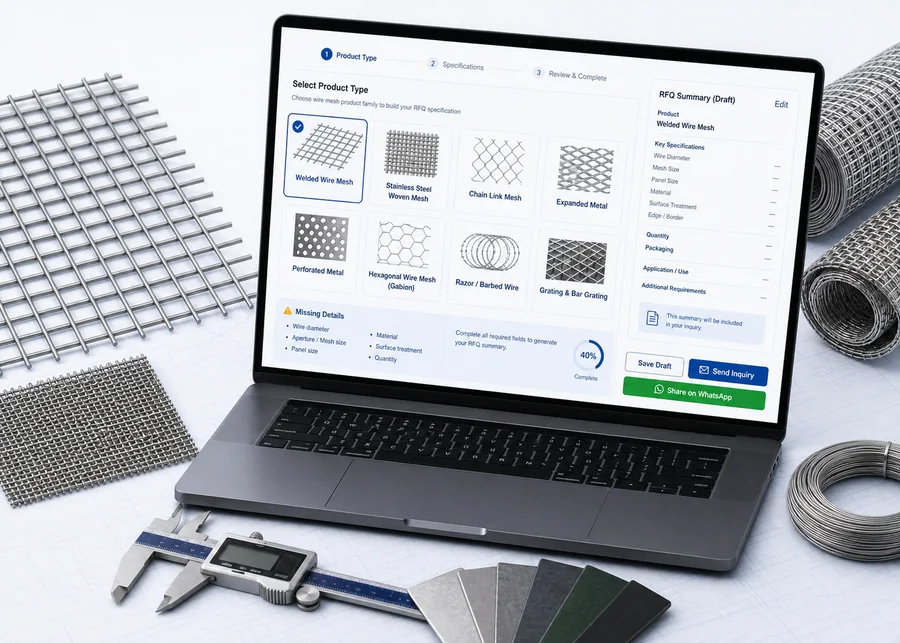
Interactive tool
Wire Mesh RFQ Specification Builder
Turn coating, material, size, quantity and missing values into a structured RFQ summary for procurement review.
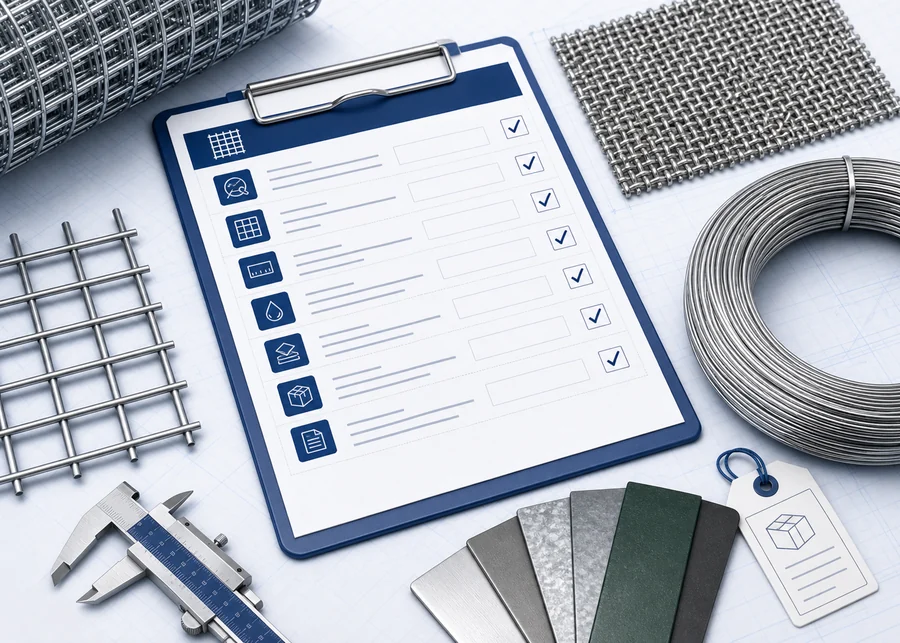
Checklist
Wire Mesh RFQ Checklist
Review material, finish, packing, destination and document details before sending an inquiry.
Exposure map
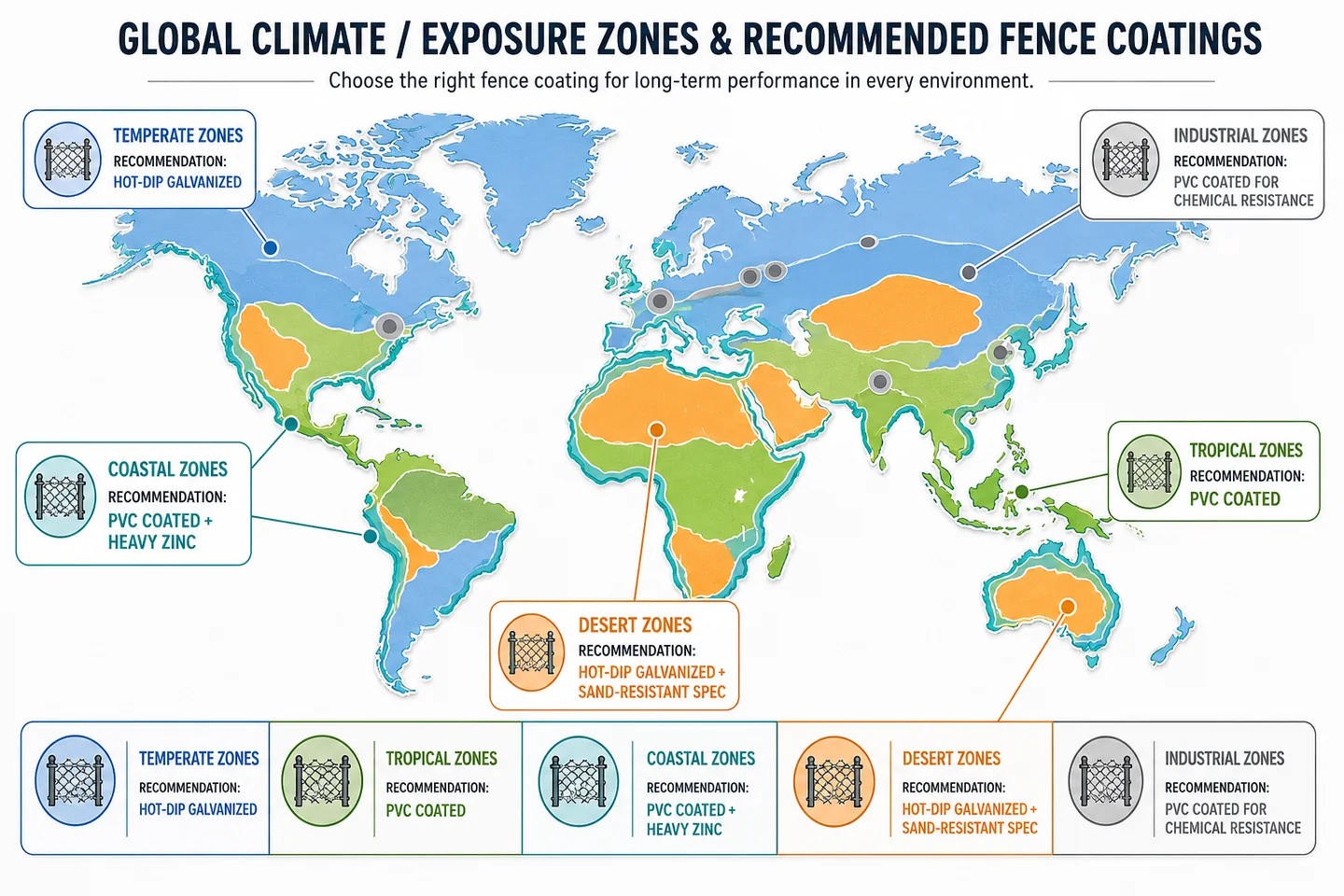
Global exposure zones help start the coating conversation
A climate or exposure map is useful for reading, but it cannot replace the project standard. Use it to decide what evidence to send with the RFQ, then confirm the zinc layer, PVC thickness, test method and documentation requirement against the drawing.
Downloadable reference
Fence Coating & Exposure Zone Reference Pack
Use this PDF when a sourcing, QA or project procurement team needs a portable reference for zinc layer, PVC thickness, salt spray discussion, exposure zones, regional standards and RFQ wording. It is a procurement reference only, not a final quotation, engineering design, warranty or compliance approval.
Last updated: July 8, 2026