How ANJIA GROUP Export Service Supports Wire Mesh Buyers from Inquiry to Delivery
Updated Jun 30, 2026
A practical look at ANJIA GROUP's wire mesh export service flow, from inquiry and specification review to packing, loading photos and shipment communication.
Table of contents

For overseas buyers, sourcing wire mesh from China is not only a price comparison. A workable order also depends on specification confirmation, packing details, export communication and shipment follow-up.
ANJIA GROUP's export service flow is built around those practical steps. The goal is to help importers, distributors and project buyers make each order file clear before production, packing and loading begin.
This article explains how the ANJIA team supports a wire mesh or fencing inquiry from the first message to export delivery communication, and what buyers can prepare to make the process smoother.
Quick answer for buyers
ANJIA GROUP export service supports wire mesh buyers by turning a general inquiry into confirmed product, packing and document details before shipment. The practical flow is inquiry review, specification confirmation, quotation, optional sample or drawing review, production coordination, packing plan, loading photo support and export-document communication. Buyers can speed up review by sending product type, application, material, wire diameter or thickness, mesh opening or hole pattern, roll or panel size, surface treatment, quantity, packing method, destination country or port, trade term and required documents. Common document discussions may include invoice, packing list, bill of lading, certificate of origin, MTC, inspection photos, SGS/TUV/CE/RoHS references when applicable and buyer-specific label requirements. Final certificate scope and copies should be confirmed during order review so quotation, production, inspection and shipping teams work from the same requirement set.
Export proof snapshot
| Export proof item | When it helps | Buyer should confirm |
|---|---|---|
| Specification sheet or drawing | Before quotation and production review | Product route, size, material, finish and tolerance expectation |
| Sample, detail or inspection photos | Before bulk order or shipment review | Which visible points need photo proof |
| Packing and loading photos | Before dispatch and receiving | Pallet, label, carton, bundle and mixed-SKU rules |
| Export and quality documents | During order and shipping coordination | Invoice, packing list, B/L, CO, MTC, SGS/TUV/CE/RoHS reference scope when relevant |
Why a clear export service flow matters
Wire mesh products often include many small details. A buyer may ask for welded wire mesh, fencing panels, gabion mesh, hardware cloth, window screen, galvanized wire or related products, but the final order still needs specific information.
- Wire diameter, mesh opening, panel size, roll width or sheet size.
- Material and surface treatment.
- Product format such as rolls, sheets, panels, posts or complete fence sets.
- Packing method, label requirements and pallet plan.
- Destination, shipping terms and required documents.
- Photos or inspection records needed before shipment.
When these details are discussed early, buyers can compare quotations more accurately and reduce misunderstandings during production and loading.
Step 1: inquiry and requirement review
The process starts when a buyer sends product information through the inquiry page, email, WhatsApp or another communication channel.
At this stage, the ANJIA team reviews the product type, intended use and specification level. Some buyers already have drawings or a project document. Others only know the application, such as perimeter fencing, cage mesh, gabion filling, window screening or general wire mesh distribution.

Useful inquiry details include product name, mesh opening, wire diameter, product format, finish, quantity, packing preference, destination and any photos or drawings available.
If some details are missing, the first task is to clarify the specification before treating the inquiry as a final price request.
Step 2: specification confirmation before quotation
A useful quotation should describe the product clearly, not only list a unit price.
For wire mesh and fencing products, ANJIA may confirm mesh opening, wire diameter, roll width, panel height, coating type, color, edge treatment, accessories, packing method and document needs.
This step is especially important for mixed orders. For example, a buyer may combine welded wire mesh panels, fence posts, clamps and small accessories in one shipment. The order file should separate each item so production, packing and loading teams can identify them correctly.
Step 3: samples, drawings or reference photos when applicable
Not every order needs a sample, drawing or factory photo. For standard repeat products, a clear specification and packing requirement may be enough. For a new buyer, a new market or a project order, additional confirmation can help.
Depending on the product and order stage, buyers may request sample photos, product detail photos, packing reference photos, drawing review for fence systems, or factory video references from the video page.
These materials should be treated as order support, not as a replacement for the final specification. The buyer and supplier still need to confirm what will be produced, packed and shipped.
Step 4: production coordination
After the order is confirmed, production coordination focuses on matching the order file with the product type, size, finish, quantity and packing plan.
- Checking whether the product is a roll, sheet, panel, coil or finished fence set.
- Separating different sizes, colors or accessories.
- Confirming the packing format before production is completed.
- Planning photos or inspection points requested by the buyer.
- Keeping the buyer informed when order details need clarification.
For many buyers, this communication is as important as production itself. If a label, pallet plan, accessory quantity or shipping mark is missing, the problem may not appear until unloading.
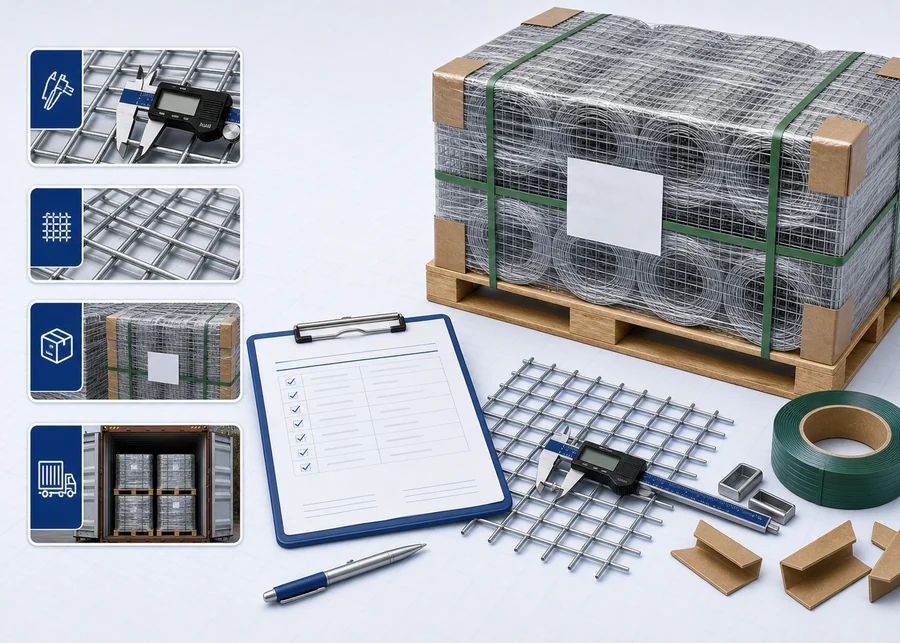
Step 5: packing plan and loading preparation
Packing should match the product and the buyer's handling method. A distributor may need labels and retail-friendly rolls. A project buyer may need pallets grouped by size or site area. A fence buyer may need panels, posts, clamps and accessories separated but loaded together.

Common packing questions include whether rolls are wrapped individually, whether panels are stacked on pallets, whether posts and accessories are packed separately, and whether shipping marks, labels or packing photos are required.
Buyers can also review the wire mesh fence export packing checklist for a more detailed packing discussion.
Step 6: loading photos and export documents
Before shipment, buyers may need visual proof of packing and loading. For many export orders, this can include photos of packed goods, container loading, door closing and seal information when applicable.

The document package depends on the product, shipping terms and destination requirements. Common export documents may include commercial invoice, packing list, bill of lading and certificate of origin when applicable.
The key point is simple: document needs should be discussed before shipment, not after the container leaves.
Step 7: shipment communication and repeat order support
After loading, communication usually shifts to shipping documents, tracking information and any follow-up questions from the buyer.
For repeat orders, a clear previous order record can help the buyer and supplier reuse confirmed specifications, labels, packing requirements and product photos. This is useful for importers who purchase similar wire mesh or fence products regularly.
Service flow summary
| Stage | What ANJIA supports | What buyers should prepare |
|---|---|---|
| Inquiry | Review product type, use and missing details | Product name, use, size, quantity and destination |
| Specification | Confirm mesh, wire, finish, format and packing | Drawings, photos or previous order reference if available |
| Quotation | Provide product and packing details for comparison | Required terms, destination and document needs |
| Production | Coordinate product format, order grouping and updates | Confirm any changes before production starts |
| Packing | Discuss pallets, labels, accessories and photos | Shipping marks, label format and handling requirements |
| Loading | Provide loading communication when applicable | Forwarder details and required loading evidence |
| Follow-up | Support documents and repeat order reference | Arrival feedback and reorder specification records |
What buyers can send for a faster review
- Product type and application.
- Mesh opening, wire diameter, panel size, roll size or sheet size.
- Material and surface treatment.
- Quantity and packing method.
- Destination and preferred shipping terms.
- Photos, drawings or samples if available.
- Required documents or inspection points.
If you are still comparing product categories, start from the products page or review ANJIA's background in the company story article.
FAQ
Can ANJIA handle mixed wire mesh and fence orders?
Mixed orders can be discussed when the product sizes, packing needs and loading plan are clear. Buyers should list each product separately, including quantity, dimensions, finish, accessories and labels.
Does every order need a sample?
No. Samples are more useful for new buyers, new specifications, color confirmation or market testing. Repeat or standard orders may only need clear specifications and packing confirmation.
Can buyers request packing and loading photos?
Yes, packing and loading photos can be discussed as part of the order process. Buyers should state photo requirements before loading so the team can plan the right checkpoints.
Are export documents the same for every shipment?
No. Document needs depend on the product, destination, shipping terms and buyer requirement. Confirm required documents before shipment instead of assuming that every document applies to every order.
What is the best way to start an inquiry?
Send product type, size, material, finish, quantity, packing, destination and any drawings or photos through the inquiry page or contact page. If the specification is incomplete, describe the application and target market first.
Conclusion
A wire mesh export order is easier to manage when the buyer and supplier treat it as a clear process: inquiry, specification review, quotation, production coordination, packing, loading and shipment communication.
ANJIA GROUP's export service flow is designed to make these steps visible and practical for overseas buyers. Clear details at the beginning help reduce confusion at the end.
About ANJIA GROUP
ANJIA GROUP supplies wire mesh, fencing and related industrial products for global B2B buyers. Contact our team to discuss product specifications, matching accessories and export packing.
Discuss your sourcing requirements
Send your product requirements and any relevant drawings to our team.
Get a Free Business Quote Wire Mesh and Fence Products
 Wire Mesh Products
 Factory, QC & Packing Reference Pack
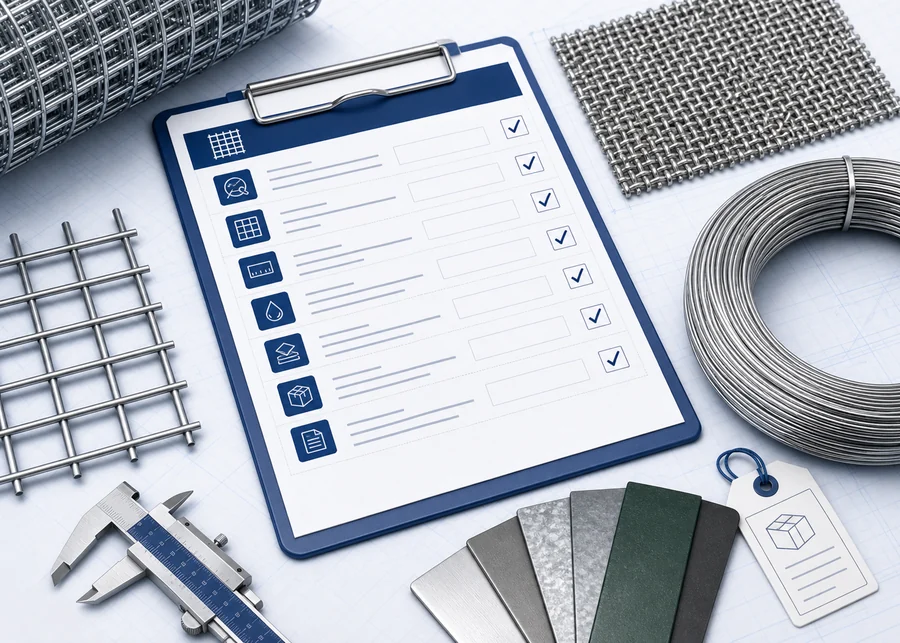 Wire Mesh RFQ Checklist