
Welded Wire Mesh Applications: Where Rolls and Panels Are Used
Updated Jun 28, 2026
A practical application guide for welded wire mesh rolls, sheets and panels, covering construction, fencing, agriculture, gabions and industrial partitions.
Table of contents

Welded wire mesh is used in many different markets because the same basic product family can be supplied as rolls, flat sheets, framed panels or assembled systems. A construction buyer may think about concrete reinforcement or plaster support. A fence buyer may focus on panels and posts. A distributor may need garden mesh, cage mesh, shelves or light industrial partitions.
For importers and distributors, the key question is not simply "what is welded wire mesh?" A more practical question is: where will the mesh be used, and what should be confirmed before asking for price?
This application guide explains common welded wire mesh uses and the specification details buyers should discuss before preparing an RFQ. It is not a substitute for engineering documents, local standards or project design review. For product-level sourcing, buyers can also review the welded wire mesh product page.
Why application matters before quotation
Two welded wire mesh products may look similar in a photo but serve very different jobs. Application affects nearly every quotation field:
- mesh opening or aperture;
- wire diameter;
- roll width, roll length, sheet size or panel size;
- material and surface treatment;
- edge treatment, frame, post or accessory needs;
- packing method and loading plan;
- whether photos, drawings or project documents are required.
For this reason, welded wire mesh should be quoted by use case, not by product name alone. A roll for garden protection, a sheet for plaster support and a framed panel for industrial separation should not be compared only by price per square meter.
Construction and building support
Construction is one of the most common welded wire mesh application areas. Depending on the project, welded mesh may be used in concrete work, wall finishing, plaster support, precast products or light building reinforcement.
For concrete-related use, buyers usually need to confirm sheet size, wire diameter, mesh opening and whether the mesh should be supplied flat, bundled or prepared for site handling. The final design should follow the project engineer's requirement, because construction performance depends on the full structure, not only on the mesh.
For plaster, stucco or wall support, buyers often discuss smaller openings and lighter wire. Galvanized welded mesh is commonly requested when the mesh may be exposed to moisture before or during finishing. Buyers should confirm whether rolls or sheets are easier for the local installer.
| RFQ field | Why it matters |
|---|---|
| Use type | Slab, wall support, plaster or precast work may require different product formats. |
| Mesh and wire | Opening and wire diameter should follow the buyer's document or local project requirement. |
| Format | Rolls, sheets and panels affect site handling and packing. |
| Finish | Finish should match exposure and storage conditions before use. |
Fencing and perimeter separation
Welded wire mesh is also used in many fence products. It can appear as simple garden fencing, framed temporary fence panels, 3D welded mesh fence, welded mesh security panels or other perimeter systems.
For fence buyers, the mesh itself is only one part of the order. Posts, clamps, feet, braces, gates, coating, color and packing often matter as much as the mesh panel. A buyer comparing welded mesh fence products should confirm the complete system, not only the mesh aperture.
- Is the product a roll fence, flat panel or framed panel?
- What panel height and width are required?
- Are posts, clamps, bases or other accessories included?
- Is the finish galvanized, PVC coated, powder coated or another agreed finish?
- Does the buyer need labels, bundle marks or separated accessory cartons?
For related fence sourcing, buyers can start from the fence category or compare specific fence articles in the News Centre.
Agriculture, garden and cage mesh
Agricultural and garden uses often need welded mesh that is practical, repeatable and easy to handle. Typical applications include animal cages, garden protection, tree guards, small enclosures, crop support and light farm separation.
Cage and enclosure buyers usually care about opening size, wire diameter, surface finish and whether the mesh edge is safe enough for the intended assembly. Garden and crop support buyers may care more about roll width, roll length, weight, coating color and retail packing.
For these orders, the best RFQ usually includes the end use. A mesh used for a rabbit cage, poultry enclosure, garden border or plant support may need different wire and opening choices. If the buyer only writes "welded mesh roll," the supplier may not know whether strength, appearance, bending, corrosion resistance or retail packing is the priority.
Industrial partitions, shelving and machine-area separation
Welded mesh panels are common in warehouses and factories because they allow visibility and airflow while creating physical separation. They may be used for storage partitions, tool rooms, machine-area guards, pallet rack decking, shelving decks or light industrial barriers.

For industrial use, the buyer should describe the installation environment and the role of the mesh. A welded mesh shelf deck and a mesh partition wall are not the same product, even if the wire pattern appears similar.
- panel size and frame requirement;
- wire diameter and mesh opening;
- whether a supporting frame, channel or post is needed;
- galvanized, painted or powder coated finish;
- packing method for panels and accessories;
- whether the buyer needs photos or drawings before production.
If the mesh is used near machinery, final safety requirements should be checked against the buyer's local regulations and project documentation. ANJIA can discuss product format and packing, but the final safety design belongs to the project owner or qualified local reviewer.
Gabion, landscape and stone-filled structures
Welded mesh can be assembled into gabion boxes or landscape stone cages. Compared with woven hexagonal gabions, welded gabion panels often provide a cleaner rectangular appearance. This can be useful for landscape walls, garden borders, decorative stone cages and some retaining structures where the project design specifies welded panels.
Buyers should confirm whether the project requires welded gabion panels, woven gabion baskets or another format. The decision depends on design requirements, site condition, expected appearance, assembly method and project documents.
For a deeper product comparison, see welded gabion box vs woven gabion basket.
Transport, infrastructure and project-specific uses
Some welded wire mesh applications are tied to road, bridge, rail, drainage or other infrastructure work. These uses are usually project-specific and should follow engineering drawings and local requirements.
For importers, this means the RFQ should be document-led. Instead of asking for a general welded mesh price, the buyer should send drawings, mesh schedule, material requirement, panel size, tolerance requirement if specified, packing requirement and destination.
ANJIA can review product and packing details, but performance claims should not be assumed from product name alone. If a project has structural or public-infrastructure requirements, the final specification should be confirmed by the project designer or responsible engineer.
Application-to-specification reference
The table below is a practical discussion reference for RFQs. It is not a universal standard, and final values should follow the buyer's actual order requirement.
| Application | Common format | Buyer should confirm |
|---|---|---|
| Concrete or slab work | Sheets or panels | opening, wire diameter, sheet size, bundling and project document requirement |
| Plaster or wall support | Rolls or sheets | small opening, light wire, galvanized finish, roll width and handling method |
| Garden fencing | Rolls | opening, wire diameter, height, coating, roll length and retail or pallet packing |
| 3D welded mesh fence | Panels with posts | panel size, bends, wire, coating, color, posts, clamps and packing |
| Temporary fence | Framed panels | frame tube, mesh opening, bases, clamps, braces and loading plan |
| Animal cages | Rolls or panels | opening, wire, coating, edge condition and assembly method |
| Industrial partitions | Framed panels | panel size, frame, post, finish and accessory packing |
| Shelving decks | Panels or decks | wire, opening, support channel, load-related project requirement and pallet packing |
| Welded gabions | Flat-pack panels | box size, mesh, wire, coating, connectors and stone-fill application |
How importers can plan a welded mesh assortment
Because welded wire mesh covers many markets, importers should avoid building an assortment from random sizes. A better approach is to group products by customer type.
For construction customers, keep the discussion around sheet size, wire diameter, opening and project documents. For fencing customers, plan panels, posts, coatings, colors and accessories together. For agricultural and garden channels, focus on roll width, roll length, coating and easy handling. For industrial buyers, separate partitions, shelves, guards and framed panels in the order file.
This grouping helps buyers decide which sizes should be stock items and which should be made for project orders. It also helps the supplier plan packing, labels and container loading.
RFQ checklist for welded wire mesh applications
- Application or end use.
- Mesh opening or aperture.
- Wire diameter.
- Roll, sheet, panel, framed panel or assembled product format.
- Product size, roll width, roll length or panel size.
- Material and surface finish.
- Quantity and packing method.
- Accessories, posts, clamps, connectors or frames if required.
- Destination and preferred shipping terms.
- Drawings, photos or project documents when available.
If you are not sure which format fits your market, start from the wire mesh category or send an application description through the inquiry page.
FAQ
Can the same welded wire mesh be used for construction and fencing?
Sometimes the product family overlaps, but the required specification is usually different. Construction use, fence panels and garden rolls may require different wire diameter, opening, size, finish and packing. Buyers should quote by application, not by product name alone.
Is welded wire mesh supplied as rolls or panels?
Both are possible. Light welded mesh is often supplied in rolls, while heavier mesh, fence panels, gabion panels and industrial partitions are often supplied as sheets or panels. The required format should be stated in the RFQ.
Which finish should buyers choose?
The finish depends on the use environment and market requirement. Buyers commonly discuss galvanized, PVC coated, powder coated, painted or stainless options. Do not choose only by appearance; confirm the application, handling method and expected exposure.
Can welded mesh be used for machine guards or industrial safety panels?
It can be used in industrial separation and guarding systems, but final safety requirements should follow the buyer's local regulations, project drawings and responsible safety review. The RFQ should include panel size, frame details, opening, wire diameter and installation context.
What should importers send for a faster quotation?
Send application, opening, wire diameter, format, product size, finish, quantity, packing, destination and any drawings or photos. If the order includes accessories such as posts, clamps, frames or connectors, list them separately.
Conclusion
Welded wire mesh is widely used because it can be adapted into many product forms: rolls, sheets, panels, framed barriers, cage mesh, gabion panels and industrial partitions. The same versatility also makes RFQ clarity important.
Before comparing price, buyers should identify the application, format, mesh opening, wire diameter, finish, packing and accessory needs. Clear application details help the supplier quote the right product and help the buyer avoid comparing mismatched specifications.
About ANJIA GROUP
ANJIA GROUP supplies wire mesh, fencing and related industrial products for global B2B buyers. Contact our team to discuss product specifications, matching accessories and export packing.
Discuss your sourcing requirements
Send your product requirements and any relevant drawings to our team.
Get a Free Business Quote Welded Wire Mesh
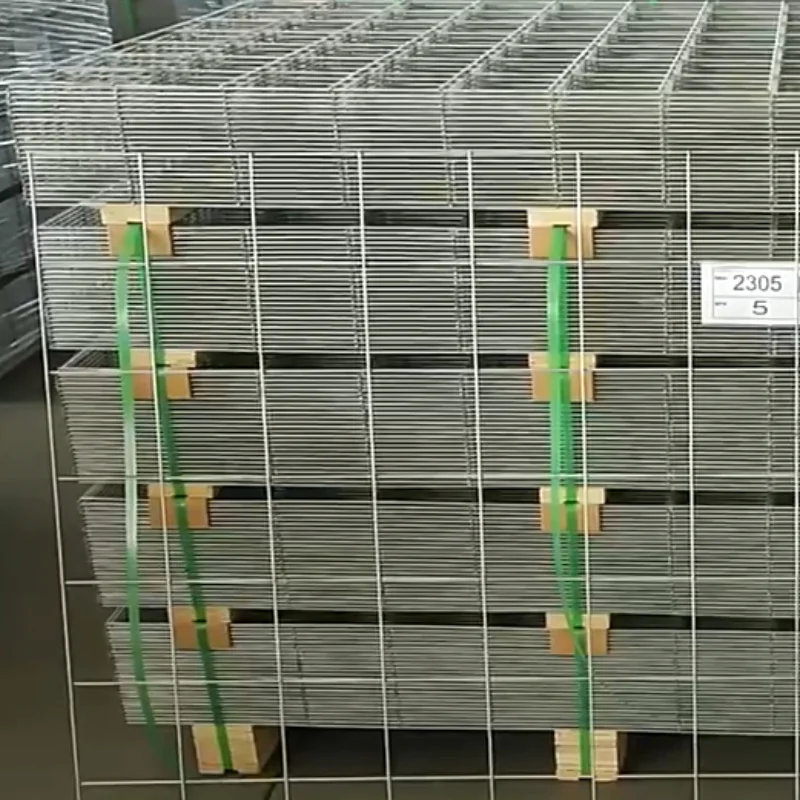 Welded Wire Mesh Panel
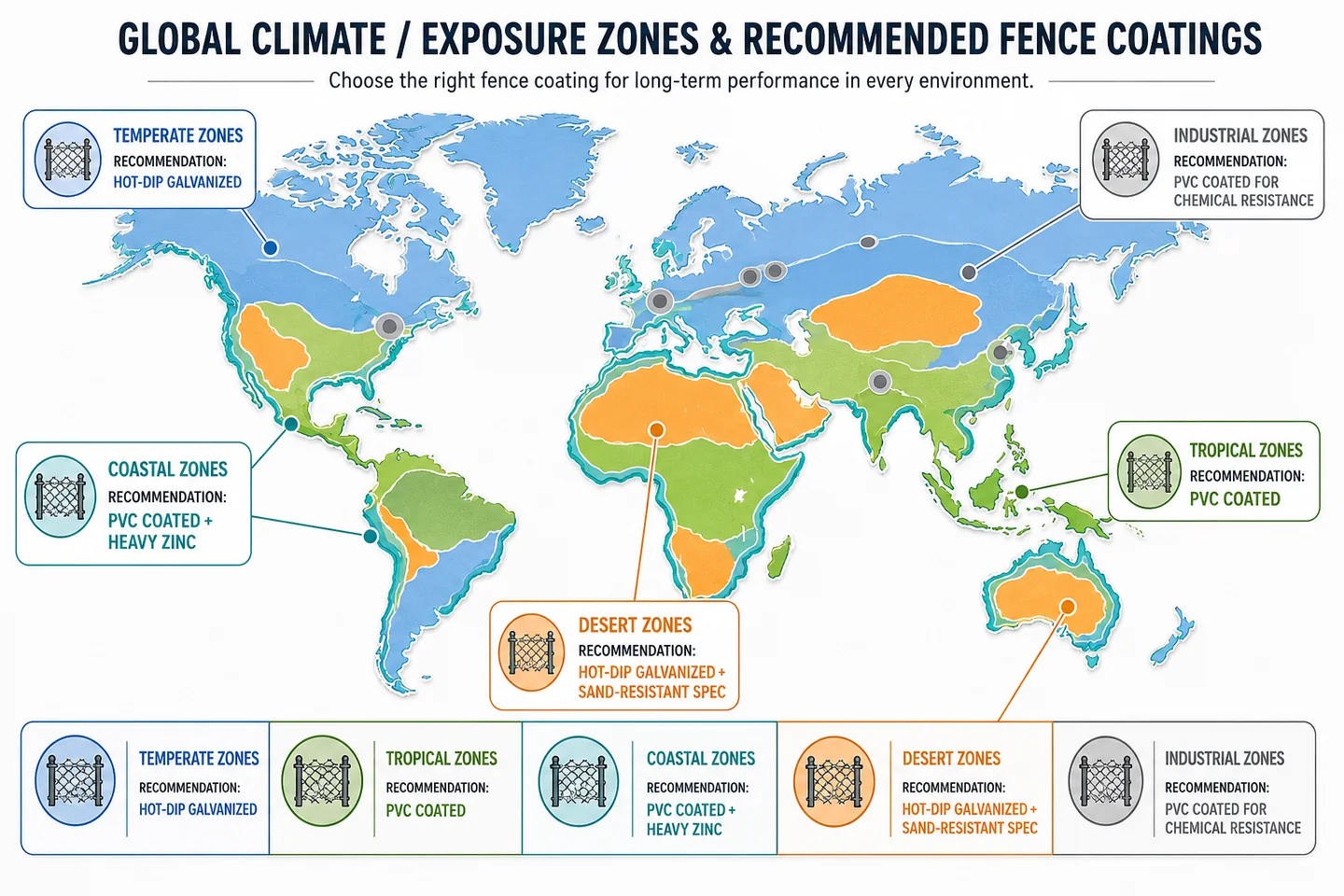 Galvanized vs PVC Coated Wire Mesh Guide
 Fence Coating & Exposure Zone Selector