What Buyers Can Learn from ANJIA Wire Mesh Factory Video References
Updated Jul 12, 2026
A company update on how wire mesh buyers can use ANJIA factory videos, QC photos, packing scenes and loading proof during supplier evaluation.
Table of contents

Overseas buyers often need to evaluate a wire mesh or fencing supplier before they can visit the factory in person. A quotation, a brochure and a few product photos can help, but they do not always show how the supplier actually works.
Factory video references are useful because they make the supplier's daily operation more visible. They can show whether production equipment is active, whether quality checks are being recorded, how products are packed, and how the team communicates before shipment.
At ANJIA, we share factory video references to help buyers review visible production, packing and loading context for wire mesh, fencing, gabion, wire and screen orders. Use the questions below to decide what additional evidence is relevant to your order.
Why factory video references matter in B2B sourcing
For importers, the first question is not only "can this supplier quote the product?" It is also "can this supplier show enough production and shipment evidence for the order I want to place?"
- They show the production environment behind the quotation.
- They help buyers understand which product processes the supplier can discuss.
- They give a quick view of workshop, warehouse, quality and packing scenes.
- They help the buyer prepare more specific questions before samples, inspection or a trial order.
- They support communication when buyers cannot visit the factory immediately.
Factory video should not replace samples, documents or third-party inspection when those are required. It is best used as an early screening and communication tool, especially before a buyer moves from general inquiry to a detailed RFQ.
Buyers can start by reviewing ANJIA's public video center and then ask for order-specific photos or video clips when a project reaches the specification stage.
Start with the supplier's visible operation
The first layer of a factory video is simple: does the supplier show a real working environment? For a wire mesh and fencing supplier, useful company-level footage may include factory exterior views, office communication scenes, active production areas, storage, sample displays, packing zones and loading areas.
These scenes do not prove every order detail by themselves, but they help buyers understand whether the supplier can show the operating environment behind its offer.
- Does the video show consistent company identity across office, factory and product scenes?
- Does the supplier show actual production or only finished product displays?
- Are product categories and workshop scenes relevant to the products being quoted?
- Can the sales team explain what each video scene represents?
For company background and general sourcing context, buyers can also review the ANJIA GROUP company profile.
Check whether production footage matches the product
Production footage is more useful when it connects to the actual product category. A video of a workshop is not enough if the buyer needs welded mesh panels, chain link fence, gabion mesh or window screen with specific requirements.

For wire mesh and fencing orders, buyers can look for footage related to welding, weaving, cutting, bending, forming, wire feeding, roll forming, panel stacking, basket folding, surface appearance and product grouping before packing.
The goal is not to judge the full technical capability from one clip. The goal is to connect video evidence with the quotation. If a buyer is quoted welded wire mesh rolls, the buyer should ask whether there is relevant production, packing or measurement evidence for that product type.
Read QC footage as operational evidence
Quality-control video or photo references are valuable when they show practical checkpoints rather than only finished goods.

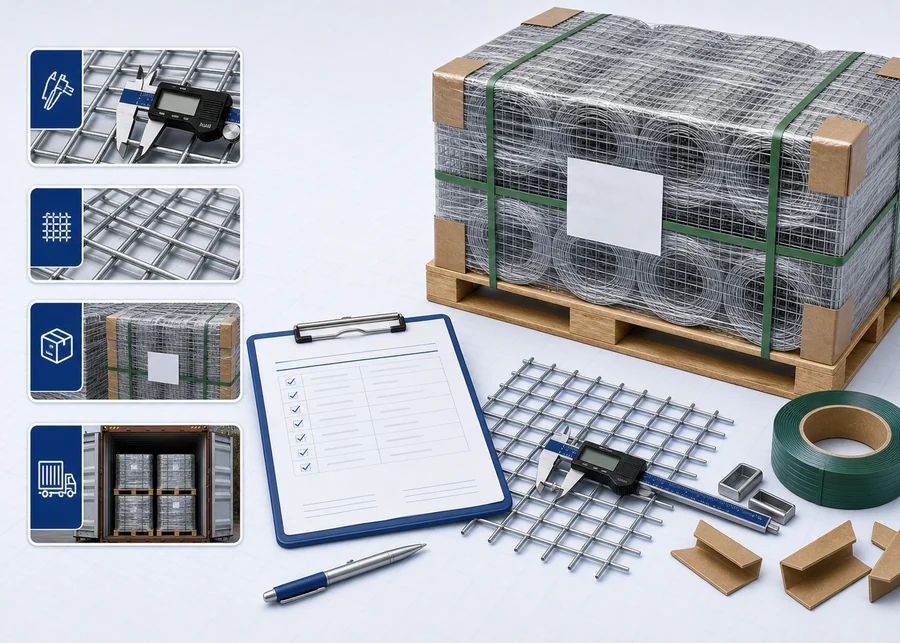
Useful QC footage may show wire diameter, mesh opening, panel size or roll width measurement, product labels, item ID cards, packing checks, certificate review and time-stamped or order-related inspection photos.
Buyers should read these records carefully. A measurement photo helps show what was checked at that moment, but it does not automatically prove every batch, every tolerance or every market requirement. If a buyer needs a formal test, a third-party inspection or a named certificate, that requirement should be confirmed before production or shipment.
For more detail on documentation and inspection photos, see ANJIA GROUP's wire mesh quality documentation system.
Packing and loading footage can prevent shipment surprises
Many wire mesh sourcing problems happen after production: missing accessories, unclear labels, mixed goods, damaged packing or loading plans that do not match the buyer's warehouse process.

Buyers can look for roll wrapping, panel stacking, palletizing, carton packing, product labels, accessory bags, posts, clips, fittings, loading sequence and protection during truck or container loading.
Packing footage should be read together with the packing list and final order file. If a buyer has a strict unloading plan or retail packing requirement, the detail should be discussed before production rather than after loading.
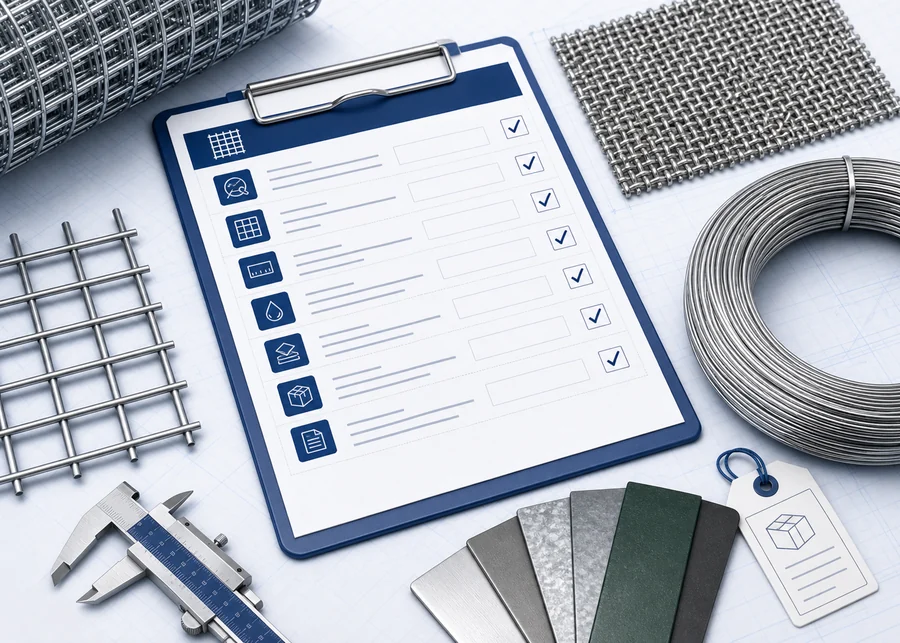
A practical buyer checklist for video review
The following checklist can help buyers turn factory videos into useful sourcing questions.
| What to check | Why it matters | Question to ask the supplier |
|---|---|---|
| Company and factory scene | Confirms the visible operating environment | Which facility or workshop is shown in this video? |
| Product process | Connects the video to the quoted product | Is this process used for my product type or only for another category? |
| QC action | Shows practical inspection behavior | What dimension, surface or packing point is being checked? |
| Labels and order reference | Connects video evidence to a real order | Can the photo or video be linked to my PI, item or batch? |
| Packing method | Reduces shipment and unloading risk | How will my rolls, panels, accessories or cartons be packed? |
| Loading proof | Supports final shipment review | Can loading photos or video be provided before shipment when required? |
This checklist is not a substitute for the buyer's own inspection standard. It helps buyers ask clearer questions and avoid treating a general factory video as complete order proof.
Video, samples and documents should work together
The strongest supplier review usually combines several types of evidence:
- Factory video references to understand the supplier's visible operation.
- Product samples to check material, finish, size and handling before bulk order.
- Specification confirmation to align mesh opening, wire diameter, panel size, roll width, coating and packing.
- Inspection photos or reports when the buyer needs measured records.
- Commercial and shipment documents when the order moves toward delivery.
- Live video call or third-party inspection when the project needs extra confidence.
For many buyers, the video review comes first because it is quick and low-friction. The deeper checks can then focus on the supplier and product category that already look relevant.
How ANJIA uses video references in buyer communication
ANJIA's video references are meant to support transparent sourcing communication. They are not designed to replace order-specific confirmation.
In normal buyer communication, a video can help explain what type of production or packing scene the buyer is asking about, why certain specification details need to be confirmed before quotation, which product photos or measurement photos may be useful, and whether the buyer should request samples, extra photos or third-party inspection.
If a buyer needs a specific video point, such as a wire diameter check, roll packing scene, accessory packing detail or loading photo, it is best to mention this early in the RFQ or before shipment review.
Buyers comparing categories can start from the products page and then send the target product, application and packing requirements through the inquiry page.
FAQ
Can factory videos prove a supplier is suitable for every order?
No. Factory videos are useful sourcing evidence, but they should be combined with samples, specifications, documents and order-specific checks when needed.
What should I ask after watching a factory video?
Ask which product process is shown, whether it applies to your quoted item, what QC point is being checked, and whether order-specific photos can be provided before shipment.
Are packing and loading videos important for wire mesh orders?
Yes. Wire mesh and fence products can be rolls, panels, baskets, posts or mixed accessories. Packing and loading footage helps buyers check labels, grouping, protection and shipment readiness.
Can I request a live video call?
A live video call can be discussed when a buyer needs a real-time walkthrough, product explanation or shipment check. The scope and timing should be confirmed with the sales team in advance.
What information should I send before asking for order-specific video proof?
Send the product name, mesh opening or size, wire diameter, finish, quantity, packing expectation, destination and any inspection photo points. Clear requirements make useful video or photo evidence easier to prepare.
Build supplier confidence with visible evidence
Factory video references help overseas buyers move from a general supplier search to a more specific sourcing conversation. They show the environment behind the quotation and give buyers a practical way to ask better production, QC, packing and shipment questions.
ANJIA GROUP uses factory videos, product photos, QC records and shipment evidence to make wire mesh and fencing sourcing more visible for international buyers. If you are comparing suppliers or preparing a trial order, review the video center first, then send your product and packing requirements for a more detailed discussion.
About ANJIA GROUP
ANJIA GROUP supplies wire mesh, fencing and related industrial products for global B2B buyers. Contact our team to discuss product specifications, matching accessories and export packing.
Discuss your sourcing requirements
Send your product requirements and any relevant drawings to our team.
Get a Free Business Quote Wire Mesh and Fence Products
 Wire Mesh Products
 Factory, QC & Packing Reference Pack
 Wire Mesh RFQ Checklist