
Square, Round or Peach Posts? A Fence Post RFQ Guide

Updated Sep 22, 2026
Match the post profile to the fence system. Then confirm dimensions, connections, quantities and packing before comparing quotations.
Quick Answer
Choose fence posts as part of a complete fence system. Square posts need outside dimensions, round posts need outside diameter, and peach-shaped posts need a matching profile and connector reference. For each option, confirm material, wall thickness, overall length, mounting method, finish and accessory quantities before comparing quotations.
Start with the panel, roll or gate drawing. Profile shape alone does not establish strength or compatibility.
Table of contents
1. Match the profile to the fence system
Begin with the fence the post must support: welded panels, double-wire panels, chain-link rolls or a gate. A familiar profile can still have a different hole pattern, cap or connector. Share a drawing or dimensioned sample when matching an existing installation.
| Profile | Application discussion | Dimensions to provide | Connection to confirm |
|---|---|---|---|
| Square | Panel systems with the specified clamp or bracket | Outside dimensions, wall thickness and overall length | Clamp, bracket, holes, cap and panel orientation; matching tube size alone is insufficient. |
| Round | Chain-link, rail or gate systems where the drawing calls for a round post | Outside diameter, wall thickness and overall length | Rails, clamps, tension components or gate fittings; do not substitute a nominal pipe label for actual outside diameter. |
| Peach-shaped | Panel systems using a matching shaped profile and connector | Profile drawing, width, depth and overall length | Matching clips, panel direction, cap and holes; request the specific profile drawing rather than a generic shape name. |
These are starting points for a supplier discussion, not a strength ranking. Final suitability depends on the complete system and project requirements.
See Fence Posts and Accessories for the product family.
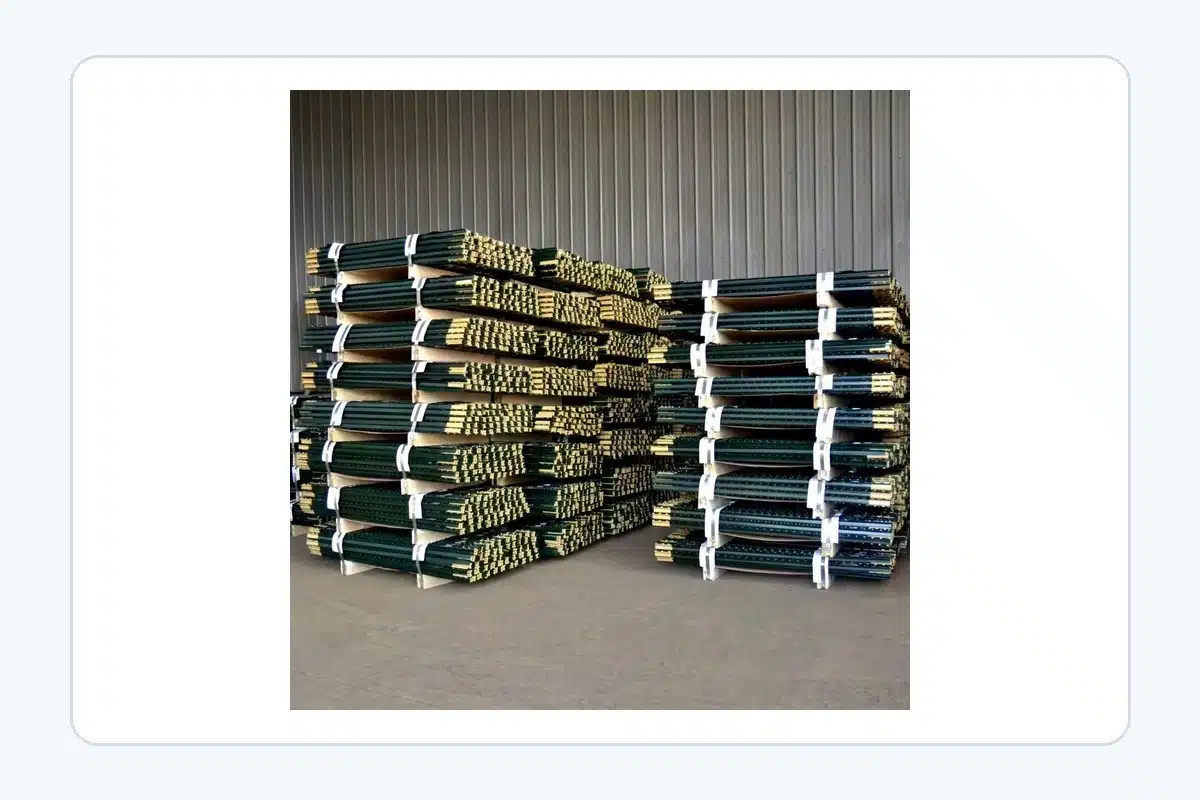
2. Confirm dimensions and matching fittings
Square posts: dimensions and fitting positions
Provide outside dimensions, overall length, any wall-thickness requirement, finish and cap. Attach the relevant clamp or bracket reference and the required hole positions. Two square posts can look alike while their fittings and panel orientation differ.
Round posts: diameter and system connections
Specify outside diameter and length together with wall thickness, finish and end details. Diameter alone does not identify the rails, clamps, tension components or gate fittings included in the supply. For a chain-link fence, list mesh and post requirements as separate lines.
Peach-shaped posts: profile and connector reference
Use a drawing or confirmed profile reference to show width, depth and connector details. When the post is paired with a welded panel, identify the matching clips and panel direction. The name “peach post” does not establish a universal connection standard.
Material, measurement units and coating basis
State the material and any grade required by the project specification. Keep the dimensions in one unit system and distinguish the steel wall thickness from the finished coated dimensions. If a tolerance or acceptance method matters, identify it in the drawing or specification instead of assuming that two suppliers use the same basis.
- Tube dimensions: identify outside width and depth for square posts, outside diameter for round posts, or a section drawing for shaped posts. Give dimensions in mm or inches with the unit written explicitly.
- Wall thickness: say whether the value is nominal or a required minimum, and how it is to be checked. Coating thickness and steel wall thickness are separate fields.
- Finish: distinguish the required metallic coating and any additional powder or PVC coating. Include color, exposure conditions and requested inspection documents without assuming a universal coating life.
- Fittings: list clamp dimensions, bolt size, cap fit and material/finish requirements. State whether fasteners, caps and spare fittings are included in the quoted price.
The Chain Link Fence Manufacturers Institute's post guide explains outside diameter as the measurement used for fence pipe. That reference applies to chain-link framework; it does not establish compatibility for a square-panel or peach-post system.
A specification example using ANJIA's published size options
ANJIA's Fence Posts and Accessories specification table lists square profiles including 40 × 40, 50 × 50 and 60 × 60 mm, and round outside diameters including 48, 60 and 76 mm. Its published length range is 1.5–3.0 m and wall-thickness range is 0.8–3.0 mm. These are catalog discussion ranges, not a statement that every combination is available or suitable for a project.
Illustrative RFQ record, not a customer order or structural recommendation: the example below shows how a buyer could describe a square post using those published ranges. The selected thickness and length still require supplier and project confirmation.
| Field | Example entry | Confirmation still needed |
|---|---|---|
| Outside profile | 60 × 60 mm square | Required tolerance and matching clamp dimensions |
| Wall thickness | 2.0 mm requested | Nominal or minimum steel thickness; acceptance method |
| Overall supplied length | 2.4 m = 2,400 mm | Visible fence height and mounting details are separate |
| Material and finish | To project specification | Material/grade, coating basis and color if required |
| Connection and mounting | Attach the approved system drawing | Hole layout, cap, clamp, bolts, embedment or base plate |
When comparing quotations, check that both suppliers used the same outside dimensions, steel thickness, length, mounting detail and accessory list. A price per post is not comparable if one offer excludes caps, clamps or a base plate.
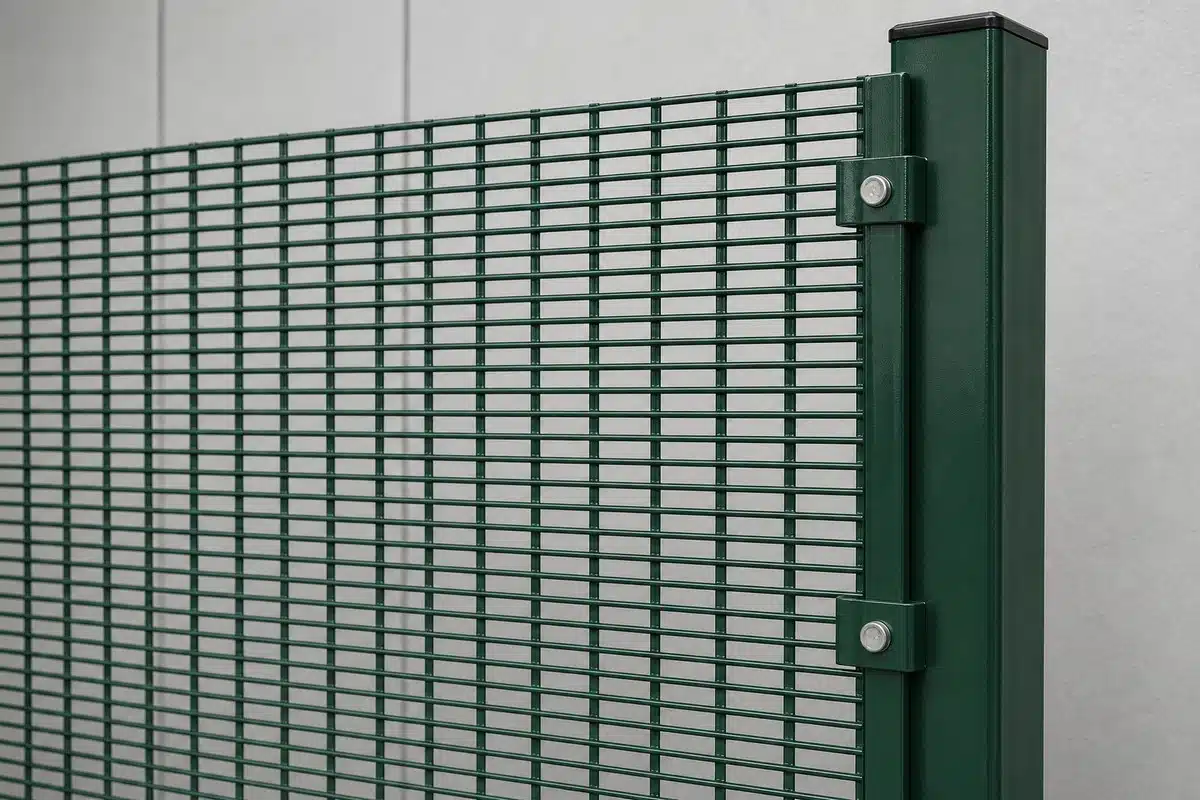

3. Define the complete supply scope
For 3D welded mesh panels or double-wire fence panels, describe the panel dimensions, wire and coating requirements alongside the post and fitting references.
Line posts
List regular post positions and their matching panels or rolls.
Corners and ends
Keep any different connection, length or fitting requirements separate.
Gate posts
Identify the gate reference and the fittings required by the project drawing.
Embedded or base-plate mounting
For an embedded post, give the overall supplied length and the project drawing that defines the exposed height and embedment. For a base-plate post, provide the plate dimensions and thickness, hole pattern, anchor requirements and connection detail. Confirm whether plates and anchors are supplied with the posts or sourced separately.
A change in mounting method can change the supply scope even when the visible fence height stays the same. Foundation capacity, anchor design and final installation details must be resolved through the responsible project process.
Keep posts, panels, clamps, caps and other accessories as separate order lines. Even when profiles are alike, lengths, holes and fittings may differ across these groups.
4. Prepare an initial quantity record
Use the Fence Panel & Post Spacing Calculator to organize initial quantities from your inputs. The RFQ Specification Builder helps collect product, packing and destination information.
If quotation or shipping comparisons use weight, distinguish kg per post, kg per metre, net product weight and gross packed weight. Do not compare a tube-only weight with a finished post that includes a cap or welded base plate. Ask the supplier to state the weighing basis; catalog dimensions alone do not establish an accepted unit weight.
For chain-link projects, CLFMI's technical resources include a line-post size and spacing guide. Use the applicable project requirements when reviewing post counts; a general panel-count calculator does not replace a load-based layout.
Tool results are planning references. Final spacing, foundations, corners, gates, terrain and installation requirements should follow the responsible project review. Supplied post length is not an installation-depth recommendation.
5. Make packing and receiving checks clear
Agree how posts and smaller fittings will be grouped and counted. Bundle labels should distinguish the product line, profile and length; accessory packs should identify their contents and matching post groups.
- Confirm bundle identification and quantities against each order line.
- Specify any separator protection, pallet handling or unloading limitations.
- Request useful packing photos, including connection accessories where needed.
- Check posts, caps and fittings separately when receiving a mixed shipment.
Ask for inspection photographs that show the measurement location and scale: profile dimensions, a suitable accessible wall-thickness check, overall length and hole layout. Match each photograph to the product line or drawing revision. A surface photograph alone cannot establish coating thickness or corrosion performance; request the agreed measurement record when those requirements form part of the order.
A pallet photograph alone cannot identify every component. Share the required records before packing is planned.
6. Send a quotation-ready inquiry
Ten checks before sending a fence-post RFQ
- Fence system and intended application.
- Square, round or peach-shaped profile.
- Outside dimensions, diameter or profile drawing.
- Overall length, material/grade where required, wall-thickness basis and units.
- Mounting method, base plate/anchors if applicable, top treatment and cap.
- Holes, panel direction and matching fittings.
- Surface finish, color and coating acceptance/document requirements.
- Separate post, panel and accessory quantities.
- Drawing or dimensioned sample reference.
- Packing, destination and requested documentation.
Copy and complete the fence-post RFQ template
Hello ANJIA,

Please review our fence-post requirements:
Fence system / application:
Post profile:
Outside dimensions / diameter / profile reference:
Overall supplied length and units:
Material / grade required by the project:
Wall thickness: nominal or minimum / measurement basis:
Mounting method: embedded / base plate / drawing reference:
Base plate / anchor requirements and supply scope:
Finish / color / coating acceptance basis / cap:
Hole pattern / clamp / connector reference:
Line / corner / end / gate post quantities:
Panels and accessories required / quantities per post group:
Net weight basis if required: kg/post or kg/m:
Drawing or sample reference and revision:
Packing and labeling requirements:
Destination:
Requested inspection documents / dimension and packing photos:

Please identify any details needed to prepare a comparable quotation.
Frequently asked questions
Is a square post always used with welded mesh panels?
No. Choose the profile and connection to match the fence system, drawing and fitting reference.
Can a round post be quoted from diameter alone?
No. Include length, wall thickness, finish, cap, fittings, quantity, packing and destination.
Does a peach-shaped post require a drawing?
A drawing or confirmed profile and connector reference helps identify the exact shape, holes and matching clips.
Can the calculator decide the final installation layout?
No. It provides an initial count from entered inputs. Final layout and structural requirements remain subject to project review.
Can ANJIA help prepare a complete inquiry?
Yes. Send the system, dimensions, fittings, finish, quantities, packing needs, destination and drawings so we can identify missing product information.
About ANJIA GROUP
ANJIA GROUP supplies wire mesh, fencing and related industrial products for global B2B buyers. Contact our team to discuss product specifications, matching accessories and export packing.
Discuss your fence-post requirements
Send the RFQ and connection drawings to our team.
Get a Free Business Quote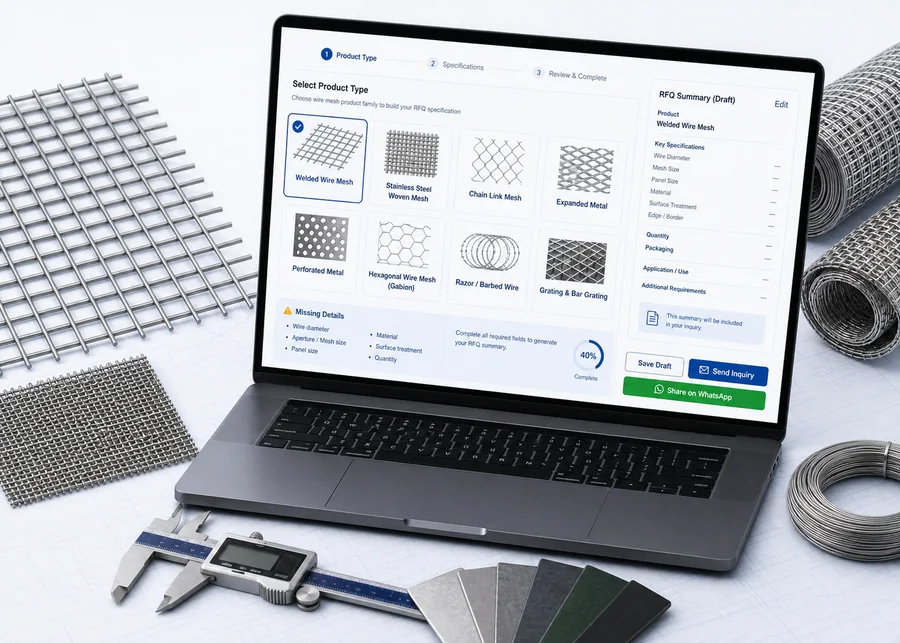 RFQ Specification Builder