
Frame Fence Panel Styles: Top Circle Fence and Triangle Top Fence Comparison
Updated Jun 24, 2026
A practical comparison of frame fence, top circle fence and triangle top fence panel styles for importers planning RFQ fields, accessories and packing.
Table of contents
When importers choose welded fence panels for residential, facility or light commercial projects, the top profile and panel structure can matter as much as wire diameter. A frame fence, top circle fence and triangle top fence may all use welded mesh, but they create different visual effects, packing needs, accessory requirements and RFQ questions.
This guide helps buyers compare these three panel styles before asking for a price. The goal is not to claim that one style is always stronger, safer or more suitable. The goal is to help importers define the style, dimensions, posts, accessories and packing method clearly enough for a quote-ready inquiry.
Use this article as a style-selection framework. Final drawings, approved samples, project requirements, inspection records and purchase documents should still control the order.
Start with the buyer decision, not the product name
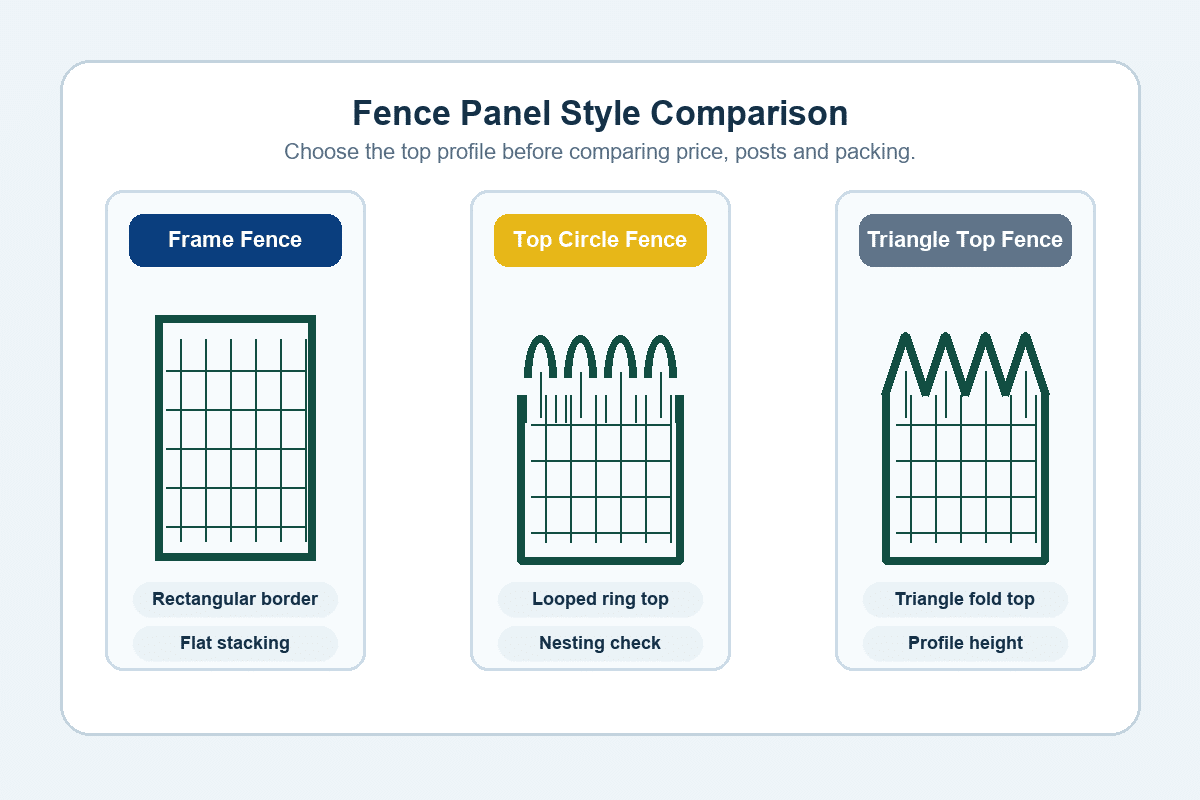
A buyer may ask for a decorative fence, garden fence, residential panel, facility fence or welded mesh fence. Those names do not always identify the panel style. Before comparing prices, the buyer should decide whether the project needs a framed panel, a looped top-circle design, a triangle-top folded design or a simpler straight-top panel.
Useful first questions include:
- Is the project driven mainly by appearance, rigidity, price, packing efficiency or replacement compatibility?
- Does the buyer already have a drawing, sample or local market reference?
- Should the top profile be straight, framed, top-circle looped or triangle-top folded?
- Does the fence need matching gates, posts and clips?
- Will the panels be packed flat, nested or mixed with other sizes?
- Are appearance photos or sample approval needed before mass production?
This avoids a common RFQ problem: two suppliers quote different styles while using similar words such as "decorative welded fence panel."
Frame fence: when the rectangular border matters
A frame fence uses a frame tube or formed border around the welded mesh panel. Buyers often choose it when they want a cleaner finished edge, a more structured appearance or a panel style that is easier to present in residential, garden or light commercial projects.
Frame fence RFQs should confirm:
- overall panel width and height;
- frame tube size and wall thickness if required;
- mesh opening and wire diameter;
- whether the frame is welded, formed or assembled by another method;
- post type and bracket or clip connection;
- coating route and color;
- packing method and label requirements.
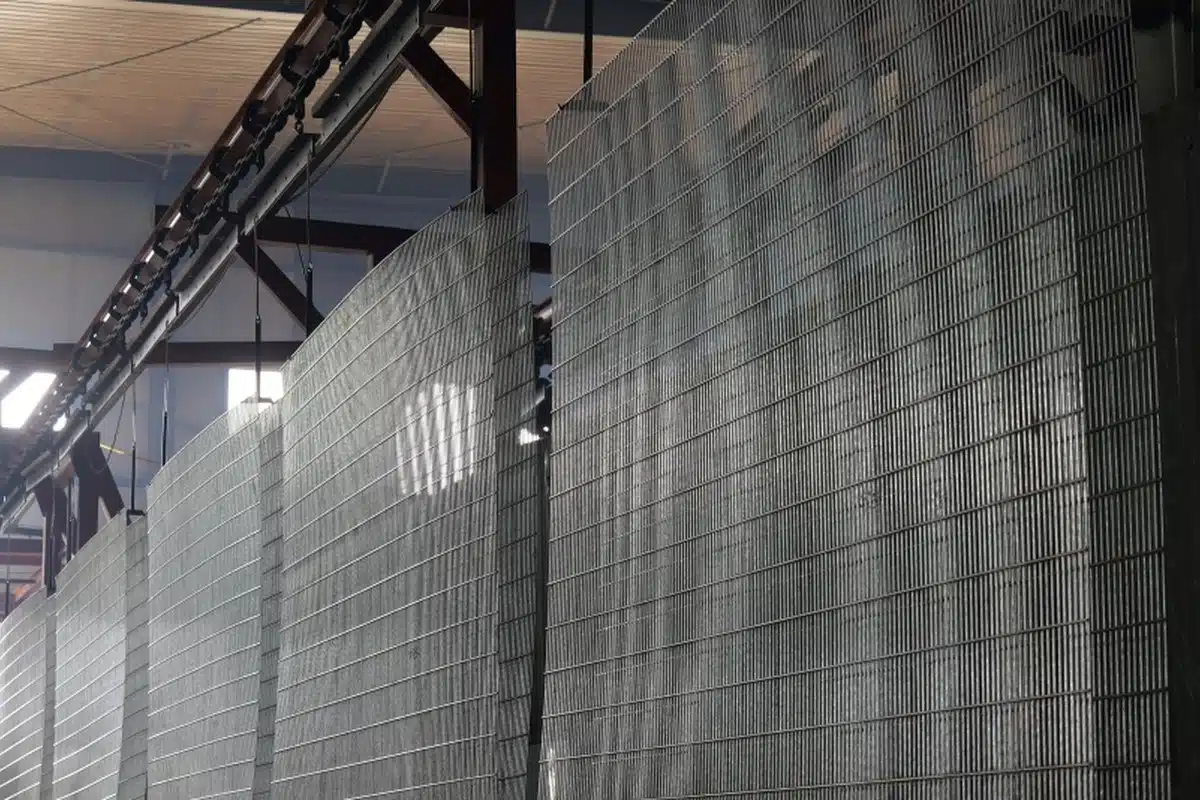
The frame can help the panel keep a defined edge during handling, but it also changes weight, packing stack and accessory planning. Buyers should not assume the frame dimension is standard across suppliers.
Top circle fence: when looped top rings are required
A top circle fence uses repeated round or oval loop shapes along the top of the welded mesh panel. The key feature is not one large arched panel top. It is the looped top detail formed by the top wires or vertical wires returning around the upper edge.
The buyer should confirm:
- loop shape, loop height and loop spacing;
- finished panel height including the looped top;
- whether the loop is round, oval or another agreed top-circle shape;
- mesh opening, wire diameter and top wire treatment;
- whether the looped top affects post cap, bracket or gate design;
- whether panels need special packing or alternating orientation.
Top circle fence should be specified with a drawing or reference photo when appearance matters. Small loop differences can look minor in a quotation but become visible after installation.
Triangle top fence: when triangular folded tops fit the project
A triangle top fence uses repeated triangular folded shapes along the top of the welded mesh panel. The key feature is a series of triangle-like top returns, not one large roof-shaped panel.
Useful RFQ fields include:
- finished panel height and triangle-top height;
- triangle angle, pitch or top profile drawing;
- mesh opening and wire diameter;
- whether the triangular fold is repeated across each panel or only at certain positions;
- compatible posts, clips and gate details;
- packing method for triangle-top panels.
Triangle top fence can create a stronger visual profile, but it should not be described as universally safer or code-compliant. Project requirements and local installation rules should still be checked separately.
Compare appearance, packing and accessory impact
The matrix below summarizes how importers can compare the three styles before supplier quotation.
| Buyer decision field | Frame fence | Top circle fence | Triangle top fence | What to confirm before quotation |
|---|---|---|---|---|
| Main style signal | Rectangular framed border | Repeated round or oval top loops | Repeated triangular folded top | Drawing, sample photo or approved style reference |
| Appearance fit | Clean and structured | Softer decorative look | Formal or angular look | Project preference and local market expectations |
| Key dimension | Frame tube and overall size | Loop height, loop shape and finished height | Triangle height, angle and finished height | Whether height includes the top profile |
| Accessory impact | Brackets or clips may attach to frame | Top loops may affect caps, gates or end panels | Triangle folds may affect caps, gates or end panels | Post, clip, gate and end-panel details |
| Packing impact | Usually easier flat stacking | May need nesting or orientation control | May need nesting or special arrangement | Bundle method, pallet plan and package labels |
| Sample need | Useful for frame size and connection | Important when loop appearance matters | Important when triangle profile matters | Sample photo, drawing or physical sample if needed |
| Claim boundary | Not automatically stronger for every site | Not automatically safer or softer for all uses | Not automatically compliant or more secure | Project approval and local requirements remain separate |
Plan posts, gates and accessories with the style
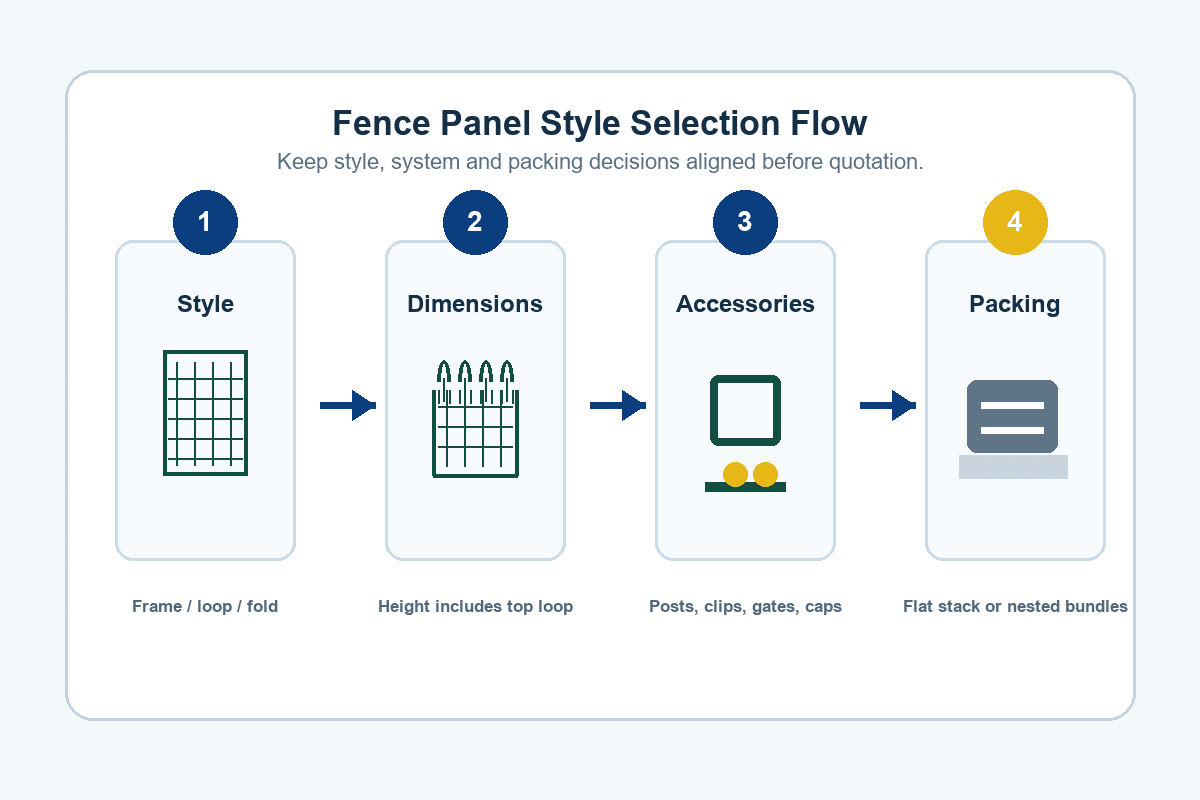
Panel style affects more than the front view. It can also affect the post system, gate design, clips, caps and spare parts. A buyer should avoid confirming only the panel style while leaving the connection method open.
Ask the supplier to confirm:
- post type and post size;
- bracket, clip or channel connection;
- number of clips or bolts per panel;
- gate frame style and whether the top profile should match the panels;
- corner, end and slope details;
- spare clips, caps and accessory pack quantities;
- whether accessories are packed with panels or listed separately.
If the order includes several styles or heights, separate them into different RFQ lines. This helps avoid mixed packing, unclear labels and receiving confusion.
Think about packing before confirming the final style
Packing should be part of style selection because framed panels, top-circle looped panels and triangle-top folded panels do not always stack the same way. A style that looks suitable for a project may require different bundle sizes, pallet arrangements or container planning.
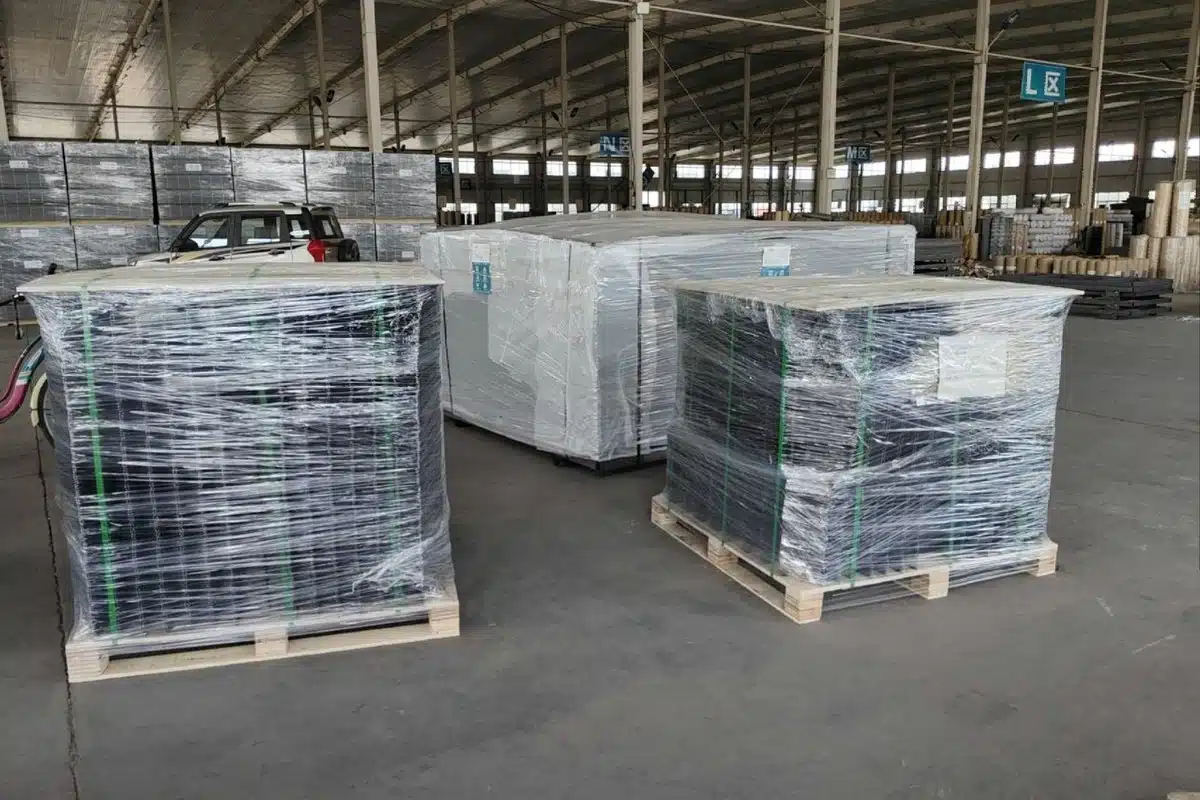
For packing and shipment planning, confirm:
- panels per bundle or pallet;
- whether panels can stack flat or need nesting;
- whether top-circle loops or triangle-top folds require alternating orientation;
- package dimensions and approximate package weight where available;
- label fields for style, size, color and package number;
- whether posts, gates and accessories are shipped together or separately;
- whether packing photos, label photos or loading photos are required.
Container loading should be treated as an estimate until panel dimensions, style profile and packing method are known. If several panel styles are mixed in one order, packing needs more careful line-item control.
Use samples and photos without overclaiming
Photos can help buyers review top shape, frame finish, weld appearance, color and packing condition. They are useful for communication and shipment release, especially when the buyer cannot visit the factory.

However, photos cannot prove future service life, local code compliance, installation quality or structural performance. If a project needs test data, material documents, coating reports or local approvals, those requirements should be written into the RFQ and confirmed separately.
Useful review records include:
- drawing version or profile sketch;
- sample photo showing top profile;
- frame or bend detail close-up;
- post and clip fit photo;
- coating appearance photo;
- packing and label photo before loading.
Common RFQ mistakes to avoid
Avoid these mistakes when ordering frame fence, top circle fence or triangle top fence:
- asking for "decorative fence panel" without naming the top style;
- forgetting whether panel height includes the top-circle loop or triangle-top fold;
- comparing a framed panel price with an unframed panel price;
- treating top circle and triangle top as only visual details while ignoring packing;
- leaving post, clip and gate compatibility to supplier assumption;
- mixing several styles in one order without line-item labels;
- requesting "best quality" without defining drawing, sample or inspection requirements;
- using photos as a substitute for project approval or local installation review.
For broader custom panel planning, the guide on custom fence panel development explains how drawings, samples and packing records can stay aligned before bulk production.
Frequently asked questions
Which style is best for residential fence projects?
There is no universal best style. Frame fence often gives a clean structured appearance, top circle fence gives a looped decorative top detail, and triangle top fence gives an angular repeated top detail. The right choice depends on project appearance, local market preference, budget, posts, gates and packing needs.
Does the top profile change the price?
It can. Frame tubes, top-circle loops and triangle-top folds can change material use, forming work, welding, finishing, packing and accessories. The buyer should compare quotations only after the style, dimensions and connection method are defined.
Can different fence panel styles be mixed in one order?
Yes, but each style should have its own specification line, quantity, color, packing requirement and label rule. Mixed styles can create receiving problems if the packing list and package labels are not clear.
Should I request a sample?
A sample or sample photo is useful when the top profile, frame dimension, color or post connection must match a buyer reference. For new products or private-label orders, sample approval before mass production can reduce misunderstandings.
Are these styles suitable for high-security projects?
These styles can be used in many residential, facility or light commercial projects, but high-security suitability depends on project requirements, design, installation and local rules. Do not treat the style name alone as a security rating or compliance claim.
Prepare a style-ready fence panel RFQ
Before asking for a final quotation, prepare a clear RFQ list for the chosen style, panel height, top profile, frame or wire details, posts, clips, gates, coating, packing, labels and proof needs. Mark uncertain fields clearly so the supplier can quote with stated assumptions instead of guessing.
For order-specific support, send your drawing, sample photo, style reference, panel schedule or packing request through the ANJIA inquiry page. The team can help review which frame fence, top circle fence or triangle top fence fields need confirmation before quotation, sample approval or production planning.
About ANJIA GROUP
ANJIA GROUP supplies wire mesh, fencing and related industrial products for global B2B buyers. Contact our team to discuss product specifications, matching accessories and export packing.
Discuss your sourcing requirements
Send your product requirements and any relevant drawings to our team.
Get a Free Business Quote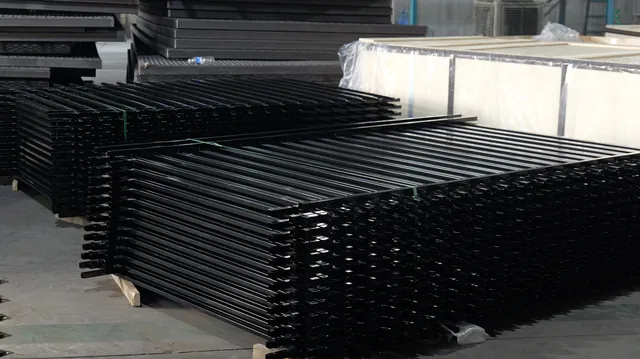 Frame Fence
 Top Circle Fence
 Wire Mesh RFQ Specification Builder
 Buyer Tools Hub