
Custom Welded Wire Mesh Development: From Drawings or Samples to Quote-Ready Specs
Updated Jul 12, 2026
A practical B2B guide for turning custom welded wire mesh drawings, samples or application briefs into quote-ready specifications.
Table of contents
Not every welded mesh order fits a standard catalog item. Importers, project buyers and distributors may need welded wire mesh in a custom panel size, roll width, mesh opening, wire diameter, edge format, coating or packing style.
Custom development is easier when the buyer turns the idea into quote-ready specifications before asking for price. The starting point may be a technical drawing, a physical sample or a written application brief. From there, the buyer and supplier can clarify the product format, dimensions, wire and opening details, surface treatment, sample approval and packing requirements.
This guide explains which information to prepare before requesting a quotation for custom wire mesh products. It is written for B2B buyers who want a practical specification checklist, not a design guarantee.

Start with a drawing, sample or application brief
A custom welded mesh inquiry usually starts from one of three inputs. Each input can work, but each one needs different follow-up questions.
Technical drawing. A drawing gives the clearest starting point when it includes product format, length, width, wire diameter, mesh opening, edge finish, coating and packing notes. PDF drawings are common. CAD files can also help if the buyer has engineering support.
Physical sample. A sample is useful when the buyer wants to match an existing mesh item from an old supplier, a local market product or a previous order. The supplier can measure wire diameter, opening, edge finish and coating condition, then return the readings for buyer confirmation.
Application brief. Some buyers know the target use but not the exact mesh specification. For example, a distributor may want welded mesh for a light enclosure, machine guard, shelving panel or fence accessory. In this case, the buyer should describe the use, size limit, handling method, environment and packing expectation so the supplier can discuss a starting specification.
The goal is not to ask the supplier to guess the final design. The goal is to create enough shared information for quotation, sample review and production discussion.
Decide panel or roll format first
The first product decision is whether the welded mesh should be supplied as panels or rolls. This affects production, packing, transport and receiving.
Panels are flat sheets cut to agreed dimensions. They are often used for fence panels, guards, shelving, cages, display racks, construction mesh and framed components. Panel inquiries should define width, length, wire diameter, opening, edge condition, flatness expectation and packing method.
Rolls are continuous mesh lengths wound for shipment. They are often used when the buyer cuts the mesh during installation or repacking. Roll inquiries should define roll width, roll length, core requirement, roll diameter limit if applicable, wrapping method and carton or pallet plan.
If the buyer is unsure which format is better, discuss market use and logistics first. A product that looks simple in one format may become difficult to pack, load or receive in another.
Clarify wire diameter and mesh opening
Wire diameter and mesh opening are the two most important dimensions in a welded mesh specification. They should be written separately and measured consistently.
Buyers should confirm:
- wire diameter for the main mesh wires;
- whether an edge wire or frame wire is different from the mesh wire;
- opening size in both directions;
- whether opening is measured as clear aperture or center-to-center pitch;
- whether the opening is square, rectangular or a custom pattern;
- whether tolerance requirements need to be stated in the order documents.
Do not rely only on a photo or a casual description such as "same as sample". A supplier can use photos for reference, but the quotation should be based on measurable details. If the buyer sends a sample, the supplier's measurements should be confirmed in writing before sample production or bulk order discussion.

Define edge finish and handling details
Edge finish affects installation, safety, packing and the buyer's downstream processing. It should be clarified before quotation because it can change cutting, welding, labor and packing requirements.
Common discussion points include:
- flush cut or trimmed edges;
- overhanging wire on one or more sides;
- bent or returned edges when required;
- reinforced side wire or frame wire;
- smooth handling requirements for retail or assembly environments;
- whether top, bottom, left and right edges are different.
For fence or framed applications, the edge may need to match posts, clips, frames or other accessories. For industrial guards or shelving, the edge may need to suit bending, welding or assembly at the buyer's site. If edge treatment is important, include a simple sketch or photo reference.
Select surface treatment by environment
Surface treatment should match the use environment, buyer market expectation and budget. For custom welded mesh, common options may include galvanized wire, galvanized after welding, PVC coating, powder coating or other order-specific finishes.
Buyers should avoid asking only for "anti-rust" or "outdoor quality". Instead, define:
- indoor or outdoor use;
- dry, wet, coastal, chemical or agricultural environment;
- expected color or RAL reference for coated items;
- whether coating appearance at weld points matters;
- required document or test reference, if any;
- whether the surface treatment must match a previous sample.
The correct coating choice depends on product use and confirmed order requirements. Do not assume one coating method fits every custom mesh product.
Use samples as approval references
For custom welded mesh, a sample is not just a sales display. It can become the reference standard for bulk production, packing and incoming inspection.
A practical sample process may include:
- initial specification confirmation from drawing, sample or application brief;
- supplier measurement or feasibility review;
- sample production or existing sample selection where applicable;
- buyer review of dimensions, opening, edge, coating and workmanship;
- written approval or revision request;
- retention of sample photos and agreed measurement records.
If the buyer needs a sample, the sample requirement should be discussed before order timing is fixed. Sample availability, sample lead time and sample cost depend on specification complexity, material, tooling, coating and production schedule.

Confirm packing and labeling before production
Custom product development often includes custom packing. This is especially important for distributors, private-label programs and buyers who need SKU control at receiving.
Packing details may include:
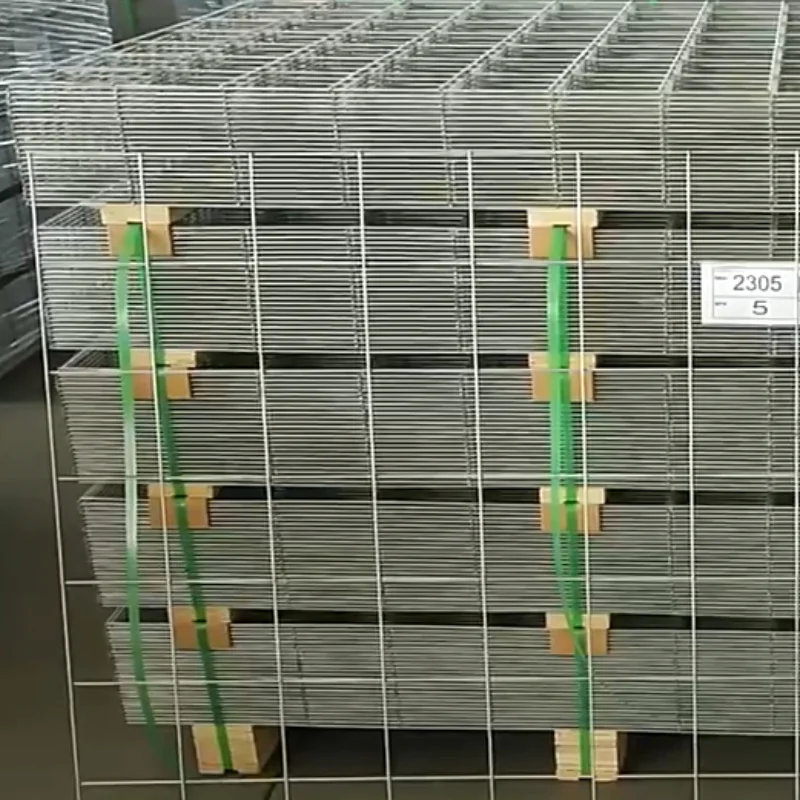
- panel stack quantity per pallet;
- roll wrapping, core, carton or bundle method;
- separator, corner protection or pallet protection when needed;
- label content and label position;
- buyer item code, SKU, barcode or shipping mark;
- mixed-product separation for container loading;
- photo requirements before shipment.
If a buyer needs private labels, carton marks or market-specific wording, the label artwork should be approved before production or packing starts. Customer brand names and private product codes should not be reused in public materials without permission.

Control drawing, sample and packing changes
Custom welded mesh development should have one controlled reference before bulk production starts. The reference may be a drawing, a measured sample, a revised specification sheet or an approved pre-production sample. If several versions are discussed by email, the buyer and supplier should mark which version is valid for quotation, sample approval and packing preparation.
Weight can help catch misunderstandings in custom work. A target panel weight, roll weight or total shipment weight can be checked against wire diameter, aperture, finished size, edge finish, coating and packing method. A large difference does not automatically mean the product is wrong, but it is a useful signal that the drawing, sample or quotation basis should be reviewed before production.
| Development record | Buyer decision | What to confirm before approval |
|---|---|---|
| Drawing or sample version | Which file or sample controls quotation and production. | Use version names or dates; do not rely on old photos after a revision. |
| Specification fields | Wire diameter, opening, finished size, edge, coating and tolerance notes. | Confirm measurable fields before sample approval or repeat order. |
| Weight and packing basis | Expected panel/roll weight, units per pallet, labels and carton or pallet method. | Use weight as a cross-check, not as the only acceptance method. |
| Change approval | Which changes require buyer confirmation before bulk production. | Record accepted changes in writing and keep them with the order file. |
This change-control approach does not turn ANJIA into the project designer. It helps both sides keep quotation, sample review, production and packing aligned with the buyer's confirmed specification.
Quote-ready specification checklist
| Specification item | What to clarify | Buyer note |
|---|---|---|
| Starting input | Drawing, sample or application brief | State which input is authoritative |
| Product format | Panel, roll or special component | Format affects packing and loading |
| Dimensions | Width, length, roll length or finished size | Use the same unit across documents |
| Wire diameter | Main wire and edge wire if different | Confirm by measurement when using samples |
| Mesh opening | Square, rectangular or custom pattern | Clarify pitch vs. clear aperture |
| Edge finish | Flush cut, overhang, bent edge or reinforced edge | Define each side if different |
| Surface treatment | Galvanized, coated or other agreed finish | Match environment and market expectation |
| Color | RAL or buyer reference if coated | Confirm sample or color card when needed |
| Tolerance | Dimension, wire and opening tolerance if required | Put critical tolerances in writing |
| Sample approval | Sample quantity, review points and approval method | Keep photos or signed reference records |
| Packing | Pallet, roll, carton, label and protection method | Confirm before production or packing |
| Documents | Certificates, test references or inspection records when applicable | Do not assume every document applies to every order |
FAQ
Can custom welded mesh be developed from a competitor sample?
Yes, a physical sample can help start the discussion. The supplier should measure the sample and confirm the readings with the buyer before quotation or sample production. A sample photo alone is usually not enough for accurate specification matching.
What is the MOQ for custom welded wire mesh?
MOQ depends on the product format, wire diameter, mesh opening, coating, setup requirement and packing method. A small change to panel size may be easier to discuss than a completely non-standard opening or special coating. Confirm MOQ after the specification is reviewed.
How long does sample development take?
Sample timing depends on material availability, production schedule, coating requirement and revision complexity. A simple sample may be faster than a custom coated or non-standard mesh sample. Buyers with project deadlines should discuss sample timing before committing to bulk order dates.
What is the difference between pitch and aperture?
Pitch is measured from wire center to wire center. Aperture is the clear opening between adjacent wires. The difference matters because one includes the wire diameter and the other does not. State the measurement method in the RFQ.
Can ANJIA discuss custom welded mesh from drawings or samples?
Yes. ANJIA GROUP can review drawings, samples, application descriptions and packing requirements for welded mesh orders. The final quotation, sample plan and production discussion depend on confirmed specifications, available materials and order requirements. Buyers can send an inquiry with drawings, sample photos or application notes.
Move from idea to RFQ
Custom welded mesh development works best when the buyer treats specifications as a shared checklist. The more clearly the buyer defines format, dimensions, wire, opening, edge, coating, sample approval and packing, the easier it is for the supplier to quote, prepare a sample and discuss production.
If you are developing a new welded mesh item, prepare your drawing, sample photos, target use, packing expectation and receiving requirements before sending the RFQ. ANJIA can review the information and help identify which details need to be confirmed before quotation.
About ANJIA GROUP
ANJIA GROUP supplies wire mesh, fencing and related industrial products for global B2B buyers. Contact our team to discuss product specifications, matching accessories and export packing.
Discuss your sourcing requirements
Send your product requirements and any relevant drawings to our team.
Get a Free Business Quote Welded Wire Mesh
 Welded Wire Mesh Panel
 Wire Mesh RFQ Specification Builder
 Buyer Tools Hub