
Razor Wire and Barbed Wire Manufacturer Checklist: What Buyers Should Verify

Updated Jun 23, 2026
A practical checklist for comparing material certificates, zinc coating, blade profile, assembly quality, packing and pre-shipment proof before bulk sourcing.
Table of contents
Sourcing razor wire and barbed wire from China can deliver significant cost advantages, but procurement teams often face the same practical problem: the approved sample looks acceptable, while the container shipment may show different blade thickness, uneven zinc coating, weak tensile strength or poor packing. The gap between quotation and delivery is where projects lose time, money and credibility.
This guide distills the verification steps that experienced buyers use when evaluating a razor wire and barbed wire manufacturer, from material certificates to coating integrity, blade geometry, assembly quality, packing standards and pre-shipment inspection. Whether the application is an industrial perimeter, logistics yard, infrastructure site or commercial compound, the checklist below helps buyers compare suppliers more clearly before placing a bulk order.
1. Understand the Product: Razor Wire vs. Barbed Wire
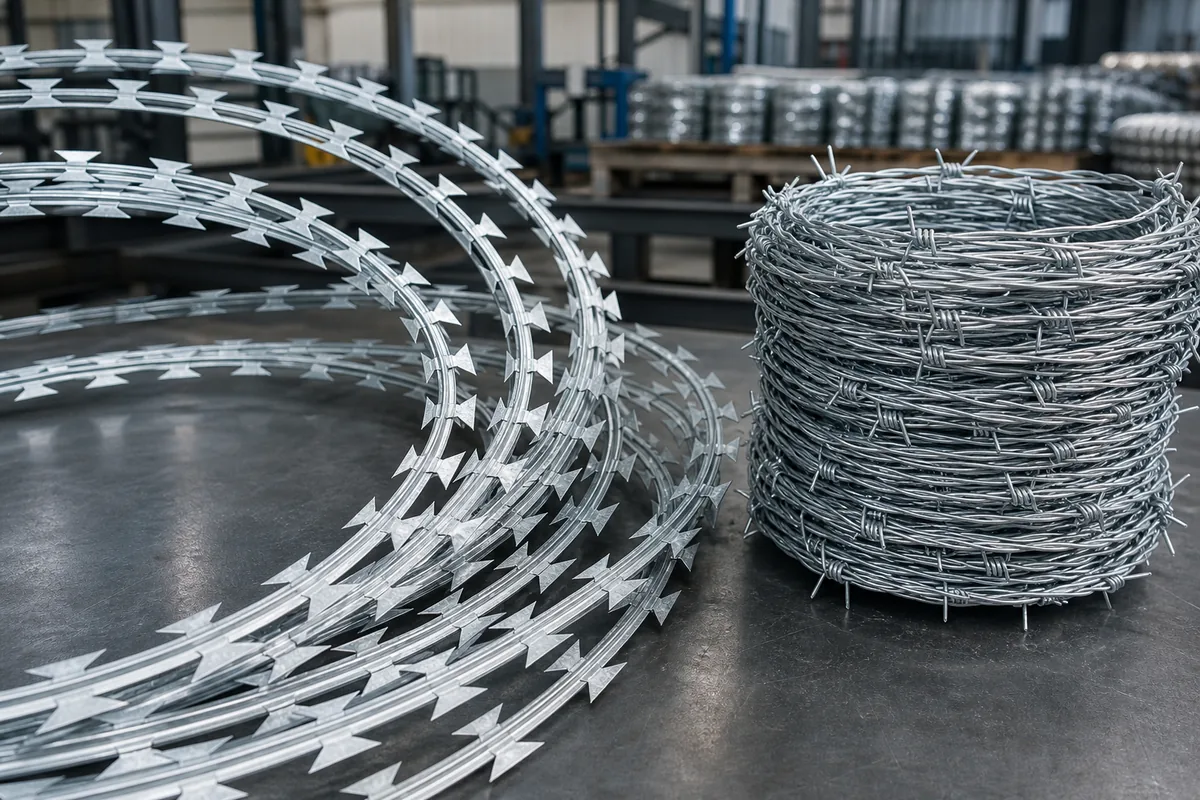
Before auditing a supplier, buyers must be precise about what they are ordering. Razor wire, also called concertina wire or barbed tape, and traditional barbed wire are different products with different manufacturing processes, performance characteristics and price points.
Razor wire is manufactured by punching blades from hot-dipped galvanized or stainless steel sheet, then crimping those blades around a high-tension core wire. The result is a continuous blade tape designed for stronger perimeter-control use than traditional barbed wire. Standard blade types include BTO-10, BTO-18, BTO-22, BTO-30, CBT-60 and CBT-65, each with distinct blade length, spacing and geometry.
Barbed wire is produced by twisting two or more strands of galvanized wire together and inserting barbs at regular intervals, typically 3 to 6 inches apart. It is simpler to manufacture, lighter per meter and usually less expensive per ton.
The distinction matters because manufacturing equipment, quality control protocols and testing methods differ between the two. A factory that excels at barbed wire production may subcontract razor wire, or vice versa, which introduces quality risk into a bulk fencing order.
2. Verify Core Material Specifications
2.1 Blade Steel for Razor Wire
The blade material affects corrosion resistance, profile consistency and service life. Buyers should request the following documents and measurements:
- Material grade certificate confirming hot-dipped galvanized steel sheet or stainless steel, such as SS304 or SS316.
- Blade thickness: common specification is around 0.5 mm with practical tolerance agreed before production.
- Core wire diameter: many standard razor wire products use around 2.5 mm high-tension galvanized core wire.
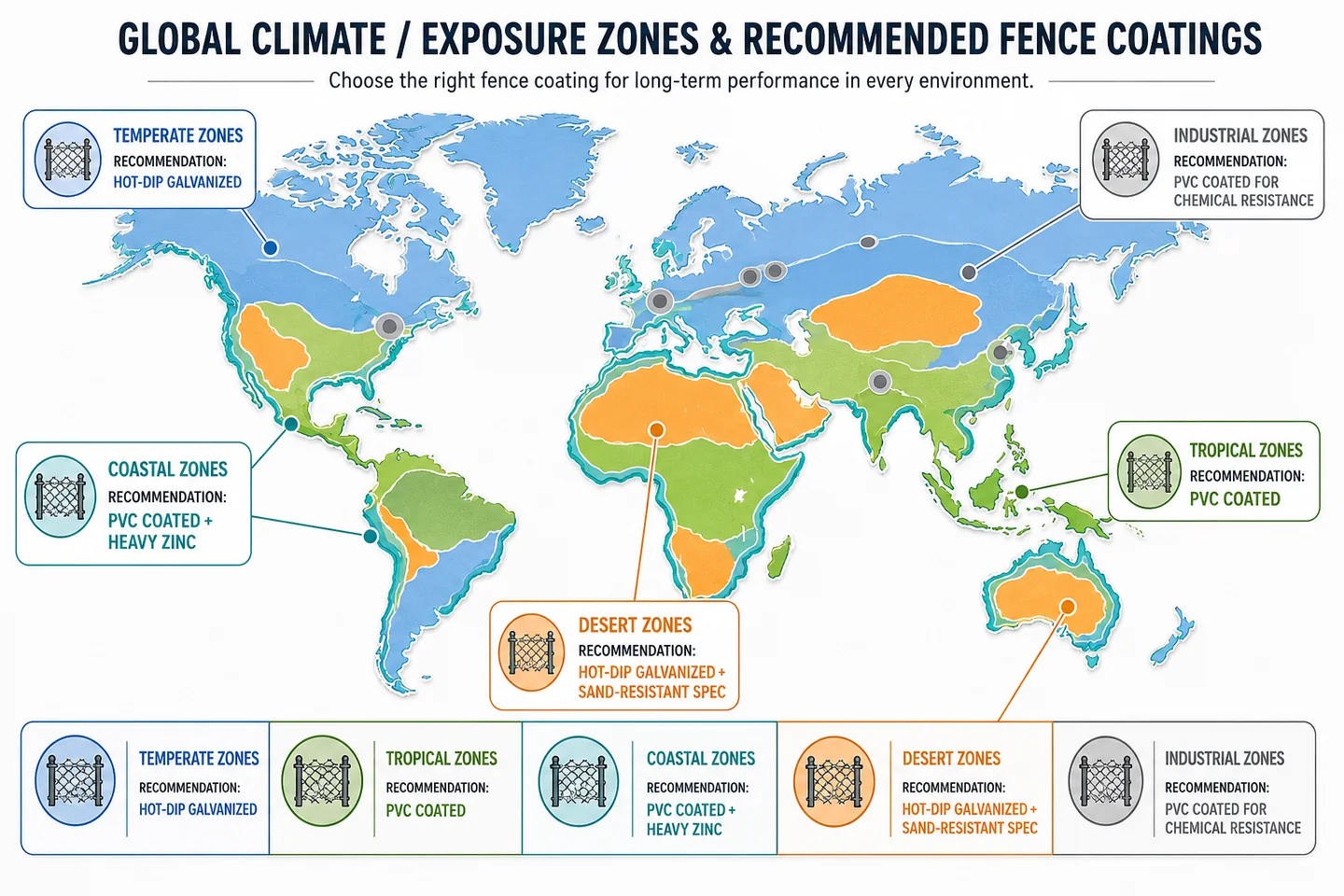
For high-corrosion environments, such as coastal, tropical or chemical-adjacent sites, stainless steel razor wire in SS304 or SS316 can be worth the premium. SS316 offers better resistance to chloride-induced pitting.
2.2 Wire Strand for Barbed Wire
For barbed wire, the critical specifications are:
- Wire diameter: commonly 2.0 mm to 2.8 mm, depending on strength and project budget.
- Barb spacing: common options include 3", 4", 5" and 6". Closer spacing increases material use and cost per roll.
- Strand type: single-twist is faster to produce; double-twist or reverse twist provides stronger torsional stability and helps prevent barb slippage.
2.3 Zinc Coating: The Quality Factor Buyers Should Not Ignore
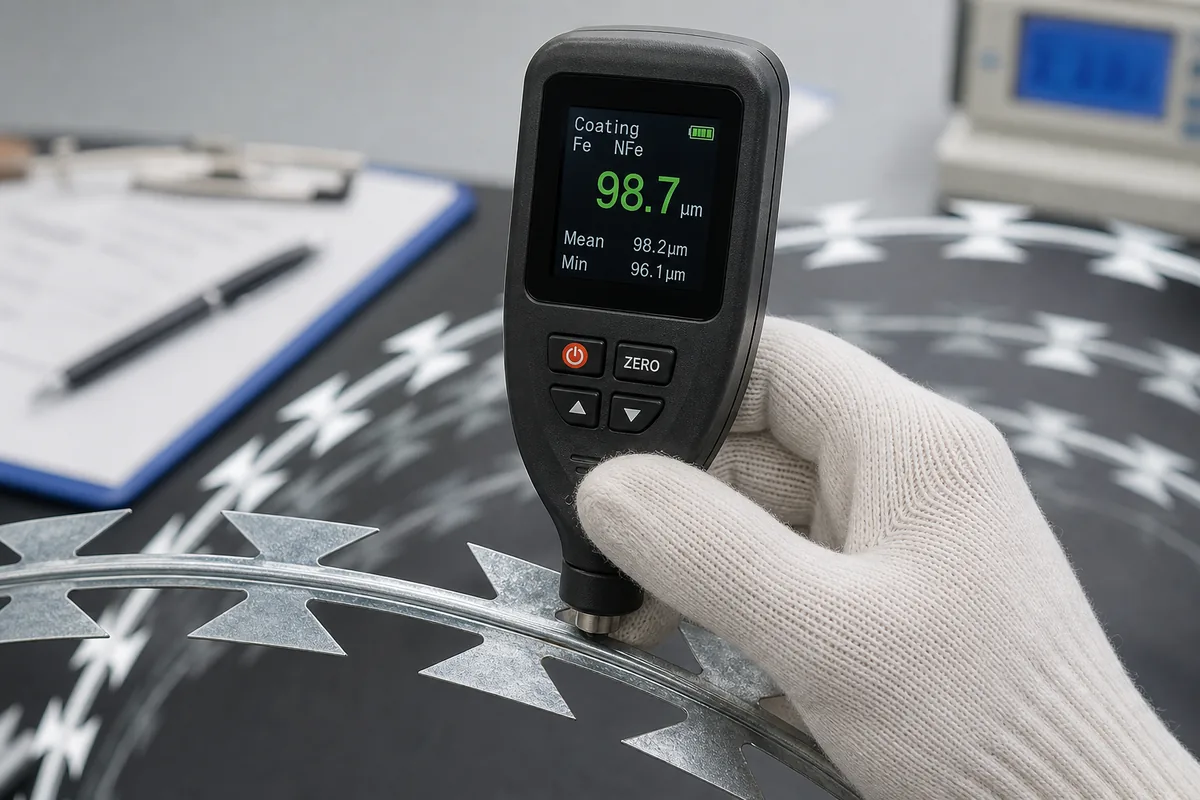
For both products, galvanization quality is one of the most important determinants of service life. Buyers should verify coating weight, coating uniformity and coating adhesion before approving a large order.
| Parameter | Minimum Purchasing Check | Stronger Project Standard |
|---|---|---|
| Zinc coating weight for barbed wire | Ask supplier to declare g/m2 value | Request test report or third-party check |
| Zinc coating on razor wire sheet | Confirm coating class before order | Higher coating for outdoor and humid use |
| Coating uniformity | Visual and bend checks | Preece test or factory inspection report |
| Adhesion | No flaking during practical handling | No cracking during agreed bend test |
Hot-dipped galvanized products usually outperform electro-galvanized equivalents in outdoor environments. Electro-galvanizing may be acceptable for some indoor or temporary uses, but it should not be quoted as equal to hot-dipped galvanized material for long-term perimeter installations.
3. Request and Verify Quality Documents
Reliable manufacturers should be willing to provide documents that match the legal entity, factory and product scope being quoted. For export orders, buyers may request:
- ISO 9001:2015 quality management certificate.
- Product test reports or batch inspection records.
- Material certificates for blade steel, core wire and barbed wire strand.
- Third-party factory audit reports when available.
- Packing photos, loading photos and shipment documents for previous comparable orders.
A manufacturer that readily provides verifiable documents is demonstrating transparency. Hesitation, expired certificates or certificates issued to a different legal entity are all reasons to investigate further before paying a deposit.
4. Inspect Blade Geometry and Assembly
Razor wire quality depends not only on material, but also on blade profile and crimping precision.
Blade profile check
- BTO-22 blades should have consistent blade length and spacing according to the approved sample.
- CBT-60 or CBT-65 profiles are larger blade types normally selected for controlled-access industrial or infrastructure perimeter projects.
- Blade edges should be consistent. Inspection should be done under safe handling conditions with proper gloves and tools.
Crimp integrity
- The blade tape must be firmly crimped around the core wire with no obvious slippage.
- Check that crimp spacing is consistent across the coil.
- Ask for close-up production photos before shipment when the order value is high.
Concertina coil formation
- Adjacent coils should be clipped together with galvanized or stainless clips according to the specification.
- Coil diameter should match the purchase order, such as 450 mm, 500 mm, 700 mm or 960 mm.
- Ask the supplier to confirm the number of clips per coil and the compressed packing diameter.
5. Evaluate Packaging and Logistics Standards
Packaging is often overlooked during quotation, yet it directly affects product condition on arrival. Buyers should verify:
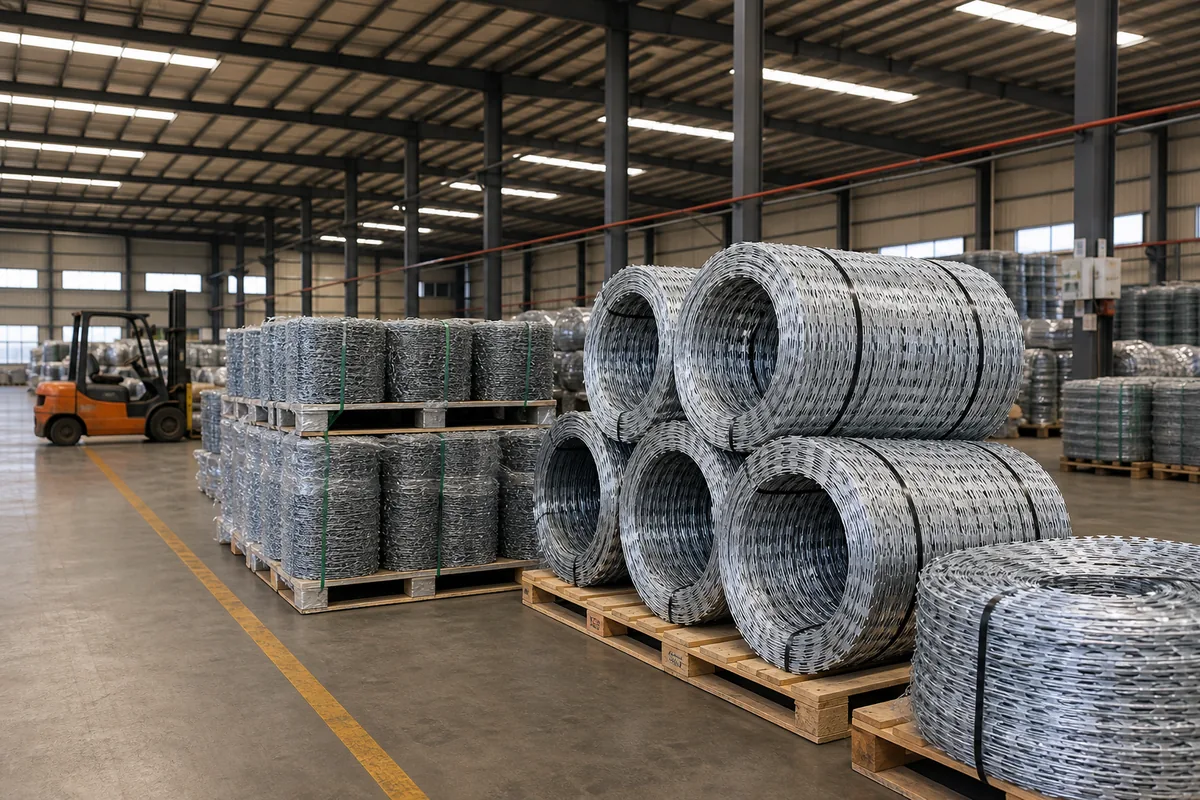
- Inner wrapping: each coil or roll should be protected against moisture and zinc oxidation during sea freight.
- Outer protection: woven cloth, PVC strip wrapping or similar protection reduces handling damage.
- Pallet specification: export-standard wooden or steel pallets with proper strapping and corner protection.
- Container loading plan: a professional supplier should confirm quantity per 20-foot or 40-foot container and show how goods will be loaded.
For bulk orders shipped from China, a clear loading plan helps avoid container overweight risk, crushed coils and difficult unloading at destination.
6. Request Samples and Arrange Pre-Shipment Checks
The most practical verification step is ordering pre-production samples and comparing them with bulk production before shipment. A strong sample and inspection process may include:
| Test | Method | Purpose |
|---|---|---|
| Tensile strength | Supplier or third-party testing | Confirm core wire and strand strength |
| Zinc coating | Coating thickness or coating weight test | Confirm corrosion protection level |
| Coating adhesion | Bend or handling test | Check for flaking or cracking |
| Blade geometry | Caliper measurement | Confirm blade length, spacing and thickness |
| Packing check | Photos or on-site inspection | Confirm wrapping, labels, pallets and loading |
A reliable wire mesh manufacturer should produce samples from the same production line and material standard intended for the full order. For larger orders, buyers can request random sampling from completed production before container loading.
7. Assess Manufacturer Capability Beyond Product Price
For recurring procurement programs, buyers need a manufacturing partner rather than a one-time low-price supplier. Useful capability indicators include:
Production capacity. Ask whether the factory has dedicated machines for barbed wire and razor wire, and whether current capacity can support your requested lead time.
Custom capability. The ability to produce non-standard blade profiles, coil diameters, roll lengths or private-label packing indicates stronger tooling and engineering support.
Engineering support. Mill certificates, packing diagrams, inspection photos and technical consultation help buyers prepare accurate RFQ documents and reduce misunderstanding.
Lead time discipline. For standard specifications, realistic lead times are usually better than extremely short promises. A supplier that promises a large custom order too quickly may not be accounting for raw material, packing or inspection time.
Comparison: Key Verification Criteria at a Glance
| Verification Area | What to Check | Risk Signal |
|---|---|---|
| Material certificate | Blade steel and core wire documents | No certificate or mismatched company name |
| Zinc coating | Coating weight or thickness | Electro-galvanized quoted as hot-dipped |
| Blade geometry | Uniform blade length, spacing and thickness | Inconsistent profile or worn punching die |
| Crimp integrity | Blade tape locked to core wire | Blade tape rotates or slides |
| Quality documents | ISO, test reports, audit records | Expired documents or refusal to share |
| Packing | Inner wrap, outer protection, pallets | Loose packing or no moisture protection |
| Samples | Batch-representative samples | Supplier only sends a polished sample |
| Lead time | Realistic production schedule | Unrealistic promises for large custom orders |
Frequently Asked Questions
What is the difference between BTO-22 and CBT-65 razor wire?
BTO-22 uses a smaller blade profile and is commonly selected for general commercial or industrial perimeter projects. CBT-65 uses a larger blade profile and is normally considered when a project requires a more prominent perimeter barrier. Buyers should confirm local project rules and safety requirements before final specification.
How can I verify zinc coating quality without laboratory equipment?
Two simple checks are useful at the buyer side. First, inspect the surface visually: hot-dipped galvanized material often shows a more visible zinc texture, while electro-galvanized material may look smoother and thinner. Second, request bend or handling checks from the supplier. For formal acceptance, use a coating thickness test or third-party inspection.
What is the typical MOQ for razor wire and barbed wire from a China factory?
MOQ depends on specification, packing and whether the order is a single item or mixed container. Barbed wire is often quoted by tons, while razor wire may be quoted by coil quantity. For mixed container orders, factories may support lower per-item quantities if the total loading plan is efficient.
Should I choose stainless steel razor wire over galvanized material?
For coastal, tropical or chemical-adjacent projects, stainless steel can provide longer service life than standard galvanized material. SS304 is common, while SS316 is stronger against chloride-rich environments. The decision should compare project life, maintenance cost and budget.
How do I ensure the shipment matches the approved sample?
Include a sample reference clause in the purchase order. It should state that bulk production must match the approved sample in material grade, blade profile, core wire, coating and packing. Pair this with pre-shipment photos or third-party inspection before balance payment and container loading.
Conclusion: Build Procurement on Verification, Not Promises
The razor wire and barbed wire market rewards buyers who verify. Factory-direct sourcing from China can offer real cost advantages, but only when paired with clear specification, material checks, coating verification, sample comparison, packing confirmation and pre-shipment inspection.
Buyers seeking a wire mesh and fencing manufacturer with export packing experience, specification support and factory-direct quotation can send product type, blade profile, coil diameter, wire diameter, coating, quantity, packing request and destination port to ANJIA GROUP for review.
About ANJIA GROUP
ANJIA GROUP supplies wire mesh, fencing and related industrial products for global B2B buyers. Contact our team to discuss product specifications, matching accessories and export packing.
Discuss your sourcing requirements
Send your product requirements and any relevant drawings to our team.
Get a Free Business Quote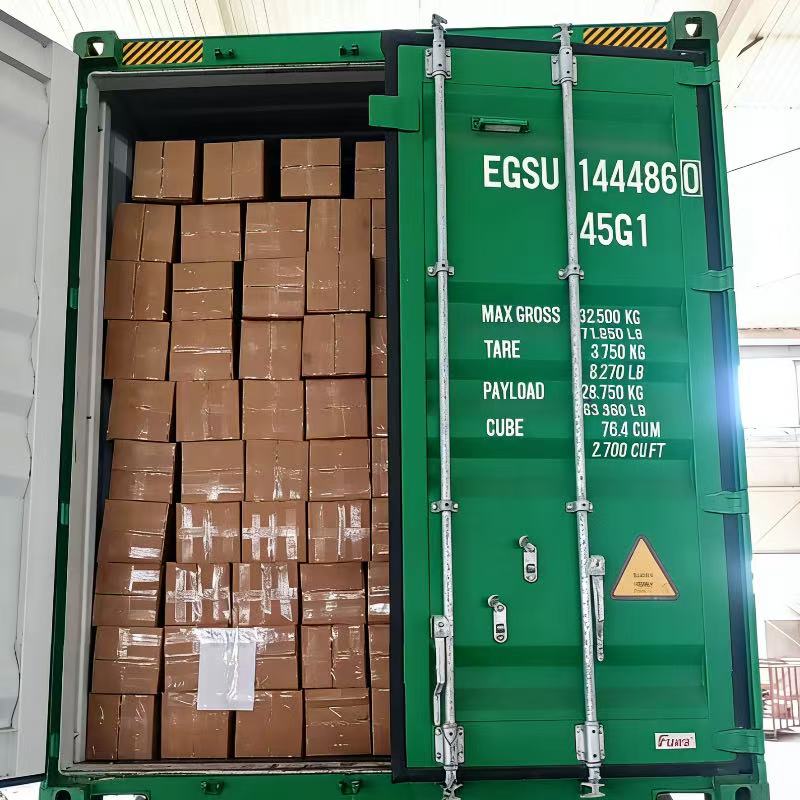 Barbed Wire
 Razor Wire
 Fence Coating & Exposure Zone Selector
 Galvanized vs PVC Coated Wire Mesh Guide