
Hardware Cloth Buying Guide: Mesh Size, Wire Gauge, Galvanized Finish, Roll Width and Packing

Confirm mesh size, wire gauge, galvanized finish, roll width, roll length, packing and labels before comparing hardware cloth quotations.
Table of contents

Hardware cloth is the North American trade name for small-opening welded wire mesh, usually made from galvanized low-carbon steel wire and supplied in rolls. Importers, hardware retailers, farm supply distributors and construction buyers often use it for poultry runs, garden fencing, rodent exclusion, ventilation screens, light reinforcement and general enclosure work.
For bulk sourcing, "hardware cloth" is not enough information for a reliable quotation. The buyer should define mesh size, wire gauge, galvanized finish, roll width, roll length, packing format, label requirements, quantity and destination. This guide explains the main specifications to confirm before comparing offers from manufacturers.
What Hardware Cloth Is, and What It Is Not
Hardware cloth is a welded square mesh with small openings, commonly from 1/4 inch to 1 inch. The mesh is rigid enough to hold its shape when fixed to a frame, which separates it from more flexible hexagonal wire netting.
Hardware cloth is different from hexagonal wire mesh, welded fence panels and woven wire cloth. The key value of hardware cloth is the combination of small square opening, welded rigidity and practical roll format.
- Hexagonal wire mesh: flexible woven mesh used for chicken wire, rabbit netting, garden use and light containment.
- Welded fence panels: heavier panels with larger openings, thicker wire and posts for perimeter fencing.
- Woven wire cloth: woven mesh for screening, sieving and industrial applications.
Mesh Size: Match Opening to Application
Mesh size is the first specification to confirm. The opening determines what the mesh can contain, cover or screen.
| Mesh Size | Metric Reference | Common Buying Use |
|---|---|---|
| 1/4" x 1/4" | 6.4 x 6.4 mm | Rodent exclusion, seed protection, small vent covers |
| 1/2" x 1/2" | 12.7 x 12.7 mm | Poultry runs, garden fencing, compost bins, general retail |
| 1/2" x 1" | 12.7 x 25.4 mm | Ventilation screens, gutter guards, enclosure work |
| 3/4" x 3/4" | 19.1 x 19.1 mm | Rabbit fencing, tree guards, larger garden use |
| 1" x 1" | 25.4 x 25.4 mm | General garden fencing, plant support, light reinforcement |
| 1" x 2" | 25.4 x 50.8 mm | Lightweight fencing, trellis and construction support |
The 1/2" x 1/2" mesh is one of the most common hardware cloth specifications for North American retail and farm supply channels. For smaller pests or finer screening, buyers often choose 1/4" mesh. For broader garden and light construction use, 1" mesh is more economical.
Wire Gauge: Strength, Rigidity and Cost
Hardware cloth wire gauge is often written in BWG. A higher gauge number means thinner wire. Wire gauge affects roll stiffness, handling, installation and price.
| Wire Gauge | Diameter Reference | Typical Buying Use |
|---|---|---|
| BWG 23 | About 0.64 mm | Light screen or small-opening use |
| BWG 21 | About 0.81 mm | Moderate garden and enclosure work |
| BWG 19 | About 1.02 mm | Common 1/2" hardware cloth quotation basis |
| BWG 16 | About 1.65 mm | Heavier garden, farm or construction requirement |
| BWG 14 | About 2.11 mm | Extra-heavy custom specification |
For many retail and farm applications, 1/2" mesh with BWG 19 wire is a practical starting point. Lighter wire may reduce cost, but it also changes rigidity and service expectation. Heavier wire can be useful for stronger enclosures, but it increases roll weight and freight planning requirements.
Galvanized Finish: Before Welding or After Welding
The finish determines how the mesh handles moisture, outdoor exposure and cut edges. Hardware cloth is usually supplied in galvanized form, with several possible coating routes.
| Finish | Weld Protection | Buying Context |
|---|---|---|
| Electro galvanized before welding | Weld points may show darker marks | Budget retail or short-term use |
| Electro galvanized after welding | More uniform coverage over the welded mesh | Standard retail and garden applications |
| Hot-dipped galvanized after welding | Heavier zinc coverage | Permanent outdoor use, humid or coastal conditions |
| PVC coated over galvanized wire | Color layer plus galvanized base | Garden, decorative and color-matched applications |
For importers serving hardware retail channels, galvanized-after-welding is often easier to present because the surface looks more uniform. For projects exposed to soil, moisture or coastal air, buyers should ask for zinc coating details and confirm the expected finish before ordering.
Roll Width and Roll Length
Hardware cloth is normally sold in rolls. Standard widths and lengths depend on the buyer's channel and shelf display requirement.
| Roll Width | Metric Reference | Common Use |
|---|---|---|
| 12" | 300 mm | Vent covers, gutter guards and narrow use |
| 24" | 600 mm | Common retail width for garden and poultry use |
| 36" | 900 mm | Wider fencing, compost bins and tree guards |
| 48" | 1200 mm | Larger enclosures and construction use |
| 60" | 1500 mm | Industrial screening and large coverage |
Common roll lengths include 10 ft, 25 ft, 50 ft, 100 ft and 150 ft. For bulk importers, 24" x 50 ft and 36" x 50 ft rolls are common starting points.
PVC Coated Hardware Cloth
PVC coated hardware cloth is used when buyers want color, better visual blending or an additional coating layer. Green and black are common choices for garden fencing and enclosure work.
PVC coating should be quoted with the galvanized base wire, core wire diameter, finished diameter, color, roll size and packing. Buyers should also confirm whether the coating is smooth, uniform and suitable for the expected outdoor use.
Hardware Cloth vs Alternative Mesh Products
Hardware cloth is useful, but it is not the right mesh for every application.
| Product | Structure | Common Use |
|---|---|---|
| Hardware cloth | Small-opening welded square mesh | Garden, poultry, screening, light enclosure |
| Hexagonal wire mesh | Flexible hexagonal woven mesh | Chicken wire, rabbit netting, light containment |
| Chain link fence | Diamond mesh roll with posts and fittings | Perimeter fence, sports fields, boundary lines |
| Stainless steel wire mesh | Stainless woven or welded mesh | Corrosion-sensitive and industrial screening use |
For larger perimeter boundaries, chain link fence or welded fence panels may be more suitable. For corrosion-sensitive screening, stainless steel wire mesh may be considered after confirming grade and application requirements.
Packing and Container Loading
Packing affects both product protection and retail readiness. Hardware cloth rolls may be supplied with individual shrink wrap, kraft paper wrap, cartons, labels, barcodes or pallet packing depending on the channel.

- Roll size and roll weight.
- Individual label content and barcode requirement.
- Inner wrap, carton or outer pallet protection.
- Number of rolls per carton or pallet.
- Pallet size, pallet height and container loading plan.
- Whether packing and loading photos can be provided before shipment.
Quality Inspection Checklist
- Mesh size: measure clear opening at multiple positions.
- Wire diameter: check the actual wire diameter with a micrometer.
- Weld quality: welded intersections should be consistent and not separate easily during normal handling.
- Surface finish: look for bare spots, rust marks, flaking zinc or obvious coating defects.
- Roll dimensions: confirm width and length against the purchase order.
- Flatness: unroll a sample and check whether the mesh lies reasonably flat.
- Packing: confirm labels, wraps, cartons and pallet condition.
- Quantity: count rolls by SKU and match the packing list.
Hardware Cloth RFQ Checklist
- Mesh size, such as 1/2" x 1/2" / 12.7 x 12.7 mm.
- Wire gauge and metric diameter, such as BWG 19 / 1.02 mm.
- Finish, such as galvanized before welding, galvanized after welding, hot-dipped galvanized or PVC coated.
- Roll width and roll length.
- Quantity per SKU.
- Packing format, label and barcode requirement.
- Destination port and preferred Incoterms.
- Any sample, photo, drawing or retail packaging reference.
Frequently Asked Questions
Is hardware cloth the same as welded wire mesh?
Hardware cloth is a small-opening welded wire mesh roll. Welded wire mesh is the broader product family, while hardware cloth usually refers to the retail and farm-supply version with smaller openings and finer wire.
What mesh size is most common for hardware cloth?
The 1/2" x 1/2" mesh is a common all-purpose hardware cloth specification. Buyers also use 1/4" mesh for smaller openings and 1" mesh for broader garden or light reinforcement use.
Which finish should I choose for outdoor hardware cloth?
For outdoor use, buyers should confirm galvanized-after-welding or hot-dipped galvanized-after-welding if longer service life is required. PVC coated hardware cloth can also be considered when color and additional coating are important.
Can hardware cloth be private-labeled?
Yes. For retail distributors, suppliers can usually support label design, barcode, carton marks, roll tags and pallet labels. Send the required label layout and SKU list before quotation.
What should I send before asking for a hardware cloth price?
Send mesh size, wire gauge, roll width, roll length, finish, packing, labels, quantity, destination port and any retail packaging requirement.
Conclusion
Hardware cloth is a high-turnover mesh product, but a reliable quotation depends on clear specification. Buyers should confirm opening size, wire gauge, finish, roll size, packing and label details before comparing offers.
About ANJIA GROUP
ANJIA GROUP supplies wire mesh, fencing and related industrial products for global B2B buyers. Contact our team to discuss product specifications, matching accessories and export packing.
Discuss your sourcing requirements
Send your product requirements and any relevant drawings to our team.
Get a Free Business Quote Wire Mesh Products
 Welded Wire Mesh
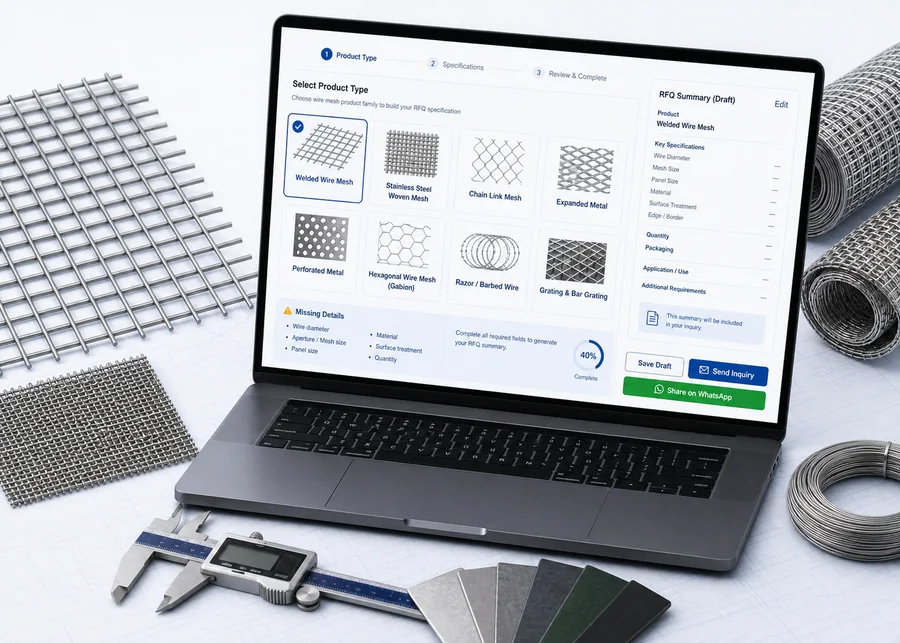 Wire Mesh RFQ Specification Builder
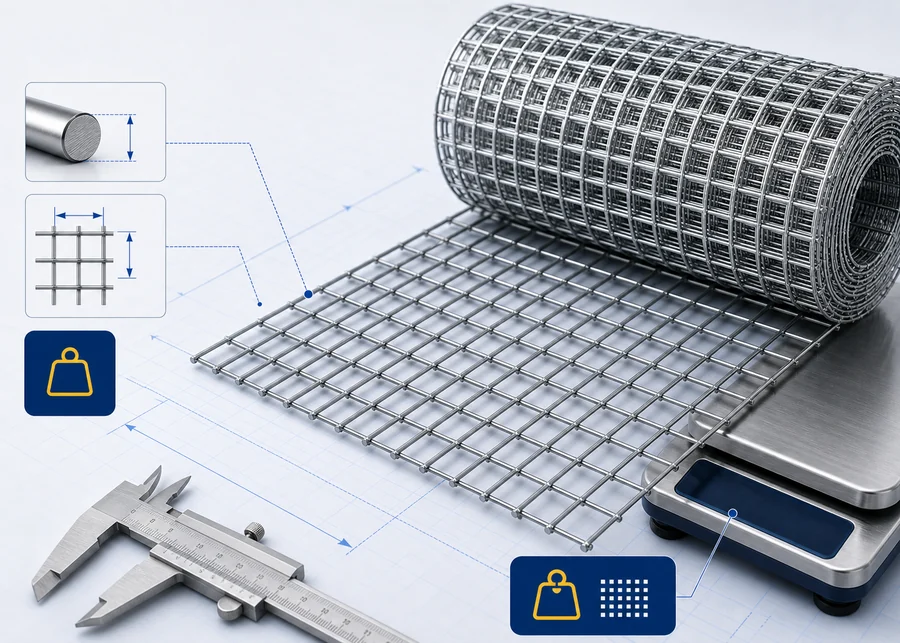 Wire Mesh Weight Calculator