
Welded Gabion Box vs Woven Gabion Basket: How Buyers Should Choose for Sourcing

Updated Jun 28, 2026
Compare welded gabion boxes and woven gabion baskets by structure, ground condition, coating, application fit, packing and RFQ details before sourcing.
Table of contents

Gabion products are wire mesh containers filled with stone. In sourcing conversations, the word "gabion" often covers two different structures: welded gabion boxes made from rigid welded mesh panels, and woven gabion baskets made from flexible double-twist hexagonal mesh.
Both can be used for stone containment, erosion control, retaining structures and landscape projects, but they do not behave the same after installation. The safer sourcing question is not "which one is better?" but "which structure fits the project condition, appearance requirement, packing plan and RFQ document?"
This guide explains the practical differences buyers should confirm before requesting a gabion quotation.
Quick comparison
| Item | Welded gabion box | Woven gabion basket |
|---|---|---|
| Mesh structure | Rigid welded mesh panels | Flexible double-twist hexagonal mesh |
| Typical appearance | Straight, flat and geometric | More flexible and ground-conforming |
| Common use | Landscape walls, decorative retaining walls, stable foundations | Riverbanks, slopes, revetments, areas with ground movement |
| Assembly | Flat panels assembled with spiral binders, clips or lacing wire | Folded basket or mattress assembled and laced on site |
| Main buying focus | Panel size, mesh aperture, wire diameter, coating, accessories, packing | Mesh opening, wire diameter, selvedge wire, coating, basket size, lacing wire |
The table is sourcing guidance only. For retaining walls, river engineering or public works, buyers should confirm project drawings, local documents and engineering requirements before ordering.
Welded gabion box: rigid panels and clean geometry
A welded gabion box is made from welded wire mesh panels. Wires are welded at intersections, then the panels are cut, folded or assembled into box units. Accessories may include spiral binders, C-rings, lacing wire, stiffeners and diaphragm panels.
The main advantage is shape control. A welded gabion box can hold a straighter face before and after stone filling, so it is often selected when the wall remains visible and a neat appearance matters.
- Mesh aperture, such as 50 x 100 mm, 75 x 75 mm or 100 x 100 mm.
- Wire diameter selected according to wall size, project requirements and coating.
- Box dimensions, panel flatness and weld consistency.
- Accessories, including spiral binders, clips, stiffeners and lacing wire.
- Flat packing, pallet plan, labels and loading proof.
For related welded mesh sourcing details, see the galvanized welded wire mesh buying guide.
Woven gabion basket: flexible hexagonal mesh
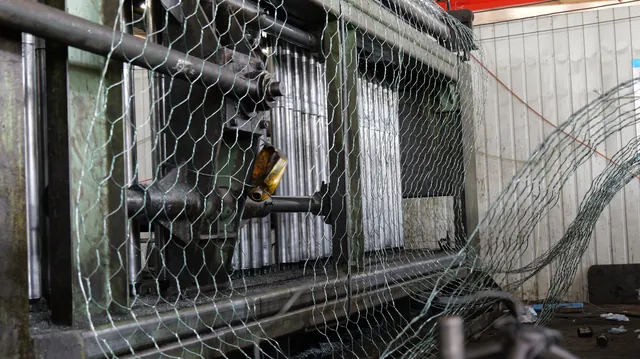
A woven gabion basket is made from double-twist hexagonal wire mesh. The wires are twisted together to form a flexible mesh structure. This allows the basket to follow uneven ground more easily than a rigid welded panel.
Woven gabions are often considered when the project involves riverbanks, slopes, revetments, drainage areas or other sites where the ground may settle or move. The flexible structure can help the basket adapt to changes in the ground profile, but final suitability still depends on engineering design and site conditions.
- Mesh opening, such as 60 x 80 mm or 80 x 100 mm.
- Wire diameter and selvedge wire diameter.
- Basket or mattress dimensions.
- Coating type and coating requirement.
- Lacing wire, tie wire and diaphragm details.
- Stone size range, because stone must not pass through the mesh opening.
For a broader gabion sourcing checklist, see the gabion basket sourcing checklist. For hexagonal mesh product context, see hexagonal wire mesh.
Structure and site condition
| Project condition | More common sourcing choice | Reason to confirm |
|---|---|---|
| Stable ground and visible landscape wall | Welded gabion box | Buyers often want straight lines and a clean stone face |
| Riverbank or slope with possible settlement | Woven gabion basket or mattress | Flexible mesh may follow uneven ground more easily |
| Decorative garden wall | Welded gabion box | Appearance, alignment and stone display are usually important |
| Large erosion control area | Woven gabion basket or mattress | Flexible units and mattresses are common for natural ground profiles |
| Project with drawings and engineering requirements | Follow project documents | Do not replace design requirements with a general buying guide |
If the site may settle, move, scour or deform, ask the project engineer whether flexible woven gabion is required. If the site is stable and the wall face is highly visible, welded gabion may be easier to align and present cleanly.
Coating and material options
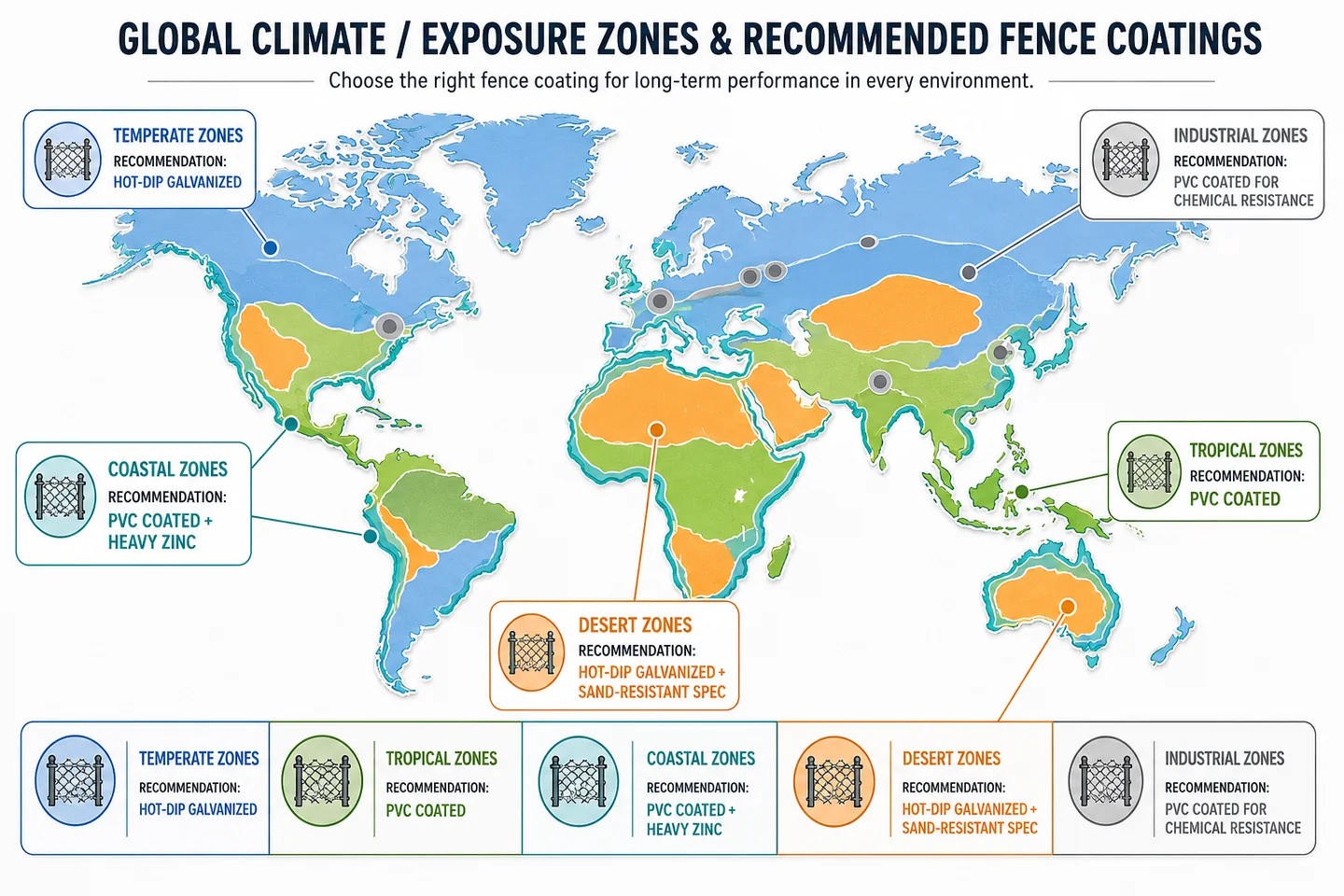
Both welded and woven gabions can use galvanized, Galfan, PVC coated or stainless steel wire. The coating should be chosen by environment, expected exposure and project documents, not only by price.
| Coating option | Common reason to choose | Buyer caution |
|---|---|---|
| Hot-dip galvanized wire | General inland or moderate exposure projects | Confirm zinc coating requirement and storage condition |
| Galfan wire | Projects that require stronger corrosion resistance than standard galvanizing | Confirm coating specification in the project document |
| PVC coated wire | Coastal, wet, polluted or color-specific projects | Confirm base wire, coating thickness, color and adhesion requirements |
| Stainless steel wire | Special corrosion or document requirements | Confirm grade, exposure environment and budget |
Avoid using a general service-life number as the only buying basis. If the project has a required design life, write that requirement into the RFQ and ask the supplier to confirm the matching material and documentation.
Application fit

| Application | Typical sourcing direction | What to confirm |
|---|---|---|
| Landscape retaining wall | Welded gabion box | Box dimensions, visible face, stone size, accessories and packing |
| Garden feature or decorative wall | Welded gabion box | Mesh aperture, wire diameter, coating color and alignment |
| Riverbank protection | Woven gabion basket or mattress | Project documents, mesh opening, coating, stone size and lacing details |
| Slope protection | Woven gabion basket or mattress | Ground condition, basket height, diaphragm spacing and installation method |
| Mixed project package | Both types may be ordered together | Separate specifications, labels, bundles and loading plan |
This is not engineering design advice. It is a sourcing framework that helps buyers ask the right questions before quotation.
Cost, packing and container loading
Woven gabion baskets may be more economical for many large erosion-control projects, while welded gabion boxes may cost more because of panel welding, heavier wires or stricter appearance requirements. The final price can change with wire diameter, coating, accessories, box size, packing and order quantity.
Before comparing prices, make sure suppliers are quoting the same gabion type, mesh opening, wire diameter, coating requirement, dimensions, accessories, packing method, destination and trade term.
Do not compare only unit price. Stone fill, site labor, accessories, geotextile, unloading method and project loss allowance can all affect total project cost.
For export packing logic, see the wire mesh fence export packing checklist.
Decision framework
1. Will the ground settle or move?
If the project is on a riverbank, slope, soft soil or irregular ground, confirm whether woven gabion or woven gabion mattress is required. If the site has a stable foundation and straight appearance is important, welded gabion may be suitable.
2. Does the visible face matter?
If the gabion will be part of a landscape wall, garden feature or architectural face, welded gabion usually gives better shape control. If the gabion is mainly for erosion control, woven gabion may be more practical.
3. What documents control the project?
For engineering works, the final choice should follow drawings, specifications, local requirements and site engineer confirmation. A supplier can help quote the product, but should not replace the project design authority.
Gabion RFQ checklist
- Gabion type: welded gabion box or woven gabion basket.
- Mesh opening or aperture.
- Wire diameter and selvedge wire diameter if woven.
- Coating type and minimum coating requirement if specified.
- Box, basket or mattress dimensions.
- Diaphragm quantity and spacing.
- Accessories: spiral binders, C-rings, lacing wire, stiffeners or tie wire.
- Stone size range if available.
- Packing method, labels and bundle requirements.
- Quantity by specification.
- Destination port and trade term.
- Any project drawings, test reports, engineering documents or local requirements to confirm.
Frequently Asked Questions
What is the main difference between welded gabion and woven gabion?
Welded gabion uses rigid welded mesh panels, while woven gabion uses flexible double-twist hexagonal mesh. Welded gabion is often selected for clean appearance and shape control. Woven gabion is often selected where flexibility and ground conformity are important.
Is welded gabion suitable for riverbank projects?
It depends on the project design and ground condition. For active riverbanks, slopes or areas with settlement, woven gabion or woven mattress is often considered.
Is woven gabion always cheaper than welded gabion?
Not always. Woven gabion can be more economical in many large projects, but price depends on wire diameter, coating, size, accessories, packing and quantity.
Can welded and woven gabions ship in the same container?
Yes. Mixed orders can be arranged when specifications, labels and packing plans are clear.
What should I send before asking for a gabion quote?
Send gabion type, mesh opening, wire diameter, coating, dimensions, accessories, quantity, packing method, destination and any project document requirements.
Conclusion
Welded gabion boxes and woven gabion baskets are not interchangeable sourcing items. Welded gabion gives stronger shape control and a cleaner visible face. Woven gabion offers more flexibility for uneven ground, slopes and riverbank-style projects.
For importers, contractors and distributors, the safest approach is to define the project condition first, then confirm mesh structure, wire diameter, coating, dimensions, accessories, packing and documentation before comparing quotations.
About ANJIA GROUP
ANJIA GROUP supplies wire mesh, fencing and related industrial products for global B2B buyers. Contact our team to discuss product specifications, matching accessories and export packing.
Discuss your sourcing requirements
Send your product requirements and any relevant drawings to our team.
Get a Free Business Quote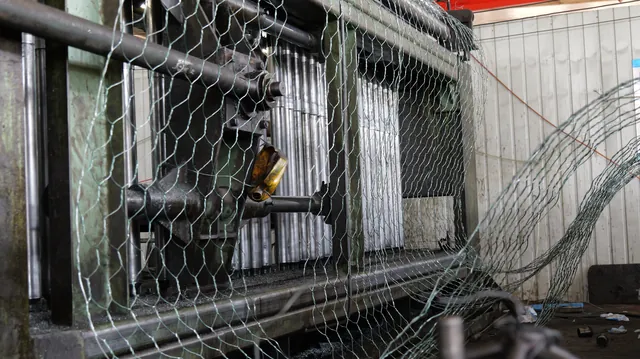 Gabion Box
 Gabion Basket
 Galvanized vs PVC Coated Wire Mesh Guide
 Fence Coating & Exposure Zone Selector