
Security Fence Applications: Warehouses, Utilities and Industrial Perimeters
A practical guide to security fence applications for warehouses, factories, utilities, logistics yards and industrial perimeters.
Table of contents

Security fence is used around warehouses, factories, utility sites, logistics yards and other industrial perimeters where buyers need controlled boundaries, clear visibility and practical access management. For importers and project buyers, the main question is not only "which fence is strongest?" A better question is: what does the site need the fence to do, and which panel, post, coating, gate and packing details should be confirmed before quotation?
This article explains common security fence applications for industrial sites. It is a sourcing guide, not a security design guarantee. Final fence height, mesh type, gate layout, topping, foundation, access control and local compliance should be confirmed by the buyer's project documents, installer and responsible site reviewer.
Why application comes before specification
Security fence products can look similar in a catalogue, but the correct sourcing choice changes by site type. A warehouse may need good visibility, vehicle gate planning and economical panel packing. A utility site may need more careful post spacing, coating and controlled access. A logistics yard may need durable panels that can handle repeated vehicle movement near the perimeter.
Before comparing quotations, buyers should define site type, perimeter length, fence height, panel format, mesh opening, wire diameter, post type, surface treatment, gate type, topping requirement if any, packing, pallet, bundle label and container loading requirements.
Warehouses and logistics yards
Warehouses and logistics yards usually need a fence system that separates the operating area from public roads, neighboring properties and storage zones. Visibility is often important because site teams may need to see vehicles, loading areas and pedestrians through the fence line.
For these applications, buyers often discuss welded mesh fence panels, 3D fence panels, double wire panels or chain link systems depending on budget and site layout. A 3D welded panel can provide a clean appearance and useful rigidity, while chain link fence may be considered for longer boundaries where roll packing and flexible installation are preferred.
Useful RFQ details include panel height, mesh opening, wire diameter, post section, coating color, gate quantity, sliding or swing gate requirement, and whether the fence will be installed around loading docks, parking areas or open storage.
Factories and production facilities
Manufacturing sites often use security fence to separate production areas, material yards, equipment zones and factory boundaries. The fence does not replace site management, lighting or access control, but it gives the project a physical boundary that can be coordinated with gates, signs and patrol routes.
For factory perimeters, buyers should pay attention to post strength, panel rigidity, corrosion environment and repair convenience. If the site has dust, moisture, chemical exposure or outdoor storage, coating discussion becomes more important than choosing by panel price alone.
When the project needs a stricter mesh format, buyers may discuss 358 anti-climb fence. The narrow mesh opening can make casual climbing more difficult, but the final security level depends on the complete site design, installation quality and project requirements.

Utility sites and equipment compounds
Utility sites can include substations, water treatment areas, telecom compounds, pump stations and other equipment yards. These projects often care about controlled access, clear maintenance routes and durable coating because the fence may stay outdoors for many years.
For utility-related projects, buyers should confirm whether the project file requires a specific fence height, mesh aperture, post spacing, gate clearance, grounding or warning sign arrangement. The supplier can help quote fence panels, posts and accessories, but site safety and engineering details should come from the project side.
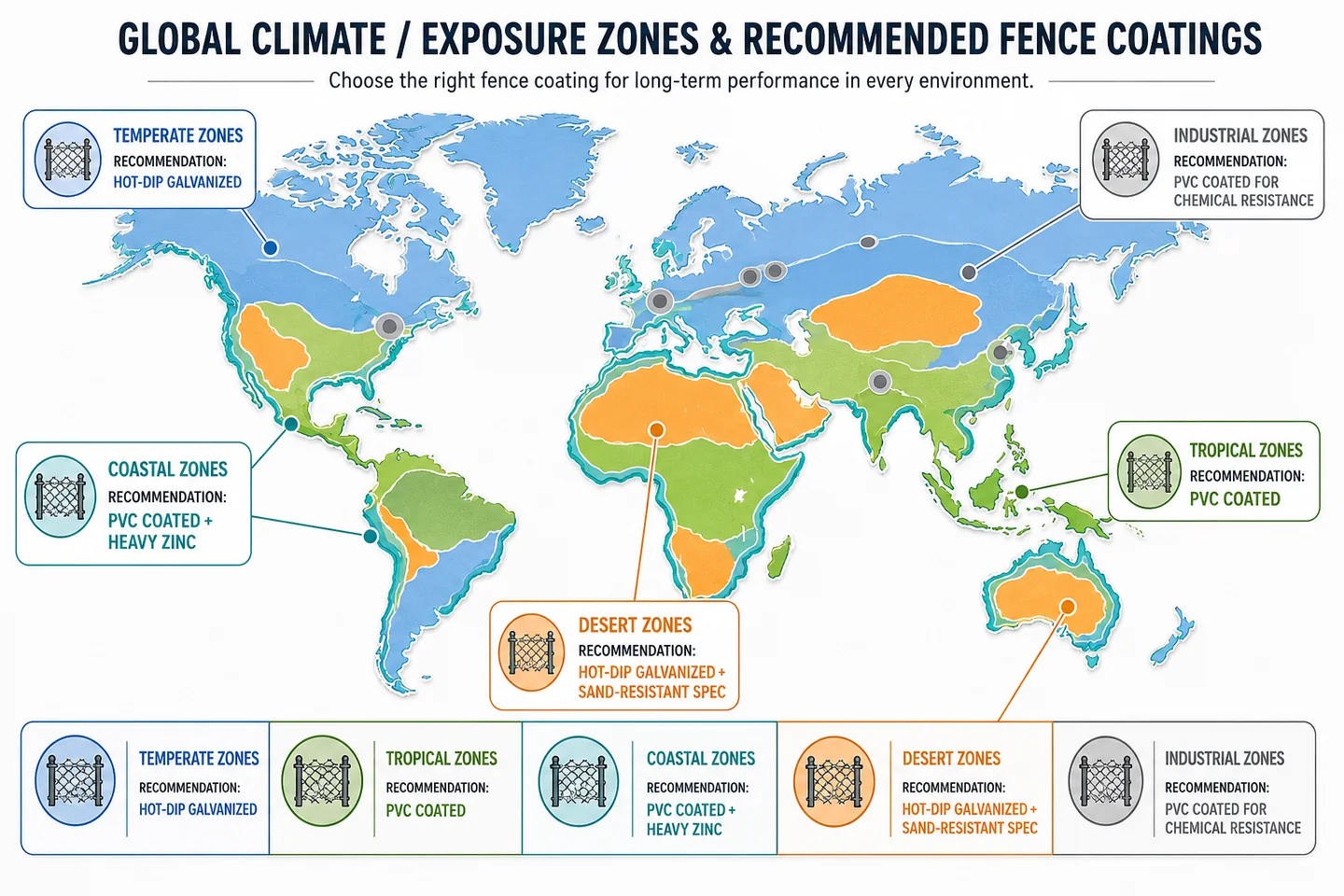
In coastal, humid or industrial environments, buyers should discuss hot-dip galvanizing, powder coating, PVC coating or other surface treatment options. The correct coating should be selected based on exposure condition, project document and buyer preference rather than a universal service-life promise.
Industrial parks and general perimeter boundaries
Industrial parks, business compounds and shared logistics bases often need a balanced fence system: presentable appearance, consistent panels, reasonable cost and easy maintenance. In these cases, an over-specified fence may increase cost without improving the site plan, while a very light fence may not meet the buyer's durability expectation.
Common options include 3D welded fence, double wire fence, standard welded mesh panels and chain link fence. The best choice depends on perimeter length, budget, visibility, expected impact risk near vehicle areas and the local installation method.
For a broader fence product path, buyers can review the fence category and compare it with related application guides such as chain link fence applications and temporary fence use cases.
Choosing the fence type by application
| Application | Common fence discussion | Buyer should confirm |
|---|---|---|
| Warehouse perimeter | 3D welded panel, double wire panel or chain link | visibility, gate layout, panel height, post type |
| Factory boundary | welded mesh panel, 3D panel or 358 mesh when required | coating, post spacing, repair access, site exposure |
| Utility compound | welded panel or 358 mesh depending on project file | access control, gate clearance, grounding or site safety notes |
| Logistics yard | welded panels or chain link for long runs | vehicle routes, corner protection, sliding gate width |
| Equipment storage | welded mesh fence or temporary fence where applicable | relocation need, base type, panel packing and labels |
| Construction phase | temporary fence panels | base, clamp, brace, screen cloth and reuse plan |
Specification points buyers should prepare
Security fence quotations are easier to compare when the buyer sends a complete specification. A product name alone is not enough. For example, "security fence" may refer to 358 mesh, 3D welded panels, double wire fence, chain link with topping or another perimeter system.
- Total perimeter length and drawing if available.
- Required fence height and panel width.
- Mesh opening and wire diameter.
- Post size, post type and installation method.
- Surface treatment and color.
- Gate type, gate size and hardware requirement.
- Accessories such as clamps, brackets, bolts, caps, base plates and topping arms.
- Packing method, pallet size, bundle label and container destination.
If the buyer is not sure which fence type fits the site, share site photos, application notes and target budget range. ANJIA GROUP can help review product options for quotation discussion, while final site design remains with the buyer's project team.
Packing and export considerations

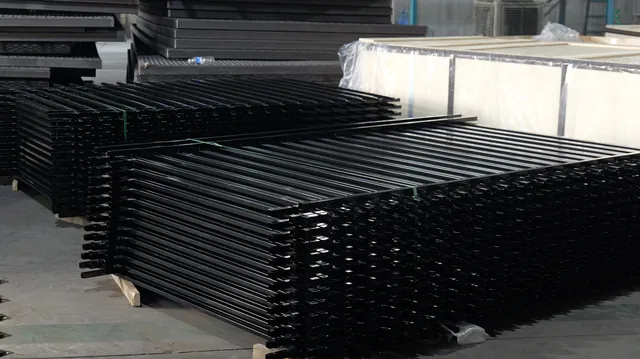
Fence panels are usually packed on steel or wooden pallets, with posts and accessories packed separately or bundled according to the loading plan. Good packing communication helps reduce missing accessories, coating scratches and site receiving problems.
- Confirm whether panels, posts and gates are packed separately.
- Define pallet size and forklift handling requirement.
- List accessories and spare parts requirement.
- Confirm bundle label language and item number.
- Confirm whether packing photos and loading photos are needed.
- Confirm mixed loading with other wire mesh or fence products.
For a general export packing reference, see the wire mesh fence export packing checklist.
RFQ checklist for security fence applications
- Application: warehouse, factory, utility site, logistics yard or other perimeter.
- Perimeter length and drawing if available.
- Fence height and panel size.
- Mesh opening and wire diameter.
- Post type and installation method.
- Coating and color.
- Gate quantity and gate size.
- Accessories and topping requirement if any.
- Quantity.
- Packing method and destination.
- Project standard or specification document if applicable.
Buyers can send these details through the inquiry page. For direct product context, review security fence and 358 anti-climb fence.
FAQ
What are the most common security fence applications?
Common applications include warehouse perimeters, factory boundaries, utility compounds, logistics yards, equipment storage areas, industrial parks and temporary construction boundaries. The correct fence type depends on the site plan and project document.
Is 358 fence always required for industrial sites?
No. 358 mesh may be discussed when the project requires a narrow aperture and more restrictive panel format. Many warehouses and general factory sites use 3D welded panels, double wire fence or chain link fence depending on budget, appearance and site conditions.
What should buyers confirm before ordering security fence?
Confirm application, perimeter length, fence height, mesh opening, wire diameter, post type, coating, gate layout, accessories, packing and destination. If a project specification exists, send the relevant document before quotation.
Can security fence panels be powder coated?
Powder coating can be discussed for many welded panel fence products. Buyers should confirm required color, base treatment, coating requirement, order quantity and expected exposure environment before production.
Can ANJIA supply posts, gates and accessories together with fence panels?
ANJIA GROUP can discuss fence panels, posts, clamps, brackets, caps, gates and related accessories as part of the order file. The exact supply scope should be listed clearly in the RFQ and confirmed before production.
Conclusion
Security fence applications should start with the site purpose, not only the strongest-looking product. Warehouses, factories, utility compounds and logistics yards each need different attention to visibility, gate planning, panel rigidity, coating, accessories and packing.
ANJIA GROUP can help importers and project buyers review security fence options, prepare quotation details and coordinate export packing based on the application. Clear site information makes the quotation more accurate and reduces order mistakes before shipment.
About ANJIA GROUP
ANJIA GROUP supplies wire mesh, fencing and related industrial products for global B2B buyers. Contact our team to discuss product specifications, matching accessories and export packing.
Discuss your sourcing requirements
Send your product requirements and any relevant drawings to our team.
Get a Free Business Quote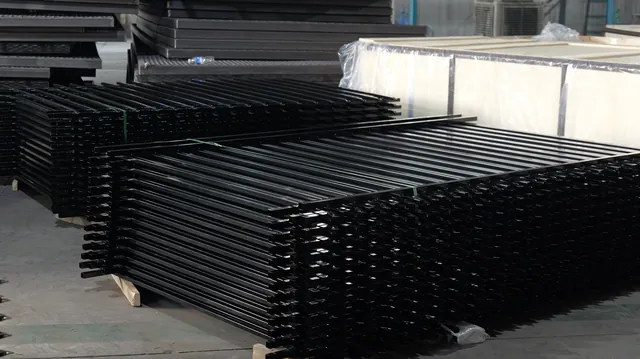 Fence Products
 Security Fence
 Fence Coating & Exposure Zone Selector
 Galvanized vs PVC Coated Wire Mesh Guide