
Expanded Metal Mesh Buying Guide: SWD, LWD, Strand Width, Thickness and Finish

Updated Jun 23, 2026
Specify expanded metal mesh by SWD, LWD, strand width, thickness, sheet size, profile, finish, packing and quotation details before comparing offers.
Table of contents

Expanded metal mesh is made by slitting and stretching a metal sheet into a diamond pattern. Because the mesh is formed from one sheet, buyers need to define the opening, strand, thickness, profile and finish more carefully than they would for many welded or woven mesh products.
Many RFQs only say "expanded metal, 2 mm thick" or "diamond mesh sheet." That is not enough for a comparable quotation. Two suppliers may quote different SWD, LWD, strand width, sheet size, material grade or coating, even when the product name looks the same.
This guide explains the main specification points importers should confirm before asking for an expanded metal mesh quotation.
What buyers should confirm first
Before comparing prices, prepare the basic specification in one clear line:
- Material: carbon steel, galvanized steel, aluminum or stainless steel.
- Opening size: SWD x LWD.
- Strand width and sheet thickness.
- Sheet size or roll size.
- Profile: raised or flattened.
- Surface finish: mill finish, galvanized, powder coated, painted or other finish.
- Quantity, packing, destination port and trade term.
If the mesh will be used for walkways, stair treads, platforms, guards or project structures, confirm the drawings and engineering requirements before placing the order. A supplier can help prepare a quotation, but final load, span and installation requirements should be checked against the project documents.
Opening size: SWD x LWD
Expanded metal openings are usually described by two dimensions: SWD, the Short Way of Diamond, and LWD, the Long Way of Diamond. Together they affect open area, visual density, airflow, drainage and the size of objects that may pass through the mesh.
| SWD x LWD reference | Typical sourcing use | Buyer note |
|---|---|---|
| Small openings | Screens, guards and decorative panels | Confirm visibility, airflow and edge condition |
| Medium openings | Machine guards, enclosures and general panels | Balance open area and rigidity |
| Larger openings | Facade, shading, light fencing and large panels | Confirm sheet stiffness and support method |
| Heavy patterns | Walkway or platform-related projects | Confirm drawings, span, fixing and engineering requirements |
Buyers should avoid sending only one opening dimension. Always confirm both SWD and LWD, and ask whether the supplier measures the opening in the same way as your drawing or sample.
Strand width and sheet thickness
The strand is the metal strip that forms each side of the diamond opening. Strand width is the visible width of the strip. Sheet thickness is the thickness of the base metal before expansion.
These two values are not the same. A mesh can have a narrow strand with a thicker base sheet, or a wider strand with a thinner base sheet. Both will change the weight, rigidity, open area and quotation basis.
| Item | What it controls | RFQ note |
|---|---|---|
| Strand width | Open area, visual density and rigidity | Specify in mm, not only "heavy" or "light" |
| Sheet thickness | Bending resistance and weight | Specify base metal thickness in mm |
| SWD x LWD | Opening size and pattern | Send both values together |
| Sheet size | Cutting, packing and installation planning | Confirm finished sheet size |
For industrial projects, ask your supplier to quote by finished sheet size and estimated weight per sheet or per square meter. This makes shipment planning and landed cost comparison easier.
Sheet size and format
Expanded metal mesh is commonly supplied as sheets. Light patterns may also be supplied in rolls, depending on material, thickness and opening.
| Format | Typical use | What to confirm |
|---|---|---|
| Flat sheet | Panels, guards, facade and fabrication | Width, length, tolerance and edge condition |
| Cut-to-size panel | Project installation or OEM fabrication | Drawing, cutting direction and packing |
| Light roll | Light decorative or screen use | Roll width, length and winding method |
| Fabricated part | Stair tread, guard or bracketed panel | Drawing, holes, frame and finish sequence |
If the project needs a specific diamond direction, tell the supplier how the LWD should run on the finished panel. This is especially important for facade panels, guard panels and repeated installation layouts.
Material options
Expanded metal mesh can be made from different sheet materials. The right choice depends on environment, appearance, weight and project requirement.

| Material | Common buying reason | Sourcing caution |
|---|---|---|
| Carbon steel | General industrial panels and fabrication | Usually needs surface protection for outdoor use |
| Pre-galvanized or galvanized steel | Outdoor or corrosion-conscious use | Confirm whether galvanizing is before or after expansion |
| Aluminum | Lightweight panels and architectural use | Confirm alloy, surface finish and handling requirements |
| Stainless steel 304 | Corrosion-sensitive general use | Confirm grade and surface finish |
| Stainless steel 316 | More demanding corrosion environments | Confirm grade requirement before ordering |
For stainless grade comparison, buyers can also review the stainless steel wire mesh 304 vs 316 guide. For welded mesh alternatives, the galvanized welded wire mesh buying guide may help compare different mesh structures.
Raised vs flattened expanded metal
Expanded metal is usually supplied as raised expanded metal or flattened expanded metal. Raised mesh keeps a three-dimensional profile after stretching. Flattened mesh is rolled after expansion to create a flatter and smoother surface.
| Profile | Typical reason to choose it | Buyer note |
|---|---|---|
| Raised | More texture and grip for suitable applications | Confirm thickness, strand width and installation direction |
| Flattened | Smooth surface, decorative panels and easier handling | Dimensions and appearance may differ from raised mesh |
Do not assume raised and flattened mesh are interchangeable. If you have a sample, send clear photos from the front and side so the supplier can see the profile.
Surface finish
Surface finish affects appearance, corrosion resistance and packing care. The best choice depends on the material and project environment.
| Finish | Typical use | What to confirm |
|---|---|---|
| Mill finish | Indoor fabrication or later finishing | Surface oil, scratches and rust prevention during shipment |
| Hot-dip galvanized | Outdoor steel applications | Galvanizing sequence, zinc requirement and drainage holes if fabricated |
| Powder coated | Architectural or color-matched panels | RAL color, pre-treatment and packing protection |
| Painted | General color finish | Paint type, color and expected handling condition |
| Anodized aluminum | Architectural aluminum panels | Color, surface requirement and batch consistency |
Avoid asking for "best coating" without context. Instead, tell the supplier where the mesh will be used, whether the project is indoor or outdoor, and whether color matching is required.
Expanded metal vs perforated metal
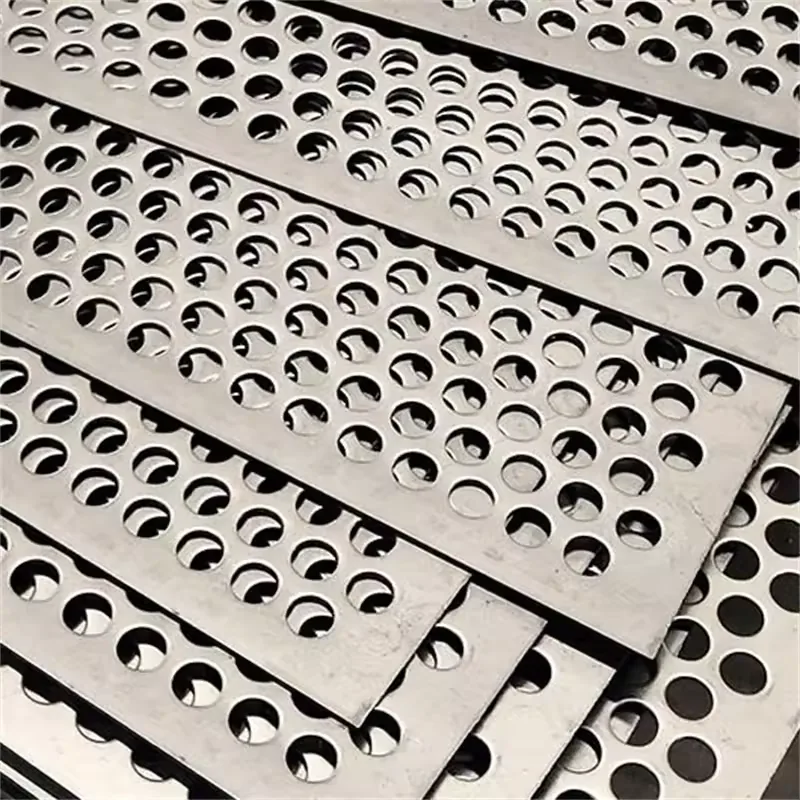
Expanded metal and perforated metal can serve similar visual or ventilation purposes, but they are made differently.
| Item | Expanded metal | Perforated metal |
|---|---|---|
| Production method | Slit and stretch sheet metal | Punch holes from sheet metal |
| Opening shape | Mainly diamond pattern | Round, square, slot and custom hole patterns |
| Surface profile | Raised or flattened | Usually flat |
| Visual style | Diamond mesh texture | More pattern options |
| Common use | Guards, panels, walkways, facade and ventilation | Screens, acoustic panels, decorative panels and precise hole patterns |
Expanded metal may be more material-efficient in some specifications because the sheet is stretched rather than punched out. Perforated metal is often preferred when the design requires precise hole shapes or a flat sheet with a regular hole pattern. Buyers should compare the actual drawing, material, finish, quantity and packing before deciding.
Common sourcing risks
Most expanded metal disputes come from incomplete specification, not from the product name itself.
| Risk | What happens | How to prevent it |
|---|---|---|
| Only thickness is specified | Supplier chooses different opening or strand width | Send SWD, LWD, strand width and thickness together |
| Raised and flattened are confused | Surface feel and dimensions do not match expectation | Send side-view photos or samples |
| Sheet size is unclear | Panels may not match fabrication layout | Confirm finished width x length |
| Finish is vague | Coating cost and appearance differ | Specify finish, color and environment |
| Packing is not defined | Sheets may scratch, bend or mix by size | Confirm pallet, separators, labels and loading plan |
For export shipment planning, the wire mesh fence export packing checklist gives a useful packing logic that also applies to many sheet and panel products.
Export packing and inspection
Expanded metal sheets can have sharp edges, raised profiles and coated surfaces that need careful handling. Packing should be planned before production is finished.
- Sheet size and bundle quantity.
- Pallet size and estimated bundle weight.
- Separator or protective layer requirement.
- Edge protection for cut panels.
- Label, carton mark or pallet mark.
- Loading photo requirement.
- Mixed-size packing list if several specifications are ordered together.
For powder coated or painted panels, packing protection is especially important. If the surface is scratched during handling, the commercial problem may appear only when the goods arrive at the destination warehouse.
Expanded metal RFQ checklist
Send these details for a clearer quotation:
- Material and grade, such as carbon steel, aluminum or stainless steel.
- Opening size: SWD x LWD.
- Strand width.
- Sheet thickness.
- Finished sheet size or roll size.
- Raised or flattened profile.
- Surface finish and color if required.
- Quantity by specification.
- Packing: pallet, bundle, label and edge protection.
- Destination port and trade term.
- Drawing, sample photo or application note if available.
Clear RFQ information helps the supplier quote the correct product and helps buyers compare different offers on the same basis.
Frequently Asked Questions
What is expanded metal mesh?
Expanded metal mesh is a sheet metal product made by slitting and stretching metal sheet into a diamond-shaped opening pattern. It can be supplied as raised mesh or flattened mesh.
Are SWD and LWD inside measurements or center-to-center measurements?
Measurement methods can vary by supplier, drawing and local convention. Buyers should send a drawing or sample photo and confirm the measurement basis before ordering.
Is raised expanded metal better than flattened expanded metal?
Neither profile is always better. Raised mesh is useful when texture is desired. Flattened mesh is useful when a smoother surface or decorative appearance is required. The correct choice depends on the application.
Can expanded metal mesh be used for walkways?
Expanded metal can be used in walkway-related projects when the specification, support span, fixing method and project requirements are properly confirmed. Buyers should follow project drawings and engineering requirements instead of selecting only by product name.
What should I send before requesting price?
Send material, SWD x LWD, strand width, sheet thickness, sheet size, profile, finish, quantity, packing and destination. Photos or drawings are helpful when the requirement is not standard.
Conclusion
Expanded metal mesh is easy to recognize but easy to specify incorrectly. A complete quotation should define SWD, LWD, strand width, sheet thickness, sheet size, material, profile, finish and packing.
For importers, the safest approach is to make all suppliers quote the same specification. That reduces price misunderstanding, avoids wrong mesh selection and makes shipment planning easier.
About ANJIA GROUP
ANJIA GROUP supplies wire mesh, fencing and related industrial products for global B2B buyers. Contact our team to discuss product specifications, matching accessories and export packing.
Discuss your sourcing requirements
Send your product requirements and any relevant drawings to our team.
Get a Free Business Quote Expanded Metal Sheet
 Metal Sheet and Screen Mesh
 Wire Mesh RFQ Specification Builder
 Wire Mesh Weight Calculator