
Gabion Box Packing and Accessory Checklist Before Shipment
A practical shipment checklist for gabion buyers reviewing folded baskets, accessory packs, labels, loading photos and receiving checks.
Table of contents
Gabion box shipments are usually checked in two layers: the large basket or panel bundles, and the small assembly parts that make the baskets usable on site. A shipment can look well packed from a distance, but still create receiving problems if lacing wire, spirals, C-rings, labels or package grouping are unclear.
Gabion box packing accessory checklist means a buyer-side review list for folded baskets, flat panels, lacing wire, spirals, C-rings, labels, packing photos and receiving records before shipment approval. It helps importers ask clearer questions, but it does not replace formal inspection, project drawings or purchase order requirements.
Use this checklist before authorizing shipment so the supplier, receiving warehouse and site team are checking the same items.

Confirm the gabion type before checking packing
The packing checklist should start with the product type. A welded gabion box, a woven gabion basket and a gabion mattress can be packed differently, and their accessories may not follow the same assembly method.
Before reviewing photos or packing records, confirm:
- whether the product is welded gabion box, woven hexagonal gabion basket, mattress or another project-specific unit;
- basket dimensions and diaphragm requirements;
- mesh opening, wire diameter and coating type;
- assembly method, such as lacing wire, spirals, C-rings or other connectors;
- whether accessories are included in the basket price or listed as separate line items;
- whether the packing list separates basket bundles from accessory packages.
If the buyer has a sample or drawing approval record, the packing review should match that record. The guide on gabion basket sample approval and drawing review explains how to confirm dimensions, mesh type and accessories before bulk production.
Check folded baskets and panel bundles
Gabion products are usually shipped folded or flat-packed to reduce volume. The buyer should not only ask whether the products are packed; the better question is whether each package can be counted, identified and handled after arrival.
For folded baskets or panel bundles, check:
- bundle count against the packing list;
- basket size or item code shown on the label;
- whether bundles are separated by product type or size;
- whether straps are firm and not cutting into the coating;
- whether folded areas look crushed, twisted or heavily deformed;
- whether visible coating damage appears around edges or fold lines;
- whether the package format matches the receiving team's unloading method.
For welded gabion boxes, flat panel bundles may include side panels, base panels, lids and diaphragms. For woven gabion baskets, the basket may be folded as one flexible unit. The buyer should avoid assuming that every bundle represents the same component count unless the packing list states it clearly.

Verify lacing wire, spirals, C-rings and fasteners
Small accessories create many shipment problems because they are easy to miss during packing and easy to overlook during receiving. A gabion order may be technically correct in basket size, but still be unusable at the site if the assembly parts are incomplete or packed without clear labels.
Common accessory checks include:
- accessory type: lacing wire, helical spirals, C-rings, clips, stiffeners or other connectors;
- coating match with the basket or project requirement;
- accessory package count;
- accessory quantity basis, such as per basket, per bundle or per order;
- whether accessories are packed with the matching basket size or separately;
- whether accessory bags have labels that match the packing list;
- whether spare or project-specific parts are listed separately.
Supplier practice can vary. Some quotations include standard assembly parts, while others list them separately. The buyer should confirm the accessory scope in writing before shipment approval, not after the container arrives.

Match labels and package grouping with the packing list
Labels help the receiving team connect physical goods with the purchase order. For gabion shipments, labels are especially useful when the order contains multiple basket sizes or different accessory types.
A practical label review should confirm:
- product name or item code;
- basket dimensions or model reference;
- mesh type, coating or specification where required;
- package number or pallet number;
- bundle count or package quantity;
- accessory type and accessory package count;
- shipping mark or buyer SKU if approved for the order.
Avoid exposing buyer brands, PO numbers, barcodes or private project marks in public photos. For internal order records, readable labels are helpful. For public website materials, label details should be neutral, hidden or not shown close enough to expose private information.
If the order is mixed with other products, the guide on mixed wire mesh container orders and packing labels gives a broader label-control framework.

Review protection, wrapping and handling risk
Packing protection should match the product finish, route and handling method. A PVC-coated basket, a galvanized welded box and a flexible woven basket may need different attention points.
Buyers can ask for photos that show:
- bundle straps and contact points;
- pallet or base support if pallets are used;
- wrapping condition and whether it covers the product adequately;
- edge protection where panels or frames could rub during transit;
- separation between different sizes or accessory groups;
- whether the truck or container floor is clean and suitable for loading.
This does not mean every gabion order needs the same packing method. The correct packing plan depends on product type, coating, bundle size, route, order quantity and buyer receiving requirements. The useful question is whether the packing method is consistent with the agreed order file.
Request loading photos before shipment approval
Loading photos help the buyer see whether package grouping and accessory placement remained clear when the goods moved from packing area to truck or container.
A useful loading photo set can include:
- products staged before loading;
- basket bundles loaded in sequence;
- accessory packages or small parts placed in a known location;
- mid-loading photo showing stack arrangement;
- final loaded truck or container overview;
- seal or loading record photo when applicable.
Photos support remote review, but they are still selected records from a specific moment. They should be read together with the packing list, commercial documents and any inspection requirement. If the order has a third-party inspection, the inspection scope should be agreed separately.
For more shipment-photo examples, see the guide on wire mesh container loading photos.

Plan receiving checks before the container arrives
The shipment review should not stop when the goods leave the factory. A good packing checklist also tells the receiving team what to check after arrival.
Receiving checks can include:
- compare package count with the packing list;
- check whether package numbers are continuous;
- separate each basket size or product type before moving goods to the site;
- count accessory bags and compare them with the packing list;
- open selected bundles to confirm panel or folded basket condition;
- photograph visible damage before moving goods away from the unloading area;
- record any shortage, damage or label mismatch promptly.
Once bundles and accessories are distributed across a project site, it becomes harder to trace missing parts. A short receiving checklist can prevent small accessory issues from becoming installation delays.
Accessory packing checklist
Use this table as a shipment-approval reference. The exact items should follow the buyer's purchase order, drawing and project documents.
| Check item | What to confirm before shipment | Risk if unclear |
|---|---|---|
| Basket type | Welded box, woven basket, mattress or project-specific unit | Wrong packing checklist is used |
| Basket size | Length, width, height and diaphragm requirement | Bundles cannot be matched to project zones |
| Bundle count | Package count matches packing list | Shortage is found only after arrival |
| Assembly method | Lacing wire, spirals, C-rings, clips or other connectors | Site team lacks required assembly parts |
| Accessory package count | Bags, bundles or cartons match the packing list | Small parts are missed during loading |
| Coating match | Accessory finish aligns with basket/project requirement | Mixed finish or corrosion concern appears later |
| Labels | Item code, size, package number and accessory type are clear | Receiving team cannot sort goods quickly |
| Package grouping | Same sizes and related accessories are grouped logically | Wrong basket or accessory reaches the wrong project area |
| Loading proof | Staging, loading sequence and final overview photos are provided | Buyer has limited evidence if shortage or damage appears |
| Receiving plan | Warehouse knows what to count and photograph on arrival | Issues are discovered after goods are dispersed |
Welded gabion and woven gabion packing differences
The buyer should also consider whether the order is welded or woven. Both can be exported successfully, but the packing focus is different.
| Packing point | Welded gabion box | Woven gabion basket or mattress |
|---|---|---|
| Typical package form | Flat panels or box units stacked and strapped | Folded flexible mesh bundles |
| Main accessory concern | Spirals, C-rings, clips, stiffeners or connector sets | Lacing wire and related tying materials |
| Bundle review | Check panel groups, frame condition, labels and wrapping | Check folded condition, labels and coating around fold lines |
| Handling concern | Rigid panels or box units may need careful stacking | Flexible bundles may be compact but should not be crushed |
| Receiving focus | Match panel/bundle count and accessory packs | Match basket bundles, lacing wire and size grouping |
For project-level product choice, buyers can review gabion mesh project development questions.
Frequently asked questions
What should be included in a gabion box packing checklist?
A practical checklist should include basket type, basket dimensions, bundle count, accessory type, accessory package count, labels, package grouping, wrapping condition, loading photos and receiving checks. The exact checklist should match the order file and project drawings.
Are lacing wire and fasteners always included with gabion baskets?
Not automatically. Supplier practice and order scope can vary. The buyer should confirm whether lacing wire, spirals, C-rings or other fasteners are included, listed separately, or supplied according to a project-specific requirement.
Should accessories be packed inside gabion bundles or separately?
Either method can work if it is clearly recorded. Packing accessories separately can make counting easier, while packing them with matching bundles can help the site team identify related parts. The important point is that the packing list and labels make the grouping clear.
Can packing photos replace inspection?
No. Packing photos help remote buyers review bundle condition, labels and loading sequence, but they do not replace agreed inspection, test documents or purchase order requirements. For higher-risk orders, buyers should define the inspection scope separately.
What should importers check when gabion goods arrive?
Start with package count, label sequence, accessory bag count and visible condition. Then open selected bundles for spot checks and photograph any damage or shortage before moving the goods away from the unloading area.
Which links should buyers review before ordering gabion products?
For product-family context, review the gabion product category and gabion box page. For procurement preparation, review the gabion sample approval and project development guides before finalizing the shipment checklist.
Prepare a gabion shipment review request
Before shipment approval, send the supplier your basket type, dimensions, assembly method, accessory scope, label rule, packing requirement and photo checklist. If the order includes several sizes, ask for package grouping that matches the packing list.
ANJIA GROUP can review gabion packing and accessory requirements for order-specific discussion. Send your gabion shipment details through the ANJIA inquiry page before final loading is confirmed.
About ANJIA GROUP
ANJIA GROUP supplies wire mesh, fencing and related industrial products for global B2B buyers. Contact our team to discuss product specifications, matching accessories and export packing.
Discuss your sourcing requirements
Send your product requirements and any relevant drawings to our team.
Get a Free Business Quote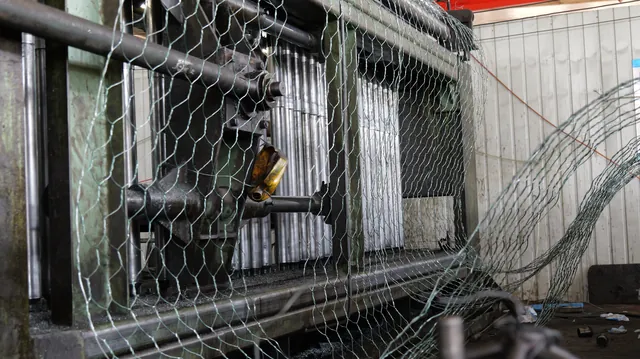 Gabion Box
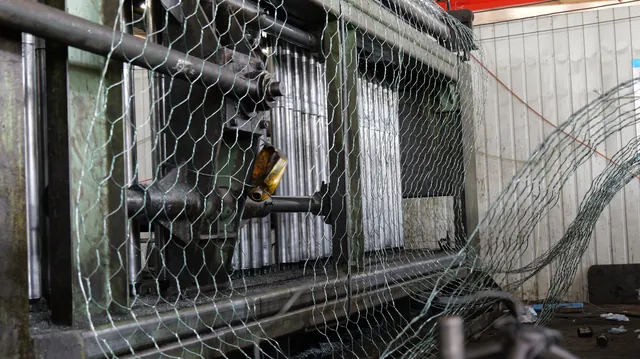 Gabion Basket
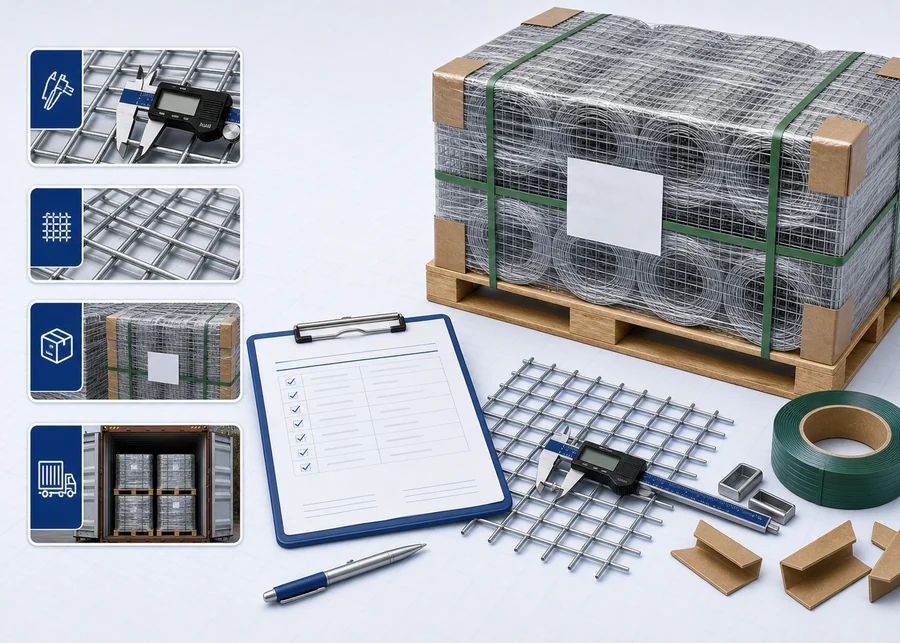 Factory, QC & Packing Reference Pack
 Wire Mesh RFQ Checklist