How ANJIA Uses Wire Mesh Production Photo Updates During Order Follow-Up
Updated Jun 18, 2026
Learn how production photo updates support wire mesh order follow-up without replacing inspection reports, test documents or third-party checks.
Table of contents
When overseas buyers place a wire mesh order, they often ask for production photo updates. They want to see that the order is moving forward: raw material preparation, machines running, visible product checks, packing progress and shipment preparation.
Production photos are useful because they reduce distance between the buyer and the factory. They help both sides discuss the same visible details before goods are packed or shipped. At the same time, photos should be understood correctly. They are a practical reference for order follow-up, not a replacement for formal inspection, material test reports or third-party verification.
This article explains how ANJIA can use wire mesh production photo updates during order communication, what each type of photo can show, what it cannot prove, and how buyers can request clearer photo sets before shipment.

Why production photos matter for overseas buyers
For importers, the period between order confirmation and shipment can be difficult to manage. The goods are not yet in the destination warehouse, but the buyer may already need to update customers, confirm warehouse space, arrange import documents or prepare a sales schedule.
Production photos create visual checkpoints during this waiting period. A photo can show that production has started. A close-up can show the visible mesh pattern, surface appearance or packing state. A label photo can help connect a product or package with the correct order reference.
For buyers building a longer-term supplier relationship, production photo updates also create a useful communication record. When a future order uses similar specifications, previous photos can help the buyer and supplier discuss packaging, labels, sample points and shipment proof more efficiently.
Buyers should still keep expectations realistic. A photo can show one visible moment. It cannot independently confirm every roll, every panel, every measurement point or every document claim. For formal quality verification, buyers should combine photos with clear specifications, agreed QC records, documents and inspection arrangements when required.
What production photos can and cannot prove
Production photos are strongest when they answer visible questions:
- Has the order entered a visible production or packing stage?
- Does the product appearance generally match the agreed type?
- Are labels, item cards or pallet marks visible enough for traceability?
- Are the requested photo stages being recorded before shipment?
They are weaker when the question requires testing, sampling or document review. For example, a photo of raw wire coils may show coil appearance and some labels, but it cannot prove chemical composition. A caliper photo can show a measurement reading at one point, but it does not prove every piece in the batch has the same dimension. A packing photo can show external wrapping and labels, but it cannot show the condition inside every sealed package.
The most useful approach is to treat photos as one layer of order follow-up. They support communication, but they should not be used alone for high-risk specification, compliance or inspection decisions.
Stage 1: raw material and pre-production reference
Before production begins, buyers may request photos of raw wire, prepared material or the pre-production area. The exact photo set depends on the product and order stage. For a welded mesh order, this may include drawn wire, wire coils, machine preparation or visible material tags where available.

These photos can help buyers understand whether the order has moved from paperwork into factory preparation. They may also help the buyer match the order discussion with visible material or process context.
What these photos can show:
- Wire preparation or material handling before mesh production.
- Visible surface condition and general production environment.
- Labels or tags when they are safe and available to photograph.
- A reference point for later production or finished product photos.
What these photos cannot prove:
- Steel chemistry, tensile strength or coating composition.
- Complete material traceability without supporting documents.
- That every unit in the order uses the same material only from one photo.
If certified material records are required, the buyer should request the relevant documents separately. The related guide on wire mesh quality certificates and test documents explains how document requests should stay order-specific.
Stage 2: in-process production progress
In-process photos show the order during production. For wire mesh and fencing products, this may include welding, weaving, cutting, folding, surface treatment or machine output depending on the product type.
These photos are useful because they show the product before packing covers the details. Buyers can review visible mesh pattern, wire arrangement, weld-point appearance, edge condition or coating appearance where the image angle allows it.
However, in-process photos should not be over-read. A single photo cannot show the full production run. It does not replace a sampling plan, calibrated measurement, coating thickness check or inspection report. It simply gives the buyer a visible reference while the order is in progress.
When requesting in-process photos, buyers should specify what they want to see:
- An overview photo showing the machine or production area.
- A close-up showing mesh opening, wire arrangement or edge condition.
- A photo that includes an order reference card if traceability is needed.
- A short factory video where moving production is more useful than still photos.
For buyers who prefer video references, ANJIA also maintains factory video references for wire mesh buyers and broader product videos at the ANJIA video centre.
Stage 3: item identification and QC reference photos
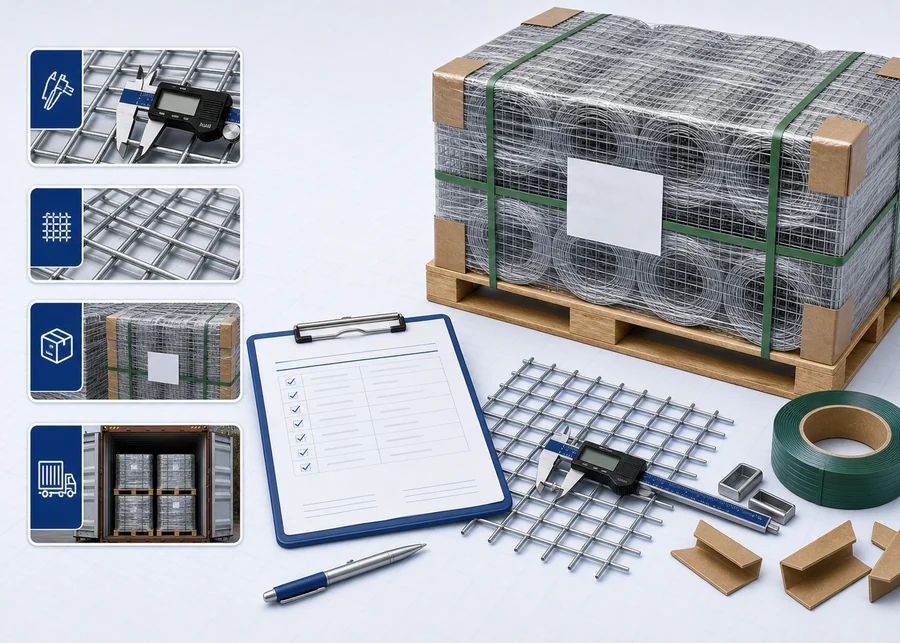
Finished product and QC reference photos are often the most important part of a production update. They can show product appearance after production, selected measurement points, labels, item cards and sample references.

A measurement photo should make the checkpoint easy to understand: which product area is being checked, which tool is being used and what the visible reference shows. It is still a visual reference for the photographed point, not a replacement for a full inspection report.
For selected photo sets, an item identification card can help connect the image to the order. The card may include an order reference, product name, specification or date, with sensitive information covered when the image is prepared for public use or shared outside the direct order communication.
QC reference photos may include caliper readings, ruler photos, coating appearance photos or packing label checks. These should be treated as visual records of the specific sample or location shown in the photo. They are helpful for communication, but they do not prove the full batch unless they are part of an agreed inspection method.
What buyers should ask for:
- A readable photo of the measurement or visible checkpoint.
- A clear view of the product area being checked.
- A reference card or label when multiple items are being produced.
- A note explaining whether the photo is only a reference or part of a formal QC record.
For measurement-focused purchasing questions, the guide on wire diameter, mesh opening and QC photos explains why buyers should define the measurement point, tolerance and document requirement before production.
Stage 4: packing and shipment follow-up photos
Packing photos help buyers review the last visible stage before goods leave the factory. Depending on the order, buyers may request photos of packed rolls, panel stacks, cartons, pallets, labels, package counts, loading arrangement or container seal details.

Packing photos are especially useful for repeat orders, mixed shipments and distributor programs. They can show whether labels are readable, whether pallet grouping looks consistent with the packing plan, and whether the goods are ready for loading.
What packing photos can show:
- External package condition, wrap, straps and pallet arrangement.
- Visible label placement and item code readability.
- General warehouse or loading-stage context.
- Package grouping before container sealing.
What packing photos cannot prove:
- The internal condition of every sealed package.
- Transit performance under rough handling.
- Complete quantity accuracy without matching the packing list and documents.
If the buyer needs stronger shipment proof, packing photos should be reviewed together with the packing list, invoice, container loading photos and seal record.
How buyers can request clearer production photos
Clear photo requests save time for both sides. Instead of asking only for "production photos," buyers should define the purpose of the photo set.
Useful request details include:
- Product type, specification and order reference.
- Which stages need photos: raw material, production, QC, packing or loading.
- Whether an item card, label or PO reference should appear in the frame.
- Which sensitive details should be hidden before wider sharing.
- Whether measurement photos are needed and which measurement points matter.
- Whether photos are for internal buyer review, customer reporting or formal inspection support.
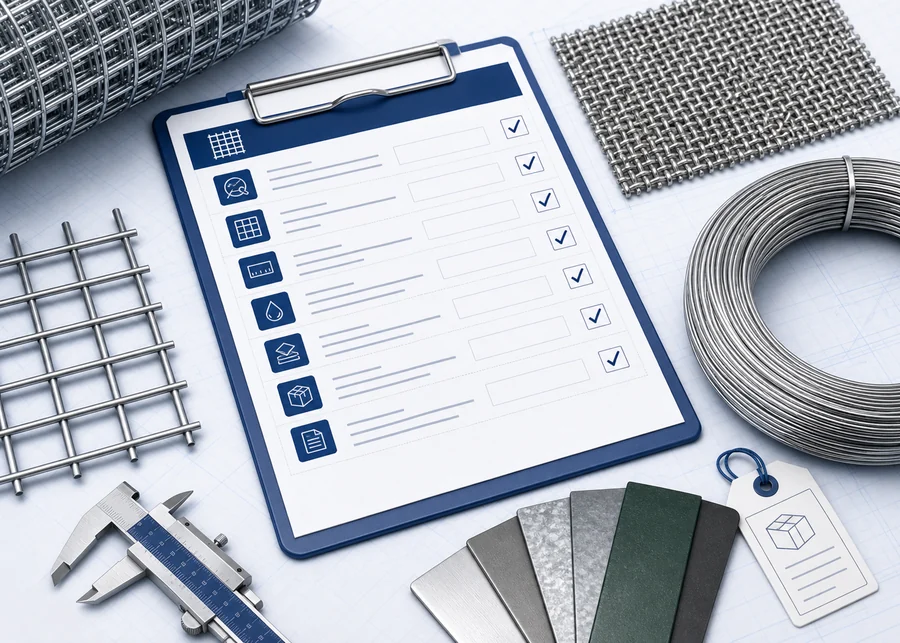
Buyers can also attach a simple photo checklist with their inquiry. This is easier to arrange before production starts than after the order is already packed.
What production photos cannot replace
Production photos should not be used as the only quality control method for high-risk orders. They cannot replace:
Third-party pre-shipment inspection. An independent inspector can sample goods physically, check packing internally, verify quantities and issue a formal report. A supplier photo set cannot provide the same independent status.
Material certificates or test reports. A photo can show that a document exists, but the actual record should be reviewed as a document, not only as an image.
Agreed sampling and measurement rules. If buyers need certain wire diameter, mesh opening or coating checks, the measurement method and acceptance criteria should be clarified before production.
Ongoing process control. Photos capture selected moments. Stable quality still depends on clear specifications, production control and order-specific QC work.
ANJIA can discuss production photo updates, quality document expectations and packing review together with the quotation. Buyers can send product details through the products or inquiry pages so the team can review what photo checkpoints are practical for the order.
Production photo update checklist
| Photo stage | Useful photos to request | What to remember |
|---|---|---|
| Raw material or preparation | Wire preparation, material area, visible tags where available | Photos support context; documents are still needed for material claims. |
| In-process production | Machine overview, mesh output, close-up of visible pattern | One photo shows one moment, not the full production run. |
| Finished product | Overall appearance, selected close-ups, edge or surface condition | Visual review does not replace sampling or formal inspection. |
| QC reference | Measurement reading, item card, sample area being checked | Readings are references unless they are part of an agreed QC record. |
| Packing | Wrapped rolls, pallets, labels, package grouping | External photos cannot show every sealed package internally. |
| Loading | Container overview, pallet count reference, seal photo where applicable | Match loading photos with documents and packing list. |
Frequently asked questions
How many production photo updates should we request?
It depends on the order size, product risk and buyer reporting need. For many orders, two or three checkpoints may be enough, such as production progress, finished product/QC reference and packing. More complex or higher-value orders may require more stages.
Can the purchase order number appear in the photo?
Yes, buyers can request an order reference or item identification card when it is useful for traceability. If the photo will be shared outside the direct order communication, sensitive details can be covered before public use.
Do production photos replace third-party inspection?
No. Production photos are visual follow-up records. They do not replace independent inspection, random sampling, physical testing or formal reporting by a third party.
Can we request measurement photos?
Yes, when the measurement points and expectations are defined before production or before the QC stage. Measurement photos should be treated as references to the specific point shown unless a broader inspection plan has been agreed.
How quickly can photos be provided?
Timing depends on the current production stage, factory schedule, product type and requested photo details. Buyers should request photo checkpoints at the inquiry or order confirmation stage so the production and follow-up teams can plan them.
How does ANJIA handle production photo updates?
ANJIA GROUP can arrange order-specific production, QC, packing or shipment photo updates when the buyer defines what they need to see. The team can also discuss factory videos, quality documents and packing records as part of the quotation and order follow-up process.
Build visibility into the order process
Production photo updates work best when they are planned early. They help buyers see visible progress, organize order records and discuss practical issues before goods are shipped.
They should also be used carefully. A clear photo can support communication, but it should not be mistaken for a certificate, test report or independent inspection. Buyers who combine photos with clear specifications, document requests and inspection planning can manage wire mesh orders with better visibility and fewer last-minute questions.
About ANJIA GROUP
ANJIA GROUP supplies wire mesh, fencing and related industrial products for global B2B buyers. Contact our team to discuss product specifications, matching accessories and export packing.
Discuss your sourcing requirements
Send your product requirements and any relevant drawings to our team.
Get a Free Business Quote Wire Mesh and Fence Products
 Wire Mesh Products
 Factory, QC & Packing Reference Pack
 Wire Mesh RFQ Checklist