
Sourcing Knowledge
A practical weight reference before wire mesh quotation
Wire mesh weight is an estimate before quotation, not a final commercial value. This guide is written for importers, distributors and project procurement teams that need to separate material, wire diameter, opening or pitch, roll or panel size, quantity and allowance so the supplier can understand the basis of the calculation. The same opening can produce different weights when wire diameter, weave route, welding loss, edge treatment, coating, tolerance, packing or cut size changes. Use this guide with the Weight Calculator and RFQ Specification Builder to prepare a clearer inquiry, then let ANJIA confirm production feasibility, tolerance, packing weight and final quotation details during order review.
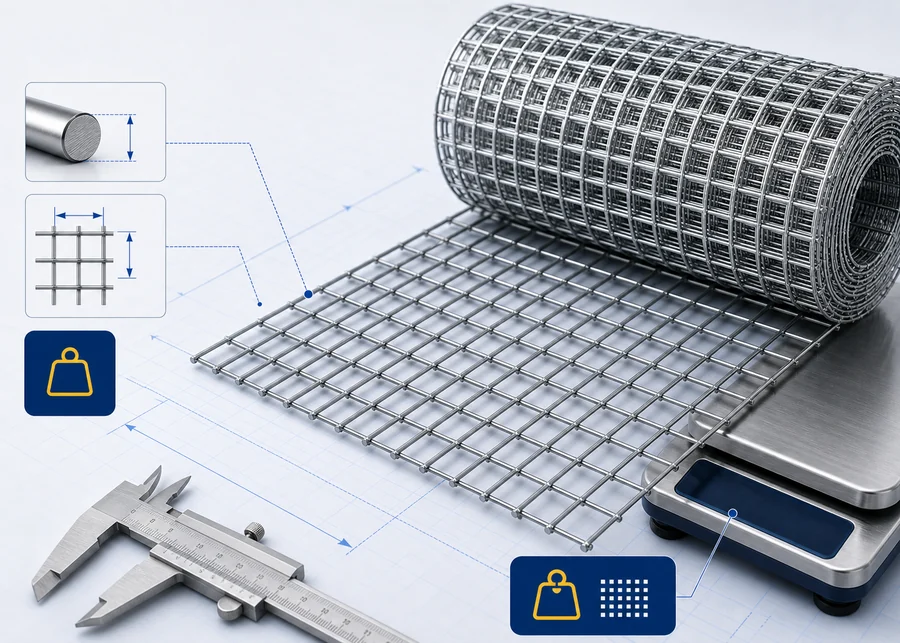
Citation-ready answer
What does a wire mesh weight estimate mean?
A wire mesh weight estimate is a sourcing reference used before quotation, not the final order weight. The estimate depends on material density, wire diameter, clear opening or center-to-center pitch, mesh count, roll width, roll length, panel size, piece count and allowance. Small changes in wire diameter can change weight significantly because round wire area changes with the square of diameter, and smaller openings usually add more wires per square meter. Coating, edge treatment, cutting, bending, welding route, tolerance, packing, pallet weight and container loading method can also change the commercial weight used in quotation. It is most useful for early budget review and supplier comparison, not final settlement. Importers, construction companies, distributors and project procurement teams should use the calculator to prepare an RFQ basis, then ask ANJIA to confirm production feasibility, tolerance, packing weight, gross weight and final quotation details.
Use this answer as a procurement estimate reference. It is not a final quotation, engineering design, packing guarantee or project compliance approval.
Weight inputs
Fields that change a wire mesh weight estimate
A useful estimate starts with the same fields that a supplier needs for quotation review. When a field is uncertain, mark it as To be confirmed instead of treating the calculator output as a fixed order weight.
Material density
Carbon steel, galvanized steel and stainless steel have different density assumptions, so material should be selected before comparing weights.
Wire diameter
Wire diameter has a large effect on weight because the round wire cross-section changes faster than the diameter number itself.
Opening or pitch
Clear opening, center-to-center pitch and mesh count describe spacing differently and should not be mixed in one RFQ without explanation.
Size and allowance
Roll width, roll length, panel size, piece count, edge treatment and allowance affect the final estimated total weight.
Buyer questions
How to read wire mesh weight, opening and wire diameter
These answer blocks are written for importers, distributors and project procurement teams that need a practical estimate before asking for price.
What changes wire mesh weight before quotation?
Wire mesh weight changes mainly with material density, wire diameter, opening or pitch, roll or panel size and order allowance.
- Material changes the density basis used for the estimate.
- Wire diameter changes the metal cross-section and can shift weight quickly.
- Smaller openings usually mean more wires per area and a heavier mesh.
- Panel count, roll length, cut edges, coating and packing allowance can change total shipment weight.
What is the difference between clear opening and center-to-center spacing?
Clear opening is the open gap between adjacent wires; center-to-center spacing is the distance from one wire centerline to the next.
- For many welded or woven mesh estimates, pitch can be treated as clear opening plus wire diameter.
- If a buyer only knows clear opening, the RFQ should say clear opening and provide the wire diameter separately.
- If a drawing gives pitch, do not re-label it as clear opening without checking the drawing basis.
How do wire diameter and opening affect weight?
A thicker wire increases weight, while a smaller opening usually increases the number of wires within the same area.
- Changing wire diameter from 2.0 mm to 3.0 mm is not a small linear adjustment for weight.
- Keeping the same wire diameter but reducing opening adds more wires per square meter.
- Comparing two specifications is only useful when material, size basis and opening definition are consistent.
Why can calculator weight differ from quotation weight?
A calculator gives a preparation estimate, while quotation weight can include tolerance, production route, coating, edge treatment, packing and order-specific review.
- Actual wire tolerance and mesh pitch tolerance can change the measured weight.
- Coating, galvanizing, PVC coating, edging, framing, bending or cutting can add or remove material.
- Packing weight, pallet weight and container loading plan are separate from net mesh weight.
What details should buyers send for a better weight estimate?
Send product type, material, wire diameter, opening definition, roll or panel size, quantity, finish, drawing or sample photo and destination when available.
- State whether the opening value means clear opening, pitch or mesh count.
- Give quantity basis, such as pieces, rolls, square meters or project area.
- Attach drawings or photos when edge, cut shape, welded frame or weave type is difficult to describe.
Use the right resource
Guide, Calculator and Builder work together
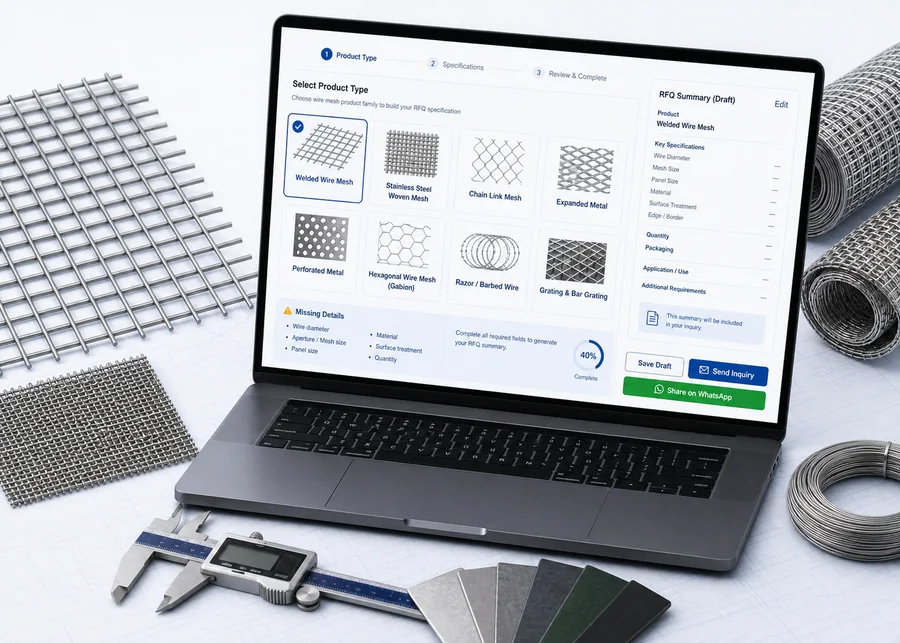
The guide explains the sourcing logic. The calculator helps prepare an estimated weight for RFQ review. The Builder turns known and missing details into a copyable RFQ summary for procurement discussion.
Calculator
Wire Mesh Weight Calculator
Estimate mesh weight from material, opening, wire diameter and roll or panel size before RFQ review.
Interactive tool
Wire Mesh RFQ Specification Builder
Turn confirmed and missing values into a structured RFQ summary for procurement review.

Checklist
Wire Mesh RFQ Checklist
Review material, size, finish, packing and destination details before sending an inquiry.
Last updated: July 8, 2026