
Coated vs Plain Aluminum Window Screen: What Importers Should Confirm Before RFQ

A buyer-first comparison of coated and plain aluminum window screen orders, focused on finish confirmation, roll format and export packing.
Table of contents
Coated vs plain aluminum window screen is a useful comparison only when the buyer treats finish as one part of a complete order record. Both routes still need the material route, mesh count, wire diameter, roll width and length, quantity, packing and destination. A plain or natural silver finish may be the requested product appearance; a coated route adds a color or finish reference that must be confirmed by sample, color card or approved order information. Neither label alone defines project suitability, service life or color acceptance. Before asking ANJIA for a quotation, importers should state the intended market, finish reference, roll format, packing and label needs, then separate the product facts a supplier can quote from any local installation or approval decision. This record also helps receiving teams distinguish finish variants after the rolls arrive.

What should importers compare between coated and plain aluminum window screen?
Start with the order record, not a general statement that one finish is “better.” Confirm whether the request is for pure aluminum wire or coated aluminum wire, then list the mesh count, wire diameter, roll width, roll length, quantity and packing. For a plain route, define whether the buyer expects a natural silver appearance and whether a sample is needed. For a coated route, provide the color reference, sample or other agreed approval route. Ask whether the order will be sold as retail rolls, used by a fabricator or received as distributor stock, because labels, cartons and pallet handling may differ. The supplier can quote the stated screen product and export scope; the buyer should retain decisions about local climate, installation, end-use performance and final market approval.
Define the two finish routes clearly
Plain aluminum finish means the natural metallic appearance specified for the aluminum screen route. It still needs a clear material, mesh, wire and roll record.
Coated aluminum finish means an aluminum screen route with a stated color or coating reference. The RFQ should identify how the color or finish will be reviewed before bulk supply.
The live Aluminum Window Screen product page lists natural silver and coated color discussions as part of the quotation route. It does not remove the need to state exact mesh, wire, roll and packing fields.
Comparison table for an importer RFQ
| Order question | Plain aluminum route | Coated aluminum route | What to send with the RFQ |
|---|---|---|---|
| Finish reference | State natural metallic appearance if required. | State color, coating reference or sample process. | Sample photo, color card or written finish reference. |
| Mesh and wire | Confirm as a normal screen specification. | Confirm separately from the finish instruction. | Mesh count, wire diameter and sample requirement. |
| Roll format | Confirm width, length, core and roll protection. | Confirm the same roll fields plus surface-protection needs. | Roll size, quantity and receiving format. |
| Labels and cartons | May use standard or buyer-defined roll identification. | May need color/SKU distinction in labels and cartons. | Label text, carton marks, barcode or private-label scope. |
| Sample review | Useful where hand-feel or appearance matters. | Important where color or coating appearance must be agreed. | Required sample, review contact and approval record. |
The table supports quotation comparison. It is not a guarantee that a finish will match an unspecified local sample, remain unchanged in every environment or satisfy a particular installation requirement.
Keep finish confirmation separate from material-family selection
If the buyer is deciding between fiberglass and aluminum window screen, use the existing Fiberglass vs Aluminum Window Screen guide for that material-family question. This article begins after aluminum has already been selected and the buyer is choosing between a natural or coated finish route.
Avoid combining unrelated decisions in one sentence such as “black coated aluminum is best for every hot market.” A color, finish, sample and packing decision can be quoted when it is documented. Climate suitability, product installation and local approval remain buyer-side or project-side decisions.

Sample, color and finish approval questions
Before bulk supply, buyers can state whether they need a physical sample, retained reference, color card, finish photograph, roll label proof or carton-artwork review. These are practical commercial checks. They prevent a supplier from guessing which visual reference applies to a mixed order.
Finish approval reference means the sample, color record or written instruction the buyer uses to identify the requested appearance. It should be retained with the commercial RFQ, not left as an informal verbal description.
When the order contains more than one color, mesh count or roll size, list each SKU separately. That makes quotation, label planning, carton separation and warehouse receiving more reliable.
Roll packing and export preparation
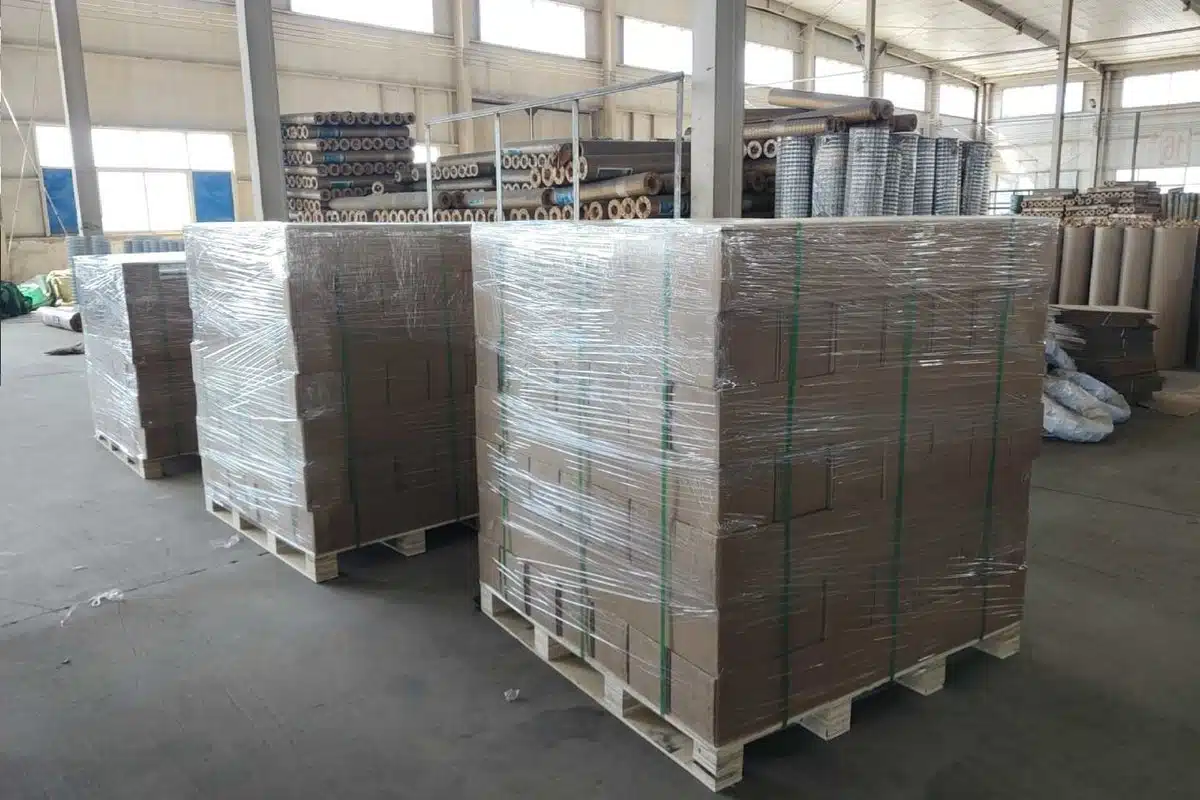
Finish selection should be reviewed together with roll protection and labels. Buyers should state whether rolls need individual wrapping, cartons, palletization, carton marks, barcode labels, mixed-SKU separation or destination-specific handling. For a detailed roll-packing sequence, see Window Screen Roll Packing.
Packing photographs and roll labels can support receiving review, but they do not replace an agreed inspection process or prove an unspecified finish requirement.
Build a SKU record before comparing quotations
Many finish questions become clearer when the buyer creates one line for every saleable roll. A line can identify the aluminum route, plain or coated finish, color reference where applicable, mesh count, wire diameter, roll width, roll length, quantity and intended label. If the buyer orders more than one finish, do not group them under one broad description such as “aluminum screen assorted colors.” Separate lines let suppliers quote the same scope and let warehouse teams identify cartons after delivery.
For a distributor order, the SKU record can also state whether a roll label, carton mark, barcode, private-label artwork or pallet mark is requested. These are packaging instructions, not a substitute for confirming the product itself. A buyer should keep finish approval, artwork approval and packing approval as related but distinct records.
The same approach is useful when a market sample is supplied. Describe what the sample is intended to confirm: mesh appearance, roll format, color, label presentation or carton layout. Do not assume that one sample silently defines every other order field. If the buyer needs a tolerance, weight, core, wrapping or carton quantity reviewed, write that requirement into the RFQ.
Receiving checks for mixed finish orders
When a shipment contains both plain and coated rolls, receiving teams benefit from a simple arrival check. Confirm the roll label against the SKU record, identify the stated finish/color, check the carton or pallet mark, and keep any required packing photographs with the shipment file. If a buyer has requested samples or retained references, compare only against the agreed reference rather than an informal screen image.
These checks improve internal handling and make follow-up questions more specific. They do not establish a product-performance claim or replace an agreed quality-control, inspection or acceptance process.
Seven checks before quotation
- Confirm that aluminum window screen, rather than another screen material, is the selected product route.
- State whether the order is plain/natural or coated, and attach the relevant finish reference.
- List mesh count, wire diameter, roll width and roll length for every SKU.
- Identify color mixes, sample needs and the finish-review contact or process.
- State roll wrapping, cartons, labels, pallet or mixed-SKU requirements.
- Provide quantity, destination, trade term and receiving constraints.
- List any requested photographs, measurements, documents or packing records before shipment.
Questions that remain with the buyer
The buyer should confirm local market preference, installation method, final use, climate exposure, retail presentation, project approval and acceptance requirements. Those points cannot be decided solely from a plain or coated finish label.
ANJIA can help turn the documented finish, mesh, roll and packing details into a clear quotation. Send the available information through the ANJIA inquiry page so our team can identify any missing commercial fields before quotation.
Frequently asked questions
Does coated mean the same thing as a guaranteed color match?
No. A coated route should be tied to an agreed color or finish reference and review process; it is not a universal color-match guarantee.
Is plain aluminum screen always the right choice for a particular climate?
No. The finish route must follow the buyer’s documented requirement and local decision process.
Should color mixes be listed separately?
Yes. List each color, mesh and roll-size SKU separately so labels, cartons and packing can be planned clearly.
Send a quotation-ready aluminum window screen RFQ
Send your plain or coated finish requirement, mesh count, wire diameter, roll size, quantity, sample or color reference, packing needs and destination through the ANJIA inquiry page. We will help organize the product and export fields for a clear quotation.
About ANJIA GROUP
ANJIA GROUP supplies wire mesh, fencing and related industrial products for global B2B buyers. Contact our team to discuss product specifications, matching accessories and export packing.
Discuss your sourcing requirements
Send your product requirements and any relevant drawings to our team.
Get a Free Business Quote Aluminum Window Screen
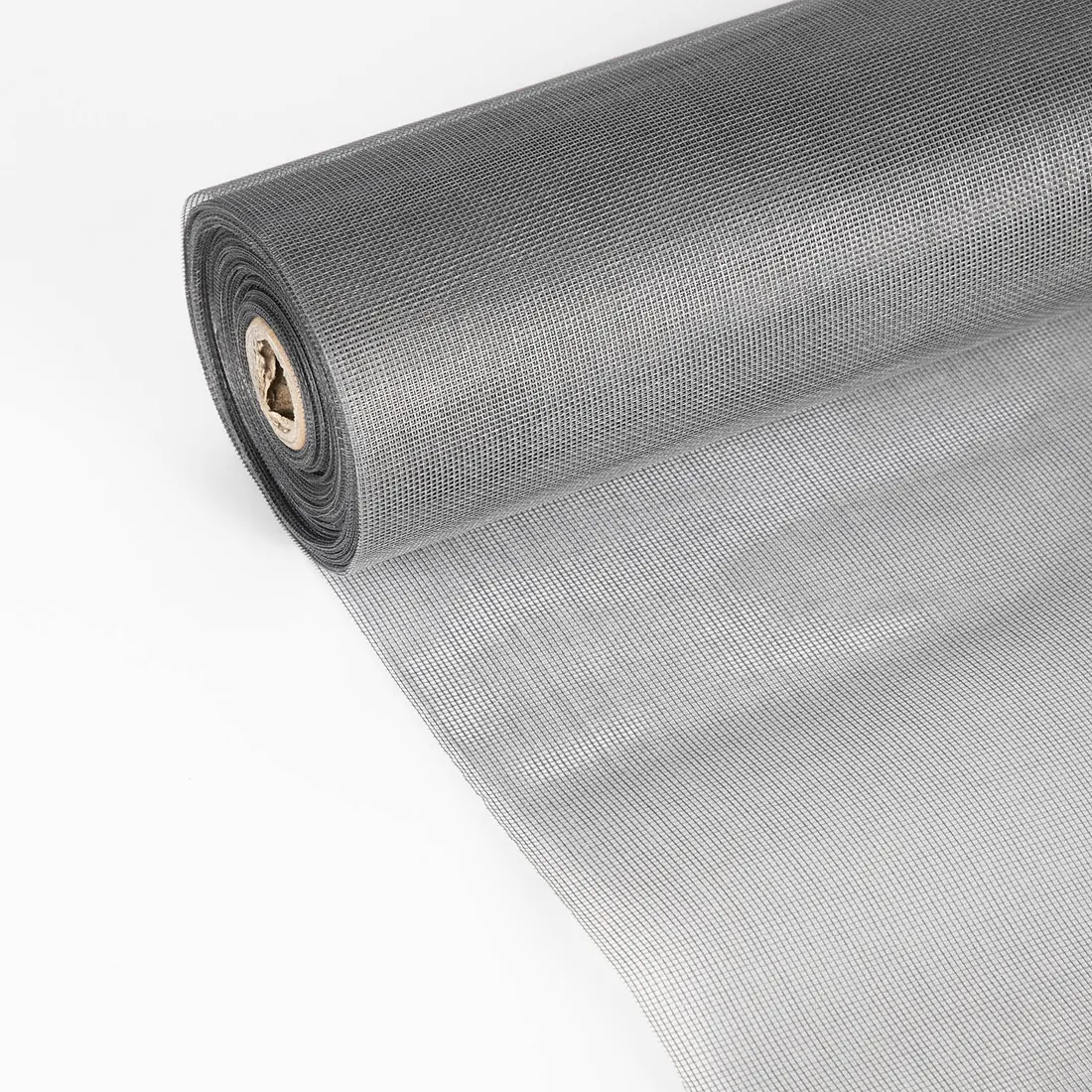 Window Screen, Wire and Nails
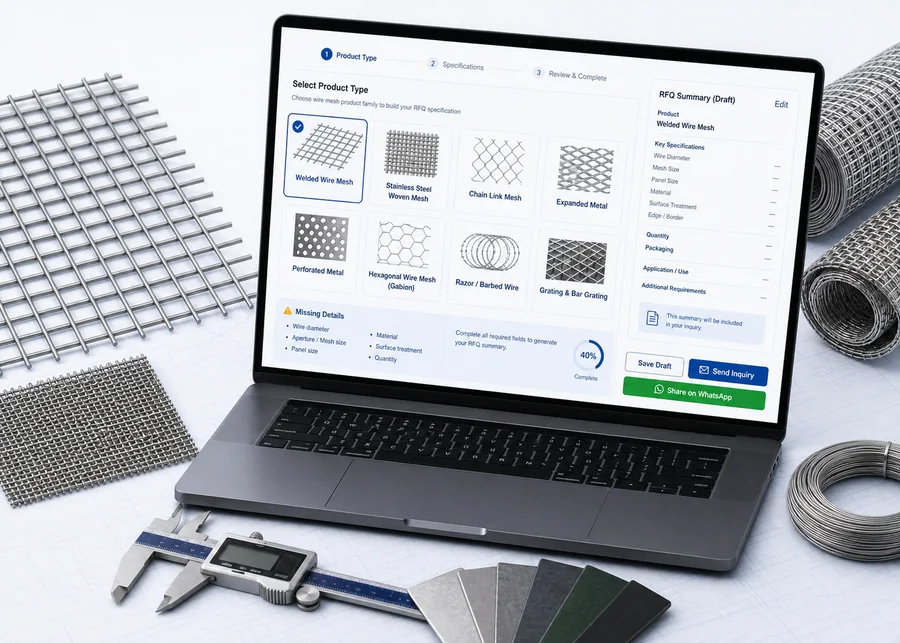 Wire Mesh RFQ Specification Builder
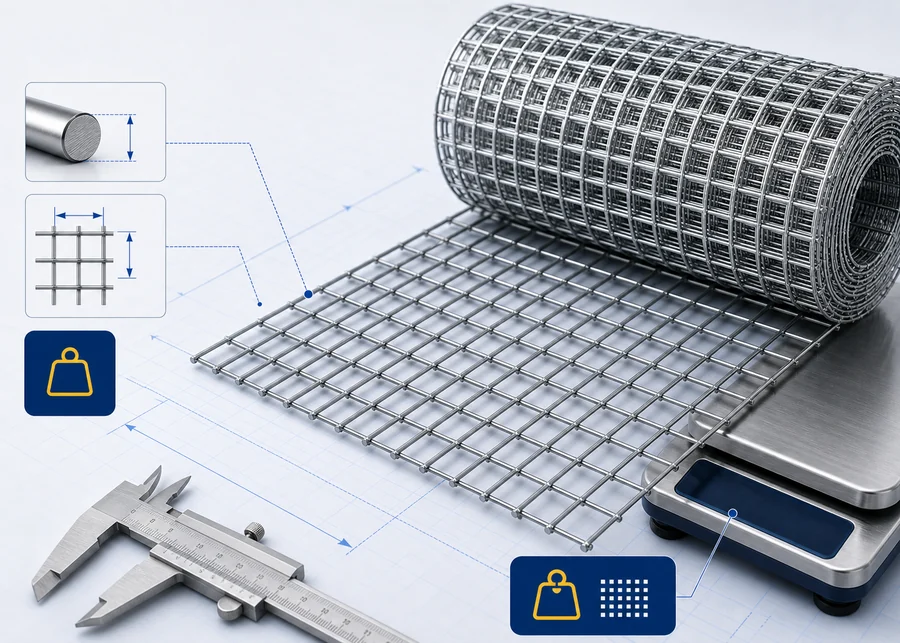 Wire Mesh Weight Calculator