
Welded Brick Mesh vs Expanded Metal Brick Mesh: What Buyers Should Confirm Before RFQ

A buyer-first comparison of welded ladder brick mesh and expanded metal brick mesh, focused on construction, RFQ fields and packing.
Table of contents
Welded brick mesh and expanded metal brick mesh are both discussed for masonry reinforcement supply, yet they are different product constructions and should not share one vague RFQ line. Welded brick mesh is commonly described as a ladder-style strip with longitudinal wires and transverse cross wires. Expanded metal brick mesh is a narrow strip made by slitting and stretching sheet metal into an opening pattern. A comparable request should first state which construction is required, then identify the strip width, roll or strip length, wire diameter or sheet thickness, opening or cross-wire spacing, material route, finish, packing, quantity and destination. A drawing, approved sample or existing product reference should stay with the same product line. This helps ANJIA organize a clear product quotation while masonry design, wall detail and final installation remain with the buyer's responsible project process.

Start by naming the brick-mesh construction
The phrase “brick mesh” can refer to more than one narrow
reinforcement format. A buyer who only sends a width and a roll length
may receive quotations for different constructions. The first line of
the RFQ should therefore state welded ladder brick mesh,
expanded metal brick mesh, or another construction
identified by a drawing or sample.
Welded brick mesh is a strip where wires are joined at intersections. Expanded metal brick mesh is formed from sheet metal that is slit and stretched into openings. Strip width is the stated narrow width of the masonry product. Connection pattern means the transverse welded-wire spacing for a ladder construction or the opening pattern for an expanded-metal construction. These are product-description fields, not an engineering recommendation.
For the broader product route, see Brick Mesh for Masonry Reinforcement. The existing Brick Mesh Specification and Packing Guide covers wider RFQ and packing records; this article focuses on the first construction choice.
Welded ladder mesh and expanded metal mesh: RFQ comparison
| RFQ field | Welded brick mesh | Expanded metal brick mesh |
|---|---|---|
| Construction | Longitudinal wires joined by transverse cross wires | Narrow expanded-metal strip with a stated opening pattern |
| Main dimensions | Strip width, roll/strip length, longitudinal-wire and cross-wire information, stated spacing | Strip width, roll/strip length, sheet thickness, opening pattern and stated strand/detail fields where required |
| Reference to attach | Ladder layout, wire arrangement or sample | Opening-pattern detail, strip reference or sample |
| Packing record | Roll or strip grouping, labels and bundle condition | Roll or strip grouping, edge protection, labels and pallet/bundle condition |
The table is an RFQ comparison tool. It does not identify which construction a wall should use. The buyer's drawing, masonry system and responsible project review determine the required route.
What to confirm for welded brick mesh
For a welded ladder-style product, keep the longitudinal wires and the transverse cross wires visible in the product record. Where the buyer has stated wire diameters or cross-wire spacing, list those values separately instead of describing the mesh with one general gauge. Also include strip width, roll or strip length, material or finish route, packing unit and quantity.
The drawing or sample should show any required ladder arrangement, protruding-wire detail or strip-end condition. A generic welded-mesh photo cannot replace that reference. If the buyer is also comparing broader construction mesh, Welded Wire Mesh is a separate product family and should not be substituted without confirming the masonry requirement.
What to confirm for expanded metal brick mesh
For the expanded-metal route, record the strip width, roll or strip length, stated material thickness, opening pattern, finish route and packing. An expanded brick-mesh strip is not specified by welded-wire spacing, because its construction is formed from sheet rather than by welded cross wires.
The buyer should supply an aperture detail, drawing or sample if the opening pattern must match an existing material. When the inquiry only says “expanded mesh,” clarify that the requested item is the narrow brick-mesh format rather than a larger expanded metal sheet. The Expanded Metal Sheet route can help distinguish the broader sheet family from a masonry strip request.

Do not compare wire diameter and sheet thickness as if they were the same field
A welded ladder mesh request can call for wire information, while an expanded brick mesh request can call for sheet thickness and opening-pattern information. Both are material-description fields, but they describe different construction routes. Keep the original terms from the drawing or sample rather than converting one route into the other.
The same care applies to width, length and packing. A product can have a similar narrow roll appearance while using a different construction, opening pattern or record of dimensions. A clear RFQ separates those fields so that suppliers quote the intended brick mesh, not merely a similar-looking roll.
Use a drawing and tool summary together
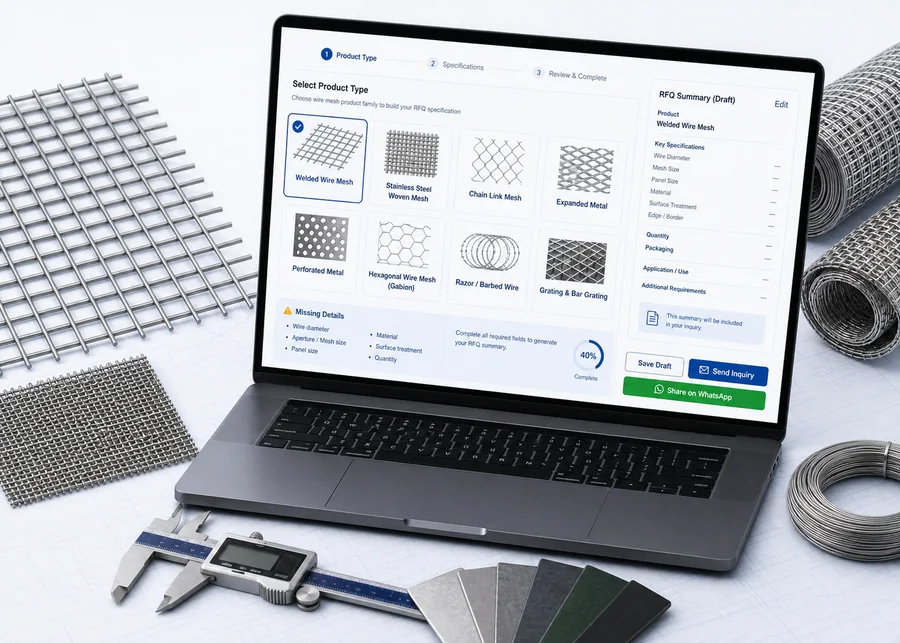
The Wire Mesh RFQ Specification Builder can help collect product, size, finish, packing and destination fields into a single inquiry summary. Use it to organize stated information, then attach the drawing or sample that defines the welded or expanded construction.
Tool output does not decide masonry design, reinforcement spacing or installation method. If a project requires particular drawing, approval or test language, provide that project requirement rather than asking a supplier to infer it from a general brick-mesh product name.
10 checks before sending a brick-mesh RFQ
- State whether the request is for welded ladder brick mesh or expanded metal brick mesh.
- Attach a drawing, approved sample or clear reference for the requested construction.
- List strip width and roll or strip length for each product line.
- For welded mesh, record longitudinal-wire and cross-wire fields separately where specified.
- For expanded mesh, record stated sheet thickness and opening-pattern fields where specified.
- State the required material or finish route without assuming a generic label is sufficient.
- Keep brick mesh separate from general welded wire mesh or full expanded-metal sheets in the quotation record.
- Confirm the packing unit, bundle or roll grouping, labels and destination handling needs.
- Request product, measurement, packing or loading photographs by product line when needed.
- Confirm quantity, destination and any required commercial or project documents before quotation comparison.
Packing and receiving questions
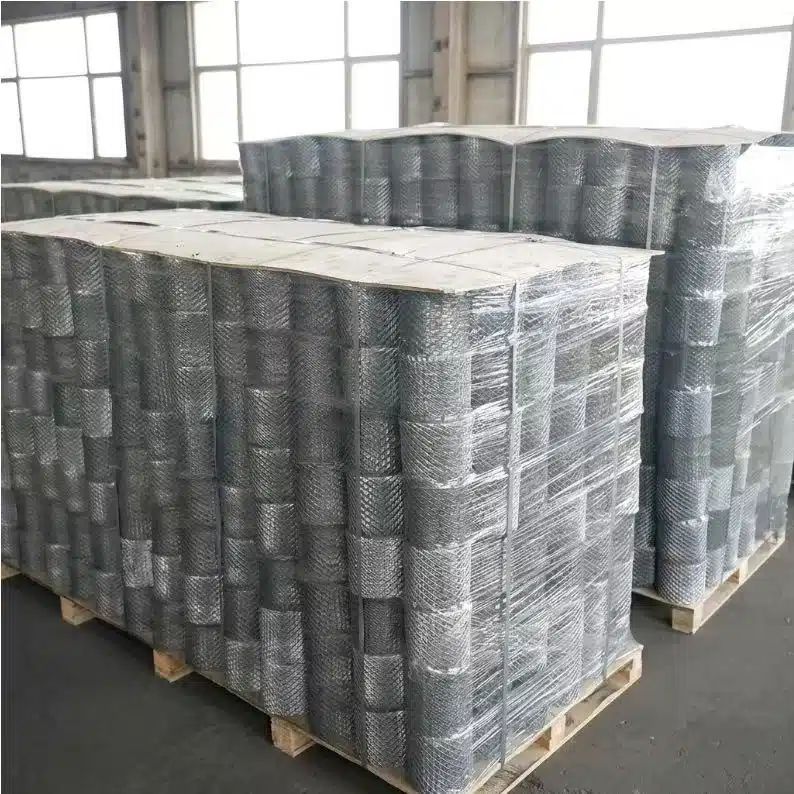
Welded and expanded brick mesh can both arrive as narrow rolls or strip groups, but their product identification should remain distinct. The packing record should identify the construction route, stated strip size, product line, package unit and visible condition. If the shipment includes both constructions, do not count all rolls under one generic “brick mesh” label.
Buyers can also state whether rolls need pallet separation, edge protection, labels, protective wrapping or loading photographs. These are packing instructions, not proof of masonry performance. They help the receiving team compare the supplied package with the approved product record.
Avoid cross-format assumptions during quotation comparison
The most common comparison error is to transfer a familiar field from one construction into the other. A buyer may know the cross-wire spacing for a welded ladder strip and ask for the same description on an expanded-metal strip. Another buyer may have an expanded opening reference but omit the welded-wire arrangement needed for a ladder product. In either case, the result can be two quotes for different constructions that appear comparable only because their width and roll length are similar.
Keep the source language from the drawing, sample or product record. For welded mesh, list the wire arrangement and stated spacing. For expanded brick mesh, list the sheet-based opening reference and stated thickness. If the buyer wants prices for both routes, request two separate quotation lines with their own drawings, packing requirements and quantity fields. That gives a supplier a clearer commercial basis and gives the buyer a clearer receiving record later.
When a sample is useful
A sample can help when the buyer is changing construction type, matching an existing narrow strip, confirming an opening pattern or reviewing how rolls are grouped for receiving. The sample should be identified by product construction and the same reference should appear in the quotation record. A sample does not replace the project drawing or authorize a supplier to choose the masonry design, but it can reduce ambiguity around visible construction and packaging details.
Frequently asked questions
Is welded brick mesh the same as expanded metal brick mesh?
No. Welded brick mesh uses wires joined at intersections, while expanded brick mesh is formed from slit and stretched sheet metal. Their RFQ fields should therefore be kept separate.
Can a supplier quote brick mesh from width and roll length alone?
Not reliably. The RFQ should also identify the construction, drawing or sample, material route, relevant wire or sheet fields, finish, packing and destination.
Should expanded brick mesh be specified like full expanded metal sheet?
No. Identify that the request is for a narrow masonry strip, then state the relevant strip dimensions and opening-pattern reference. Do not assume a full-sheet expanded-metal specification is interchangeable.
Can ANJIA help prepare a brick-mesh inquiry?
Yes. Send the construction type, dimensions, drawing or sample, material/finish route, quantity, packing requirements and destination through the ANJIA inquiry page. We can help organize the product and export fields for a clearer quotation discussion.
About ANJIA GROUP
ANJIA GROUP supplies wire mesh, fencing and related industrial products for global B2B buyers. Contact our team to discuss product specifications, matching accessories and export packing.
Discuss your sourcing requirements
Send your product requirements and any relevant drawings to our team.
Get a Free Business Quote Brick Mesh
 Galvanized Iron Wire
 Wire Mesh RFQ Specification Builder
 Wire Mesh Weight Calculator