
Window Screen Roll Packing: Width, Core, Labels, Cartons and Pallet Checks
A practical packing checklist for importers buying window screen rolls, covering roll size, core, film, cartons, labels, pallets and shipment proof.
Table of contents
Window screen roll packing is part of the product specification, not a detail to leave until the container is ready. For importers, a roll that arrives with crushed edges, loose wrapping or unclear labels can create warehouse sorting problems even when the mesh itself was produced correctly.
Before comparing quotations, buyers should confirm how the roll will be wound, wrapped, labeled, packed into cartons and loaded onto pallets. The same approach is useful whether the order is for retail-ready rolls, distributor inventory or project supply. For application context, buyers can also review our window screen applications guide.
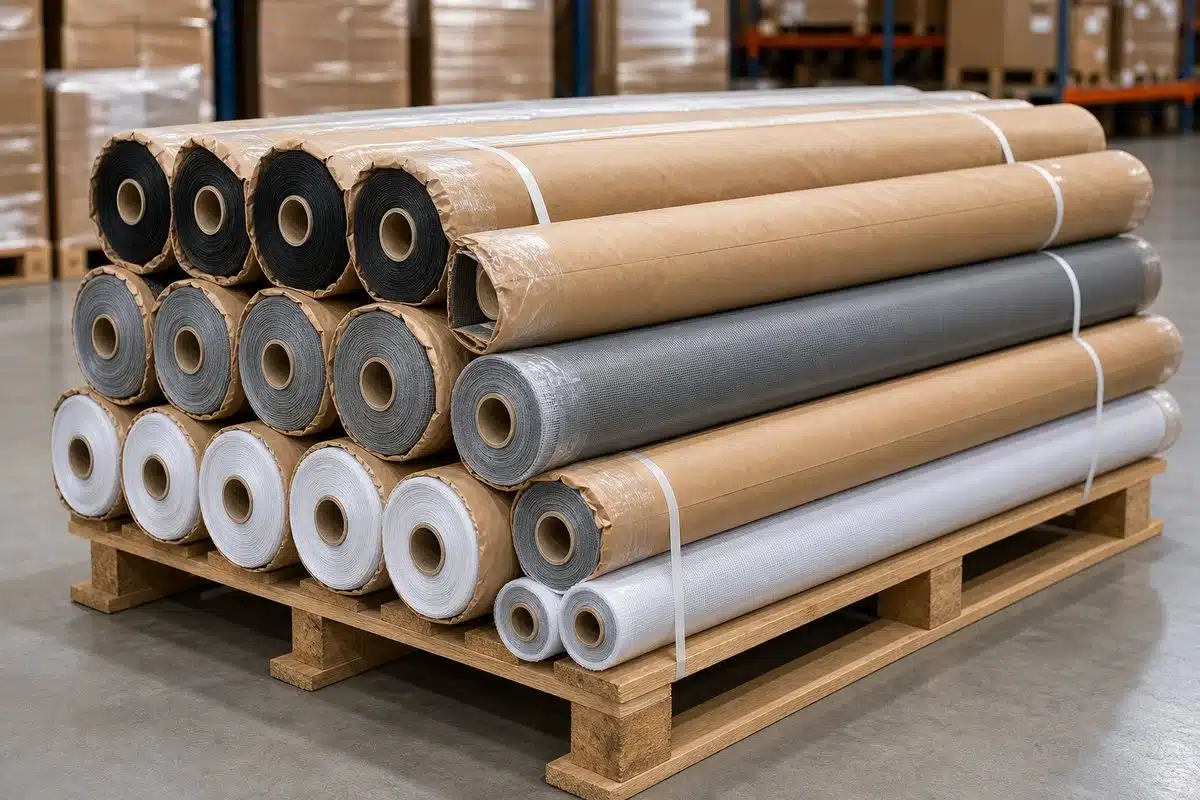
1. Start with roll width and roll length
Packing starts with the roll size. Width, length, mesh type and material weight determine the finished roll diameter, the paper core requirement, the carton size and the loading plan.
For each item, the RFQ should state:
- screen material, such as fiberglass, aluminum or another specified option;
- mesh count or opening requirement when applicable;
- roll width and roll length;
- color or surface finish;
- roll quantity per item;
- whether the goods are for retail sale, warehouse stock or project cutting;
- destination and preferred packing method.
Avoid assuming that one carton or pallet arrangement can cover every window screen item. A narrow lightweight roll and a wider heavier roll may need different cartons, different pallet stacking and different handling instructions.
2. Confirm the paper core before quotation
The paper core supports the roll from the inside. If the core is too weak for the roll width or material weight, the roll can deform during storage or long-distance transport. If the core length does not match the roll width, the roll edge may become exposed or difficult to handle.
Buyers should ask the supplier to confirm:
- core material and wall strength;
- core diameter or supplier standard for the quoted item;
- whether the core is included in the unit price;
- whether the core end needs extra protection;
- whether a sample photo can show the winding and roll end.
The goal is not to demand the largest possible core. The goal is to match the core to the order. A supplier should be able to explain why a certain core is suitable for the quoted roll size and packing method.
3. Use film wrapping to protect the roll surface
Plastic film keeps the roll tight and helps protect the mesh surface from dust, moisture exposure during handling and abrasion inside the carton. It also prevents the roll from loosening before warehouse receiving.
Important points to confirm include:
- film type, such as stretch film or shrink film;
- whether the full roll surface and roll ends are covered;
- whether the buyer needs plain film or printed branding;
- whether labels are placed on film, carton or both;
- whether wrapped-roll photos will be provided before bulk shipment.
For distributors who will repackage rolls under their own brand, plain protective film is usually easier to manage. For retail-ready supply, film, label, carton and barcode requirements should be confirmed together.

4. Match individual cartons to the actual roll
The individual carton protects one roll during handling and gives the buyer a clear surface for product information. A carton that is too loose allows the roll to move during transport. A carton that is too tight may press the roll edge or make unpacking difficult.
Instead of using a fixed carton formula, buyers should confirm the carton after the supplier calculates the actual rolled diameter. The carton discussion should include:
- finished roll diameter after winding;
- carton length, width and height;
- single-wall or double-wall construction;
- closure method, such as tape or other agreed sealing;
- whether the carton must be suitable for retail display;
- label position on one face or multiple faces.
For heavier or more sensitive screen rolls, carton strength and pallet stacking become more important than a small unit-price saving. If the destination warehouse handles cartons several times before final sale, stronger carton construction may be worth confirming early.
5. Make labels useful for warehouse receiving
Labels should let the receiving team identify the item without opening the carton. Clear labels reduce sorting errors when a shipment includes several mesh counts, colors, widths or materials.
A practical export label can include:
- product name and material;
- mesh count or specification reference;
- roll width and roll length;
- color or finish;
- quantity per carton or master carton;
- gross weight and net weight when required;
- carton dimensions when required;
- buyer item code, purchase order number or project reference;
- destination language requirement if the buyer needs bilingual labels.
The safest approach is to approve one label layout before bulk production. Buyers can ask for a label proof or packing photo, then compare the approved information with the cartons prepared for shipment.
6. Decide whether master cartons are needed
Some orders use individual cartons only. Other orders consolidate multiple individually packed rolls into master cartons. The right choice depends on roll size, retail plan, warehouse receiving method and container loading target.
When master cartons are used, confirm:
- how many individual cartons are inside each master carton;
- whether internal dividers are needed;
- master carton material and wall strength;
- maximum practical handling weight;
- outer carton label format;
- whether cartons are stacked directly or palletized.
Do not rely only on a low carton count or a neat loading calculation. A master carton that is too heavy or too weak can create damage at the destination. The packing design should balance container efficiency with safe handling.
7. Plan pallets and loading proof
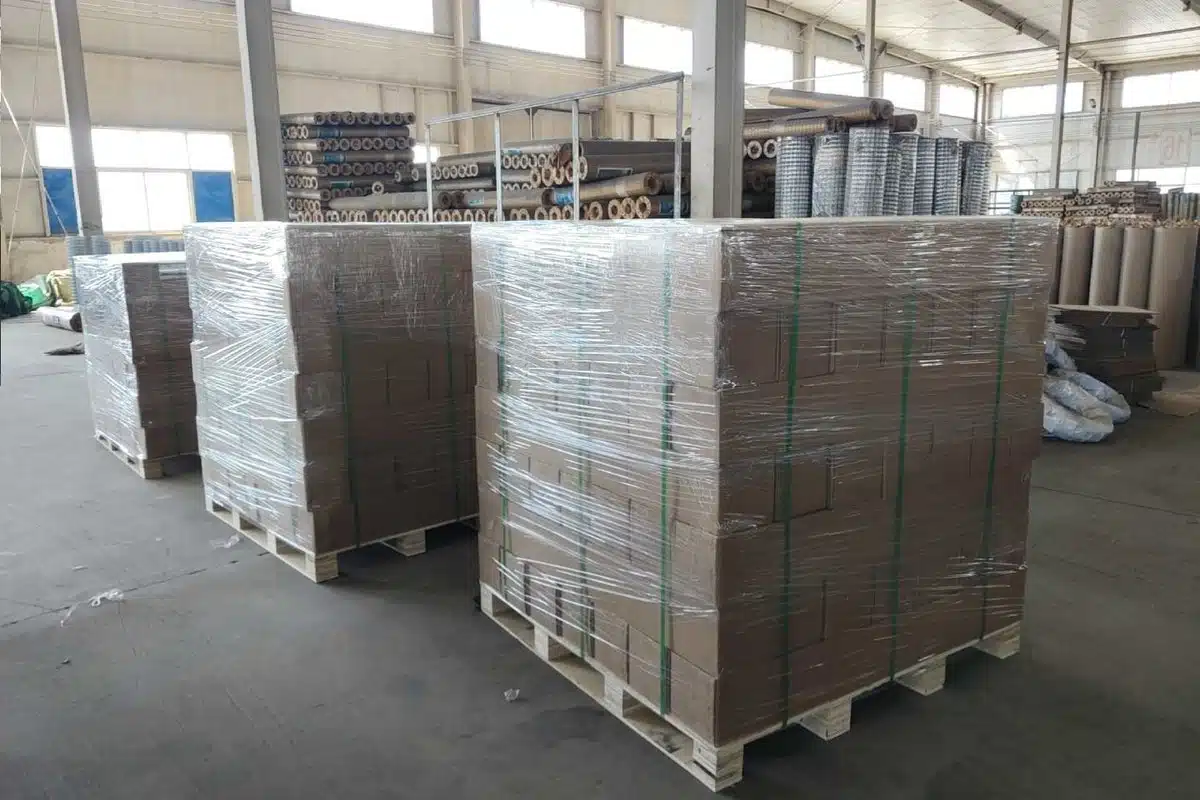
Pallet packing turns cartons into a stable export shipment. The exact pallet choice depends on the destination, container plan and buyer requirement. When wooden pallets are used, buyers should confirm whether destination rules require heat treatment or other documentation.
For palletized window screen shipments, request confirmation of:
- pallet type and approximate dimensions;
- cartons per layer and layers per pallet;
- stretch film, straps or corner protection;
- shipping mark position;
- whether pallets are stackable;
- total pallet count and container loading arrangement;
- packing and loading photos before shipment.
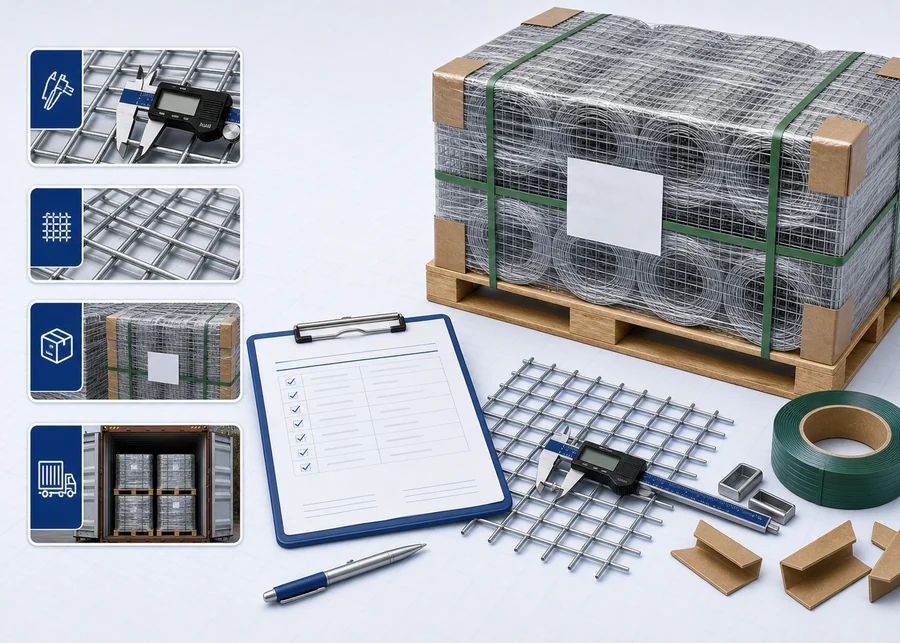
Packing photos are especially useful when the buyer cannot inspect goods before loading. A good photo set should show wrapped rolls, carton labels, master cartons when used, pallet wrapping and container loading. For a broader photo checklist, see our guide to wire mesh export packing photos.
Window screen roll packing checklist
| Packing item | What to confirm | Why it matters |
|---|---|---|
| Roll size | Width, length, material, mesh count and color | Controls rolled diameter and carton planning |
| Paper core | Core strength, diameter basis and length | Helps prevent roll deformation |
| Film wrapping | Film type, coverage and label relation | Protects the roll surface and keeps the roll tight |
| Individual carton | Carton size, wall strength and closure | Protects each roll during handling |
| Label | Item code, roll size, material and purchase order reference | Reduces receiving and inventory errors |
| Master carton | Roll count, divider needs and handling weight | Supports consolidation without overloading cartons |
| Pallet | Pallet type, wrapping, straps and loading plan | Improves shipment stability |
| Proof photos | Roll, carton, label, pallet and loading photos | Gives the buyer a check record before shipment |
8. Confirm samples or packing photos before bulk shipment
Experienced importers confirm packing before the main shipment leaves the factory. Depending on timing and order value, this can be done with a physical sample, a packing sample photo set or a written packing specification sheet.
A packing sample can help buyers check the roll end, core, film, carton and label physically. Packing photos are faster and can be enough for repeat orders when the buyer already understands the supplier's standard. A written packing sheet is useful when the order includes many SKUs.
Before approving mass packing, buyers should compare:
- the quotation packing notes;
- the purchase order packing requirement;
- the sample or packing photos;
- the label proof;
- the final pallet or loading plan.
This check is simple, but it prevents many avoidable disputes. If an item code, width, carton label or pallet arrangement is wrong at the packing stage, it can still be corrected before shipment.
FAQ
Do all window screen rolls use the same packing?
No. Packing depends on material, roll width, roll length, finished roll diameter, order quantity and destination handling. Buyers should confirm packing for each SKU instead of assuming a single standard covers all rolls.
Should the paper core be specified in the purchase order?
Yes. The purchase order should either state the agreed core requirement or reference the supplier's approved packing specification. This avoids confusion when the buyer has special handling, storage or retail requirements.
Are labels applied to the roll, carton or pallet?
Label placement depends on the packing plan. Many orders use carton labels, while some also need roll labels, master carton labels or pallet shipping marks. Buyers should approve the label layout and placement before bulk packing.
When are master cartons useful?
Master cartons are useful when smaller roll cartons need to be consolidated for easier handling or retail distribution. They are not necessary for every order. The decision should consider carton strength, handling weight and warehouse receiving practice.
Can ANJIA review custom packing requirements?
ANJIA GROUP can review window screen roll requirements, packing preferences, label content and shipment proof needs according to the order. Buyers can send material, roll width, roll length, color, quantity, destination and packing expectations through the inquiry page.
Build packing into the RFQ
Window screen roll packing should be decided before quotation, not after production. When the buyer confirms width, length, core, film, carton, label, master carton, pallet and proof photos early, the supplier can quote on a clearer basis and the buyer receives a shipment that is easier to inspect and store.
If you are comparing screen materials before packing, start with the fiberglass vs aluminum window screen guide or review broader window screen application questions. For a project or wholesale shipment, send your roll specification and packing preference to ANJIA GROUP for review.
About ANJIA GROUP
ANJIA GROUP supplies wire mesh, fencing and related industrial products for global B2B buyers. Contact our team to discuss product specifications, matching accessories and export packing.
Discuss your sourcing requirements
Send your product requirements and any relevant drawings to our team.
Get a Free Business Quote Fiberglass Window Screen
 Aluminum Window Screen
 Factory, QC & Packing Reference Pack
 Wire Mesh RFQ Checklist