
Perforated Metal vs Expanded Metal: Application Differences for Buyers
Updated Jun 30, 2026
A practical comparison of perforated metal and expanded metal for ventilation, guards, facades, walkways, screens and sourcing RFQs.
Table of contents

Perforated metal and expanded metal are both open metal sheet products. They allow airflow, visibility, drainage and light passage while keeping a metal panel structure. In photos, the two products may look similar to a buyer who is only comparing "open area" or "metal mesh sheet." In real sourcing, they are different products with different manufacturing logic, application strengths and RFQ details.
For importers, distributors, equipment builders and project buyers, the practical question is not which product is universally better. The better question is: what job should the open metal sheet do?
This article explains how to compare perforated metal and expanded metal by application. It is a sourcing discussion guide, not an engineering design document. Final material, thickness, opening, load requirement, local rule and installation detail should always be confirmed by the buyer's project file or responsible reviewer.
Quick answer for buyers
Perforated metal and expanded metal should not be quoted from the same drawing language. Perforated metal is punched from sheet with controlled hole pattern, pitch, open area and flat sheet dimensions. Expanded metal is slit and stretched into raised or flattened mesh with strand width, strand thickness, SWD, LWD and sheet size. Buyers usually compare perforated metal when hole shape, open-area control, appearance and flatness are central. They usually compare expanded metal when grip, stiffness, ventilation, drainage and weight efficiency matter. A quote-ready RFQ should include material, thickness, opening or hole pattern, sheet or coil size, finish, edge condition, flatness requirement, quantity, packing, destination and drawing or photo reference. The final choice should follow application, fabrication method and installation requirement rather than only unit price, because similar-looking panels can behave differently in cutting, framing and installation.
Decision snapshot
| Decision factor | Perforated metal | Expanded metal |
|---|---|---|
| Opening control | Strong for round, square, slotted or custom hole patterns | Defined by SWD, LWD, strand width and strand thickness |
| Surface and flatness | Better starting route for flat decorative or enclosure panels | Raised mesh may need flattening if a flatter surface is required |
| Weight and airflow | Open area depends on hole size, pitch and sheet thickness | Mesh expansion can reduce weight while keeping a connected sheet structure |
| RFQ proof | Drawing, hole pattern, pitch, thickness and sample photo | SWD, LWD, strand data, raised or flattened route and edge photo |
The basic difference
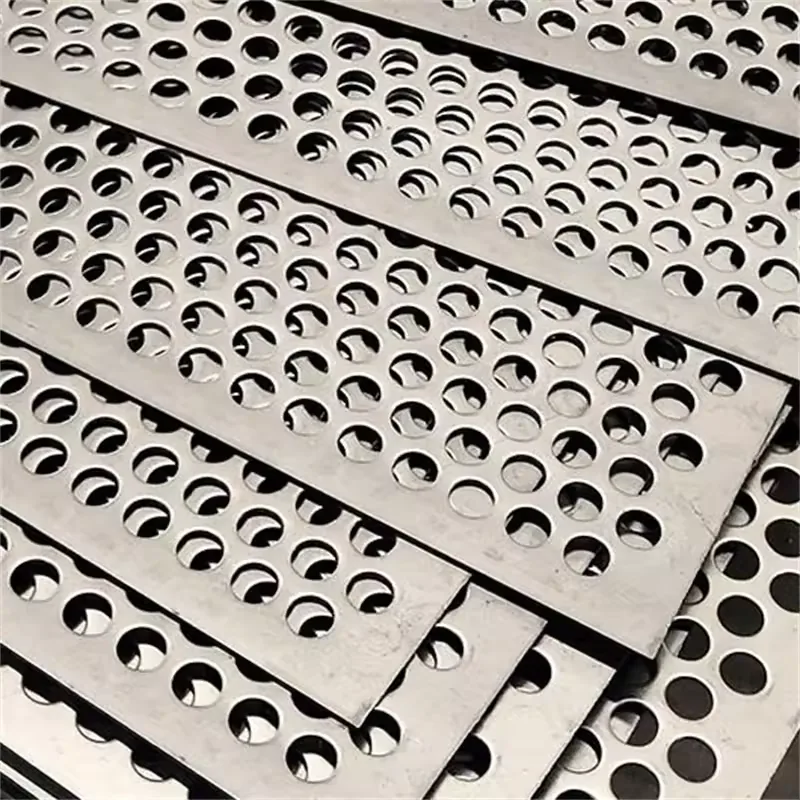
Perforated metal sheet is made by punching holes through a sheet. The opening may be round, square, slotted, hexagonal or decorative. Because the hole shape and spacing can be controlled by tooling or CNC punching, perforated metal is often chosen when the buyer needs a more regular hole pattern, a flat panel appearance or a decorative layout.
Expanded metal sheet is made by slitting and stretching a sheet so the metal opens into a diamond or similar pattern. No separate holes are punched out in the same way as perforated sheet. The original sheet is opened and stretched into connected strands. Expanded metal is often chosen when buyers need a continuous mesh structure, ventilation, fencing, platform, guard, enclosure or general industrial open-panel use.
The difference in manufacturing method affects how buyers discuss hole shape, mesh opening, flatness, surface texture, open area, visibility, material use, edge treatment, coating and packing.
When perforated metal is usually discussed
Perforated metal is useful when the buyer wants controlled holes and a flat sheet format. Common discussion scenarios include ventilation covers, equipment panels, cabinet screens, machine enclosure screens, architectural facade panels, interior screens, decorative layouts and filtering or screening tasks where the hole size needs to be discussed clearly.
For these applications, buyers should not only ask for "perforated sheet." A useful inquiry should include hole shape, hole size, pitch, sheet thickness, material, sheet size, open area target if available, surface finish, edge margin and packing method.
Perforated metal can offer a clean and regular appearance. It can also support custom patterns when the order quantity and tooling plan make sense. However, buyers should confirm drawings before production, because small changes in hole size, spacing or sheet edge can affect both appearance and installation.
When expanded metal is usually discussed
Expanded metal is useful when the buyer wants a diamond opening, connected strand structure and practical open-area performance. Common discussion scenarios include walkway panels, platform surfaces, equipment guards, ventilation screens, machine enclosure panels, fence panels, barrier panels, facade panels, sunshade panels and light construction support where the product specification requires expanded metal.
For expanded metal, buyers should confirm SWD, LWD, strand width, sheet thickness, overall sheet size, raised or flattened type, surface finish, edge treatment and packing. If the buyer is not familiar with SWD and LWD, they can review the expanded metal mesh buying guide before sending the RFQ.
Expanded metal is often discussed for applications where airflow, visibility, grip, guarding or general open-panel structure matters more than exact round or slotted hole geometry. For any walkway, guard or public project, final design suitability should be checked against the project documents and local reviewer requirements.
Application comparison

The table below is a practical sourcing reference. It does not replace drawings, standards or site-specific design review.
| Application | Perforated metal may fit when | Expanded metal may fit when |
|---|---|---|
| Ventilation panel | A flat panel and regular hole pattern are required. | A diamond opening and stronger mesh appearance are acceptable. |
| Equipment guard | The buyer wants clean holes and visibility. | The buyer wants connected strands and a mesh-panel look. |
| Architectural screen | Custom hole pattern, facade rhythm or decorative layout matters. | Diamond mesh texture or open-panel appearance is preferred. |
| Walkway or platform | Only when the project specifically requires perforated plate format. | Raised expanded metal format is requested by the project file. |
| Filter or screen | Hole size, hole shape and pitch must be discussed precisely. | General separation or protection is needed without precise hole geometry. |
| Fence or partition | A flat punched-panel appearance is required. | Diamond mesh visibility and panel economy are priorities. |
| Cabinet or enclosure | Flat sheet processing and regular holes are important. | Ventilation and protective mesh opening are enough. |
| Packing and loading | Flat panels can stack tightly. | Raised expanded metal may need more packing space. |
Key specification points buyers should confirm
For perforated metal, prepare material, sheet thickness, hole shape, hole size, pitch, open area target if the project has one, sheet size, edge margin, surface finish, drawing, sample photo, pattern reference, packing method and destination.
For expanded metal, prepare material, sheet thickness, SWD, LWD, strand width, raised or flattened type, sheet size, roll format if applicable, surface finish, edge treatment, frame or fixing requirement if needed, packing method and destination.
If the project involves installation, load, safety, acoustic or airflow targets, the buyer should send the relevant project document. ANJIA can help discuss product format, material, finish and packing, but final engineering suitability should be confirmed by the buyer's project side.
How importers can choose a practical product direction
Importers often need to decide what to stock and what to quote as a project order. A simple way to plan the product direction is to group customer demand by use case.
For decorative and architectural buyers, perforated metal may be easier to discuss because patterns, holes and panel appearance can be shown clearly in drawings. For equipment and ventilation buyers, both perforated metal and expanded metal may work depending on whether the customer wants regular holes or diamond mesh. For walkway, guarding, platform and industrial mesh buyers, expanded metal is often part of the conversation because the product form itself is widely recognized in those applications.
The right product direction also depends on packing. Flat perforated sheets may stack differently from raised expanded metal sheets. If the order includes mixed sizes, frames, edge treatment or coating, packing photos and loading plans should be discussed before shipment.
Common RFQ mistakes
Many quotation delays come from incomplete product descriptions. Avoid these common mistakes:
- asking only for "metal mesh sheet" without saying perforated or expanded;
- sending a photo without sheet thickness or opening size;
- mixing hole diameter and mesh opening terms;
- not confirming whether expanded metal should be raised or flattened;
- asking for walkway, guard or facade use without project drawings;
- ignoring edge margin, cutting direction or frame requirement;
- comparing prices without confirming material and finish;
- leaving packing method until after production.
A better RFQ starts with the application and then confirms the product format. Buyers can also send photos, drawings or a sample reference through the inquiry page.
FAQ
Is perforated metal the same as expanded metal?
No. Perforated metal is punched from a sheet to create holes. Expanded metal is slit and stretched to create connected diamond openings. They are both open metal sheet products, but their manufacturing process, appearance and sourcing details are different.
Which product is cheaper?
There is no universal answer without material, thickness, opening, sheet size, finish and quantity. Expanded metal may be cost-efficient for some large-area mesh applications, while perforated metal may be preferred when the buyer needs regular holes, a flat sheet appearance or a specific pattern.
Which one is better for ventilation?
Both can be used for ventilation. Perforated metal is often discussed when regular hole shape and flat panel appearance matter. Expanded metal is often discussed when diamond mesh, visibility and general airflow are enough. The final choice should follow the equipment or project requirement.
Can perforated metal and expanded metal use the same material?
Often yes. Buyers commonly discuss carbon steel, galvanized steel, stainless steel and aluminum for both product types. The practical choice depends on environment, finish, appearance and project requirement.
What should I send for a faster quote?
Send the application, product type, material, thickness, opening or hole details, sheet size, finish, quantity, packing method and destination. If the product is used in a project, include drawings or photos.
Conclusion
Perforated metal and expanded metal should not be compared by name alone. Perforated metal is usually discussed when hole pattern, flat sheet appearance and controlled openings matter. Expanded metal is usually discussed when diamond mesh structure, open area, guarding, ventilation or platform-style applications are the main focus.
For a practical quotation, start with the application, then confirm material, thickness, opening, finish, sheet size and packing. ANJIA GROUP can help buyers compare open metal sheet options and prepare export packing based on the order requirement.
About ANJIA GROUP
ANJIA GROUP supplies wire mesh, fencing and related industrial products for global B2B buyers. Contact our team to discuss product specifications, matching accessories and export packing.
Discuss your sourcing requirements
Send your product requirements and any relevant drawings to our team.
Get a Free Business Quote Expanded Metal Sheet
 Metal Sheet and Screen Mesh
 Galvanized vs PVC Coated Wire Mesh Guide
 Fence Coating & Exposure Zone Selector