
Wire Mesh Buyer Tools: Prepare RFQs, Estimate Weight and Check Specifications Before Quotation

ANJIA Buyer Tools are designed for importers, distributors, contractors and purchasing teams who need to turn an early wire mesh requirement into a cleaner RFQ before asking for a quotation. Instead of sending only a product name, buyers can use the tools to o
Table of contents
ANJIA Buyer Tools are designed for importers, distributors, contractors and purchasing teams who need to turn an early wire mesh requirement into a cleaner RFQ before asking for a quotation. Instead of sending only a product name, buyers can use the tools to organize dimensions, estimate weight, prepare material quantities, check product-specific fields and send a more useful inquiry.
Use this page as a sourcing preparation guide. It explains which tool to use, what result to copy into your RFQ, and where calculator results should be treated as an estimate rather than a final engineering, price or compliance decision.

Why wire mesh quotations often slow down
Wire mesh and fencing quotations rarely slow down because a buyer is asking too many questions. They usually slow down because the first inquiry is missing the fields that control product cost, packing, weight and shipment planning.
A phrase like "2 inch welded wire mesh" can mean different wire diameters, coatings, roll widths, roll lengths, before-coating or after-coating measurements, packing methods and destination assumptions. A chain link fence inquiry may miss the gate opening, corner posts, terminal posts, fittings or top protection. A gabion inquiry may include basket size but not stone-fill planning or accessory requirements.
The practical goal is not to make the buyer become an engineer. The goal is to make the first RFQ clear enough that the supplier can identify the product, estimate the supply scope and ask only the remaining order-specific questions.
| Rough RFQ that creates repeated clarification | Quote-ready RFQ that helps supplier review faster |
|---|---|
| Please quote welded wire mesh. | Welded wire mesh roll, wire diameter, mesh opening, roll width, roll length, surface treatment, quantity and destination included. |
| Need chain link fence for a project. | Fence length, height, roll length, opening, wire diameter, gate openings, post spacing, terminal posts and accessories listed. |
| Need gabion baskets. | Basket dimensions, quantity, stone-fill estimate, mesh type, lacing wire or fasteners, packing and destination included. |
| Price is lower from another supplier. | Buyer checks theoretical weight, wire diameter, opening, material, coating route and packing weight before comparing offers. |
Start with the RFQ Checklist
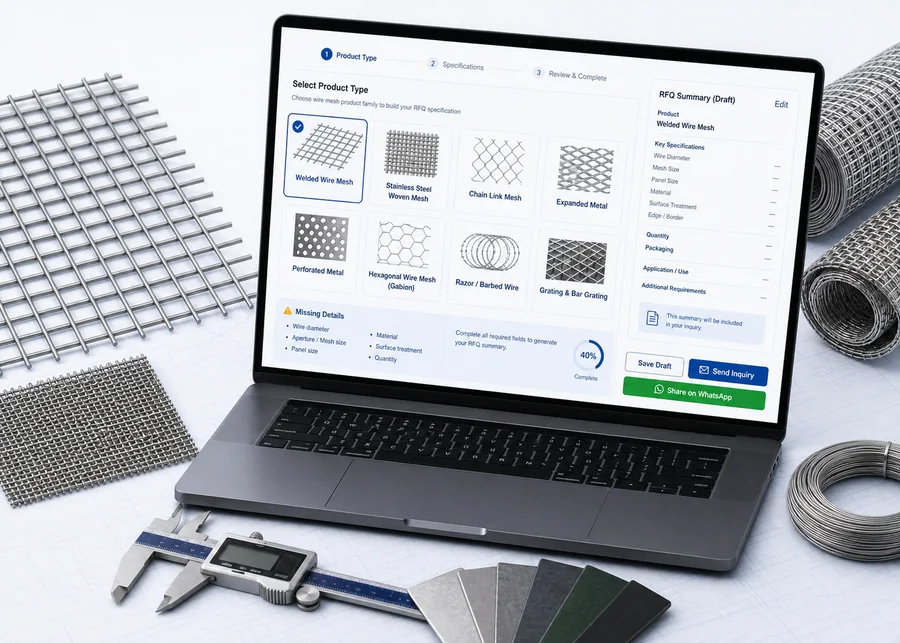
The Wire Mesh RFQ Checklist is the safest starting point when the buyer is not sure which calculator applies. It helps organize product type, material, wire diameter, mesh opening, width, length, height, quantity, surface treatment, packing, destination and proof requirements.
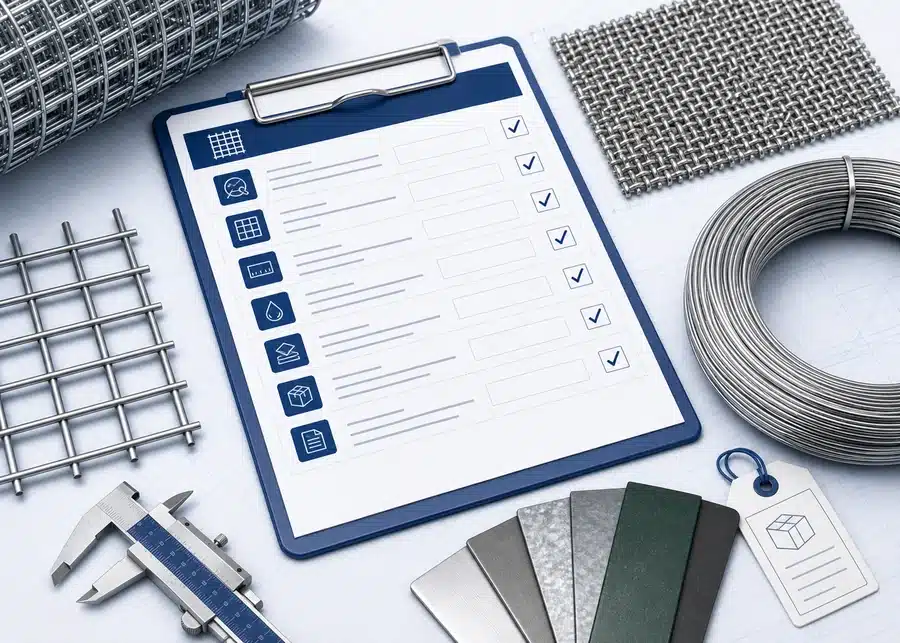
For many buyers, this checklist is more valuable than a calculator in the first step. A calculator can estimate a quantity or weight only after the basic product fields are clear. The checklist helps prevent the common problem where a buyer calculates one thing but forgets the specification field that controls the quotation.
If your market uses gauge, inch, foot or local naming habits, keep the original buyer-side unit in the RFQ and add the metric basis where possible. This reduces the risk that a supplier converts the unit differently from your purchasing team.
Use weight as a cost and specification cross-check
For many wire mesh products, metal content is the largest cost driver. When size and material are known, estimated weight becomes one of the simplest ways to check whether the requested specification and the quoted product are talking about the same thing.
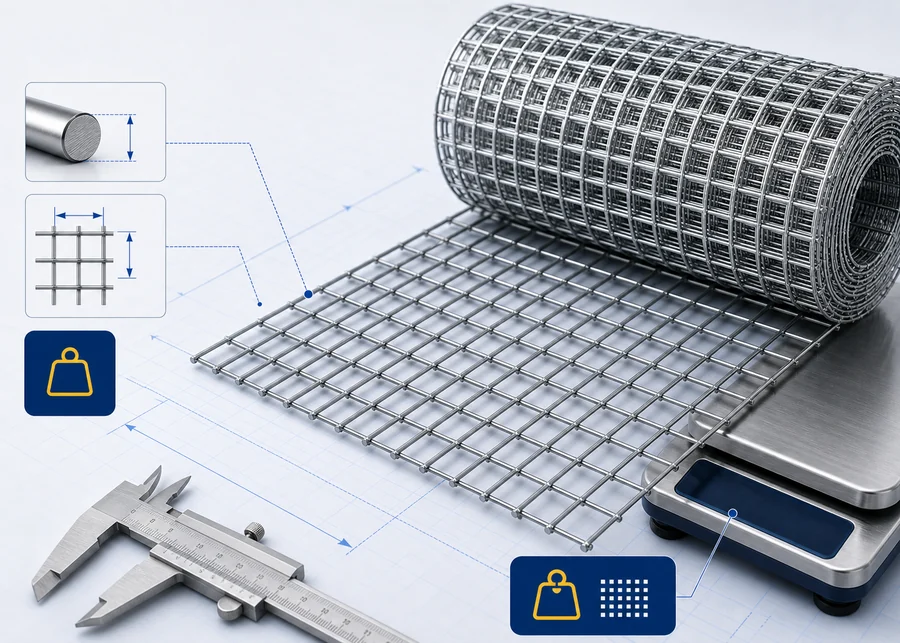
The Wire Mesh Weight Calculator helps buyers estimate weight from fields such as wire diameter, mesh opening, panel or roll size and material basis. The result should not be treated as a final shipping weight, but it is useful for RFQ discussion and cost logic.
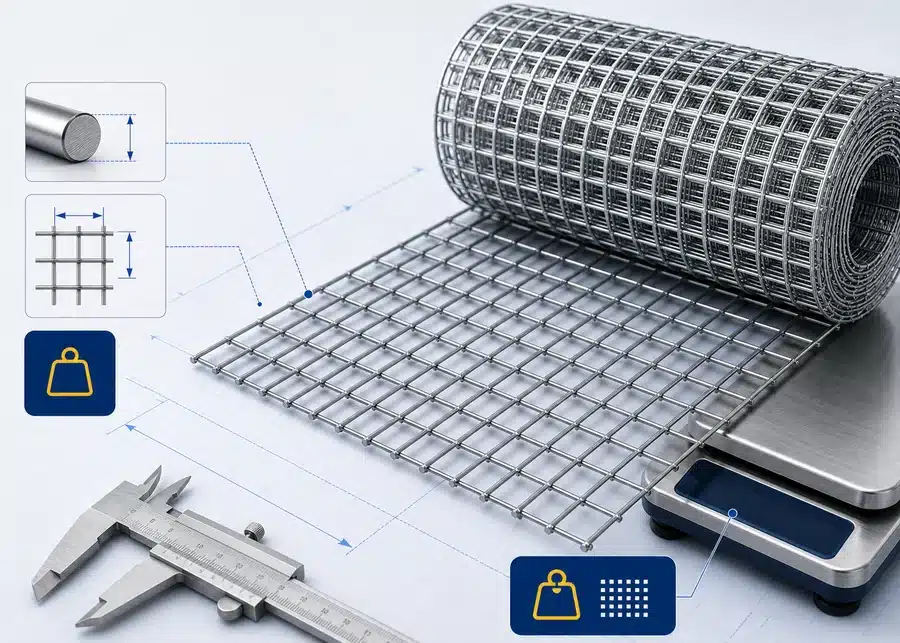
This is especially important in low-price comparisons. A much lower quotation may come from a different wire diameter, a different mesh opening, a different before-coating or after-coating basis, a lighter actual roll, a different material density, or a packing assumption that is not comparable. The right response is not to accuse another supplier. The right response is to ask clear questions:
| Cross-check question | Why it matters for quotation |
|---|---|
| Is the wire diameter measured before coating or after coating? | PVC coating, galvanizing and enamel can change how buyers describe size. |
| Is the mesh opening measured center-to-center or clear opening? | Different measurement habits can change material use and fit. |
| What is the estimated weight per roll, panel or square meter? | Weight connects specification, material cost and shipment planning. |
| Will pre-shipment photos or weighing records be available? | Proof records help buyers compare ordered fields with packed goods. |

Choose the tool by product family
ANJIA's current Buyer Tools cover general RFQ preparation and several product families where buyers often need quantity or weight estimates before quotation. The best tool depends on the product format and the question you are trying to answer.
| Buyer question | Recommended tool | Result to include in the RFQ |
|---|---|---|
| I do not know which wire mesh fields to send. | Wire Mesh RFQ Checklist | Product type, material, wire, opening, size, quantity, packing and destination. |
| I need an estimated mesh weight before comparing offers. | Wire Mesh Weight Calculator | Estimated weight per unit or total estimated weight, plus the specification basis used. |
| I need chain link fence materials for a fence run. | Chain Link Fence Material Calculator | Fence length, height, roll quantity, posts, fittings, gates and top protection assumptions. |
| I need panel fence quantity and post spacing. | Fence Panel Post Spacing Calculator | Panel count, post count, spacing basis, corner or gate assumptions and allowance. |
| I need gabion basket and stone-fill planning. | Gabion Basket Stone Fill Calculator | Basket size, quantity, volume estimate, fill estimate and accessory discussion fields. |
| I need perforated sheet open area context. | Perforated Metal Open Area Calculator | Hole pattern, hole size, pitch, sheet size, open area estimate and weight discussion basis. |
| I need expanded metal sheet weight or open area context. | Expanded Metal Weight Calculator | SWD, LWD, strand, thickness, sheet size, open area and estimated sheet weight. |
How the tools fit into a buyer sourcing workflow
The tools are not meant to replace conversation with a supplier. They are meant to make that conversation more specific. A buyer can start with a broad application, move to the right product family, calculate or organize the key fields, then send a quotation request that is easier to review.

For example, a buyer planning a chain link fence can use the material calculator to prepare roll, post and accessory assumptions before sending an inquiry. A buyer comparing welded mesh roll prices can use the weight calculator and RFQ checklist together. A buyer sourcing gabion baskets can use the stone-fill calculator to keep basket volume, accessory discussion and logistics planning aligned.
A practical order for using the tools before inquiry
A simple order works best. Start with the RFQ Checklist when the product name, unit basis or packing requirement is still incomplete. Use it to collect product type, application, material, wire diameter, mesh opening, roll or panel size, quantity, destination and any proof request. This prevents the buyer from calculating a number before the basic product scope is clear.
After the checklist, choose one calculator that matches the product family. Use the weight calculator for welded mesh, stainless mesh or similar mesh formats; use the chain link calculator for a fence run; use the fence panel spacing calculator for panel projects; use gabion, perforated or expanded metal calculators only when those product formats match the inquiry. Keep the assumptions you used, not only the final result. A supplier needs to know the wire diameter, opening, size, allowance, material and packing basis behind the number.
Before sending the inquiry, add the evidence that makes the RFQ easier to review: a photo of the product you want to match, a drawing if the size is project-specific, the destination port or country, and the preferred packing method. If the order involves private labels, mixed containers, uncertain units, local compliance or custom dimensions, treat the tool result as a preparation note and ask ANJIA to review the full requirement. The strongest inquiry is not the shortest inquiry. It is the one where the buyer's calculation, product specification and proof request point to the same supply scope.
What calculator results can and cannot confirm
This boundary matters for trust. A useful calculator should make the buyer better prepared, but it should not pretend to replace project design, final supplier confirmation, test documents or local compliance review.
| Tool result can help with | Tool result should not be used as |
|---|---|
| Preparing a clearer RFQ before quotation. | Product pricing, final freight weight or supplier commitment. |
| Comparing whether two offers are based on similar specifications. | Proof that another quotation is wrong without checking its specification basis. |
| Estimating weight, material quantities or open area for discussion. | Engineering design, site installation approval or local code compliance. |
| Asking for better proof photos, packing labels or weighing records. | A replacement for final inspection, receiving checks or third-party testing where required. |
This is why ANJIA articles and tools keep the same sourcing logic: use estimates to ask better questions, then confirm the order-specific fields with drawings, samples, production records, packing records and shipment documents when needed.

Copy this quote-ready RFQ structure
Before sending an inquiry, buyers can copy the structure below and fill in the fields that apply. Not every product needs every field, but this format helps purchasing, technical and supplier teams discuss the same request.
| RFQ field | What to send |
|---|---|
| Product type | Welded wire mesh, chain link fence, gabion basket, fence panel, perforated sheet, expanded metal or another product name. |
| Application | Fence, construction, drainage, screen, protection, packing, retail stock or project use. |
| Main specification | Wire diameter, mesh opening, sheet size, roll size, panel size, hole pattern, SWD/LWD or basket size. |
| Material and finish | Galvanized, PVC coated, stainless steel, black annealed, hot-dip galvanized, electro galvanized, powder coated or to be confirmed. |
| Quantity basis | Rolls, panels, square meters, sheets, baskets, fence length, weight or container plan. |
| Calculator result | Estimated weight, post quantity, basket volume, open area or material list, with assumptions. |
| Packing requirement | Roll packing, pallet, bundle, carton, label, private label, mixed container or receiving requirement. |
| Destination | Port, country, delivery term preference or local receiving location. |
| Proof request | Photos, labels, packing list, weight check, sample, drawing review or test document if required. |
Where these tools help most
Importers can use the tools to reduce repeated clarification before comparing suppliers. Distributors can use them to organize repeat SKUs, roll sizes, packing units and product family choices. Contractors can use product-specific calculators to prepare project assumptions before asking for a supplier review. Purchasing teams can use the weight and checklist outputs to compare quotations more carefully.
The same structure also helps buyers ask direct sourcing questions: how to calculate wire mesh weight, what to include in a wire mesh RFQ, how to estimate chain link fence materials, how to calculate gabion basket stone fill, and how to check perforated or expanded metal open area before quotation.
For buyers, the value is inquiry quality. A buyer who sends product fields, calculator assumptions and proof requirements gives the supplier a clearer starting point than a buyer who sends only a product name and waits for the supplier to guess.
From tool result to ANJIA inquiry
After using a tool, send the result together with your product photos, drawing, target size, quantity, destination and packing requirement through the ANJIA inquiry page or by email at sales@anjiamesh.com.
If you are still unsure which tool applies, start from the Buyer Tools page or send the product name and intended use first. ANJIA can help identify whether the request should be discussed as wire mesh, fence, gabion, metal sheet, window screen, wire product, accessory or mixed shipment.
FAQ
Are ANJIA Buyer Tools price calculators?
No. The tools are RFQ preparation and estimation aids. They do not calculate product pricing, freight cost or supplier commitment.
Can calculator results replace engineering design?
No. Results are useful for quotation preparation and supplier discussion, but project design, installation method, local code compliance and final engineering approval must be confirmed by qualified parties when required.
Should I send the calculator result with my inquiry?
Yes. Sending the calculator assumptions helps ANJIA understand how you estimated weight, quantity or material scope. This makes it easier to check the RFQ and ask only the remaining order-specific questions.
What if my market uses gauge, inch or feet?
Send the original buyer-side unit and add a metric basis if available. For example, include gauge or inch information together with mm, meter, roll width or roll length. This reduces conversion mistakes.
Can ANJIA provide packing or shipment proof after quotation?
For confirmed orders, ANJIA can discuss packing photos, labels, packing-list matching, production records or shipment proof according to the product and order requirements. These records support review, but they do not replace receiving inspection or third-party inspection where required.
About ANJIA GROUP
ANJIA GROUP supplies wire mesh, fencing and related industrial products for global B2B buyers. Contact our team to discuss product specifications, matching accessories and export packing.
Discuss your sourcing requirements
Send your product requirements and any relevant drawings to our team.
Get a Free Business Quote Wire Mesh Products
 Welded Wire Mesh
 Wire Mesh Weight Calculator
 Wire Mesh RFQ Specification Builder