
Welded Wire Mesh Size Planning for Sheets and Rolls
Updated Jul 15, 2026
A practical guide for importers planning welded wire mesh sheets or rolls, including size fields, edge condition, packing and RFQ details.
Table of contents
When an importer asks for welded wire mesh, the first specification is often not enough. Wire diameter, mesh opening and coating matter, but the buyer also needs to define whether the product should be supplied as flat sheets or rolls, how wide each roll should be, how large each sheet should be, and how the goods will be packed, stored and handled after arrival.
Welded wire mesh size planning means matching the product format with the application, handling method, packing plan and RFQ details before the quotation is finalized. A clear size plan helps the supplier understand the expected production route, but it does not replace project drawings, local engineering checks or order-specific factory confirmation.
For importers, distributors and project procurement teams, this is also an export procurement decision. Confirm the sheet or roll format, wire diameter, mesh opening, coating, finished size, edge condition and required packing before comparing quotations. Then ask the factory to confirm the available production format, packing method and container-loading assumptions for that specification. This helps prevent a comparison between quotations based on different roll lengths, sheet sizes, coating bases or package quantities. Use the final format summary as part of the RFQ, while keeping order-specific supplier confirmation separate.
Use the guide below to prepare sheet size, roll width, edge condition and packing details before requesting a welded wire mesh quotation.

Start with the application and handling method
The sheet-or-roll decision should begin with how the mesh will be used. A buyer who only sends "welded wire mesh, 2 mm wire, 50 mm opening" may still receive several follow-up questions because the same mesh specification can be supplied in different formats.
Useful application questions include:
- Will the mesh be cut on site or installed as pre-cut panels?
- Is the mesh used for fencing, cages, shelves, partitions, reinforcement, guards or another application?
- Will workers handle pieces manually, with a forklift, or with lifting equipment?
- Does the receiving warehouse have flat storage space for sheets?
- Does the installer need long continuous runs or fixed panel sizes?
- Is the order shipped alone or mixed with other wire mesh products?
For example, a roll format may suit a buyer who needs field cutting flexibility for fencing or general-purpose mesh. Flat sheets may suit a buyer who needs defined panel sizes for fabrication, partitioning or reinforcement work. The right choice depends on the application and the buyer's handling plan, not only on the unit price.
For broader application context, buyers can review the welded wire mesh applications guide.

Decide whether sheets or rolls fit the order
Sheets and rolls solve different problems. Sheets are flat-cut pieces, usually stacked on pallets. Rolls are continuous welded mesh, wound and wrapped for shipment.
Sheets can be easier to count, label and place into fabrication or installation work because every piece has a defined size. They may reduce cutting work at the destination when the required size is already known. They also need flat storage space and a packing plan that protects the edges and coating during transport.
Rolls are useful when the buyer needs continuous material that can be cut on site. They can reduce the number of separate pieces and may be practical for long runs, enclosures or flexible stock use. However, roll weight, roll diameter and unloading method need to be checked before the buyer assumes the format is easy to handle.
The article on welded mesh panels vs rolls explains this format choice in more detail.
Plan roll width and roll length with factory capability
Roll width should be confirmed with the supplier because it depends on the welding line, wire diameter, mesh opening, coating route and order requirement. Some widths may be common for a factory's product range, while other widths may need custom production or may not be practical for that specification.
When planning a roll format, define:
- roll width;
- roll length;
- wire diameter and mesh opening;
- coating or finish;
- edge condition;
- expected roll weight range if handling is a concern;
- roll wrapping, core and pallet requirement;
- loading and storage method at destination.
Avoid treating a roll width list as a universal catalogue. A width that is common for one mesh opening or wire diameter may not be the best option for another. If the roll is too heavy or too wide for the buyer's warehouse, the savings from a larger roll may disappear during unloading or cutting.
Define sheet width and length without assuming every size is standard
Flat sheets are often chosen when the buyer wants fixed panel dimensions. The supplier can then plan cutting, stacking, labeling and packing around the requested size.
Common discussion points include:
- sheet width and sheet length;
- whether the dimensions are outside-to-outside or center-to-center;
- trimmed or untrimmed edge requirement;
- acceptable dimensional tolerance if the buyer has one;
- quantity by sheet count or square meters;
- pallet size, stack height and package count;
- whether sheets are separated by specification, size or SKU.
Some sheet dimensions are easier to produce, pack and handle because they match equipment and pallet planning. Other dimensions may still be possible but need order-specific checking. The buyer should not assume that every large sheet size can be made, stacked and shipped without deformation risk.

Match wire diameter, mesh opening and coating to the format
Wire diameter and mesh opening affect how flexible or rigid the mesh will be. A light mesh can often be rolled more easily than a heavier mesh. A heavier welded mesh may be more practical as sheets, panels or palletized stacks, depending on the exact specification.
Buyers should define these fields together:
- wire diameter, in millimeters or gauge;
- mesh opening, in millimeters or inches;
- square or rectangular opening;
- material and coating type;
- sheet or roll format;
- edge condition;
- quantity and packing method.
Coating also matters. Galvanized, PVC-coated or other finished surfaces can be affected by cutting, stacking, wrapping and handling. If surface appearance is important, the buyer should request packing and QC photos that show the product and package condition before shipment.
For product-family navigation, start from the wire mesh product category and confirm final product links during order discussion.
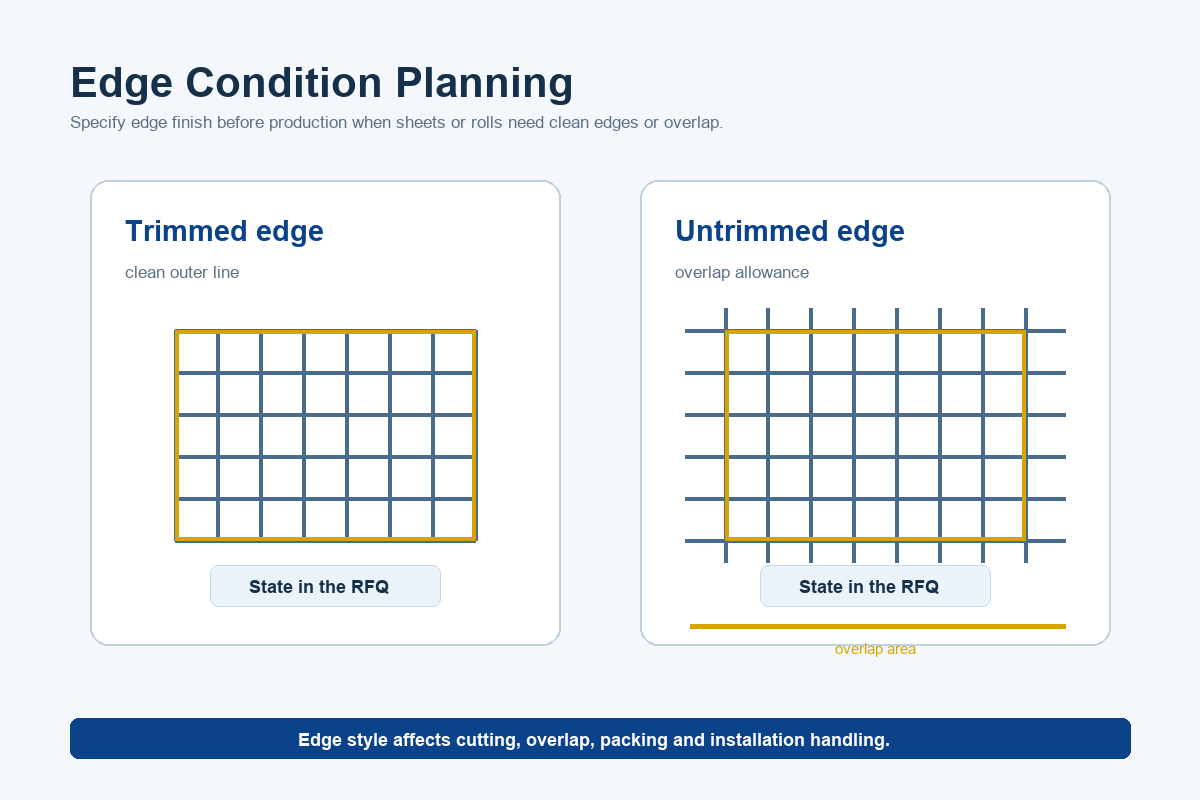
Specify trimmed or untrimmed edge condition
Edge condition should be stated in the RFQ because it affects production, appearance, overlap and installation handling.
Trimmed edge means the outer wire ends are cut close to the last cross wire, giving the sheet or roll a cleaner outer line. This is often preferred when the edge will be visible or when pieces need a neat boundary.
Untrimmed edge means some wire length extends beyond the last cross wire. This may help when overlap is required, but the buyer or installer should confirm the overlap requirement according to the project or application. It should not be treated as a structural design decision from the supplier alone.
If the buyer does not state the edge condition, the supplier may quote based on a normal production habit or may need another round of confirmation. For repeat orders, keep the edge condition consistent with drawings, samples or previous approved shipments.
Check packing, storage and container handling
Packing should be part of size planning, not a final detail added after price confirmation. Sheets and rolls use different packing logic.
Roll packing may include wrapping, labels, roll cores, straps and pallet placement. The buyer should check whether rolls will be loaded horizontally or vertically and whether the receiving team can unload them safely.
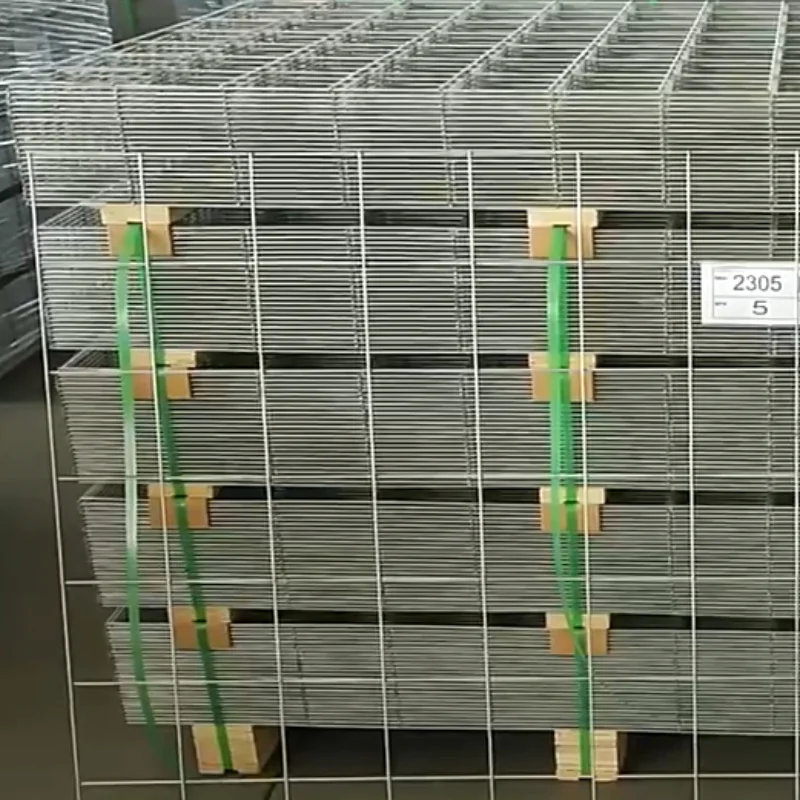
Sheet packing may include stacked pallets, protective wrapping, edge protection, labels and package separation by size. Sheet stacks can be dense and heavy, so pallet planning and forklift access should be reviewed early.
For mixed orders, the supplier and buyer should decide whether sheets, rolls and accessories need separate labels or package groups. This helps the receiving team compare the goods with the packing list after arrival.

Format comparison table
Use this table to decide which welded wire mesh format should be quoted first. The final decision still depends on the specification, production capability and handling plan.
| Planning point | Sheets | Rolls | What the buyer should confirm |
|---|---|---|---|
| Main purpose | Fixed-size pieces for fabrication, panels, guards, reinforcement or controlled placement | Continuous mesh for field cutting, long runs, stock use or flexible installation | Application, installation method and whether cutting happens at the factory or destination |
| Size field | Sheet width and length | Roll width and roll length | Whether dimensions match equipment, pallet planning and handling limits |
| Handling | Usually moved as flat stacks or pallets | Moved as wrapped rolls, with weight and diameter affecting handling | Forklift access, manual handling limits and receiving method |
| Cutting work | More cutting is done before shipment | More cutting may happen at destination | Cutting responsibility, waste allowance and edge requirement |
| Packing | Flat pallet stacks with wrapping, straps and labels | Wrapped rolls on pallets or in bundles, depending on size | Package count, label logic and protection needs |
| Storage | Needs flat storage or racking | May need upright or horizontal storage depending on roll size | Warehouse floor space, dryness and stack method |
| RFQ risk if unclear | Wrong sheet count, edge condition or pallet plan | Roll too heavy, too wide or not aligned with use | Send format, size, edge, packing and destination handling notes together |
RFQ fields for welded wire mesh size planning
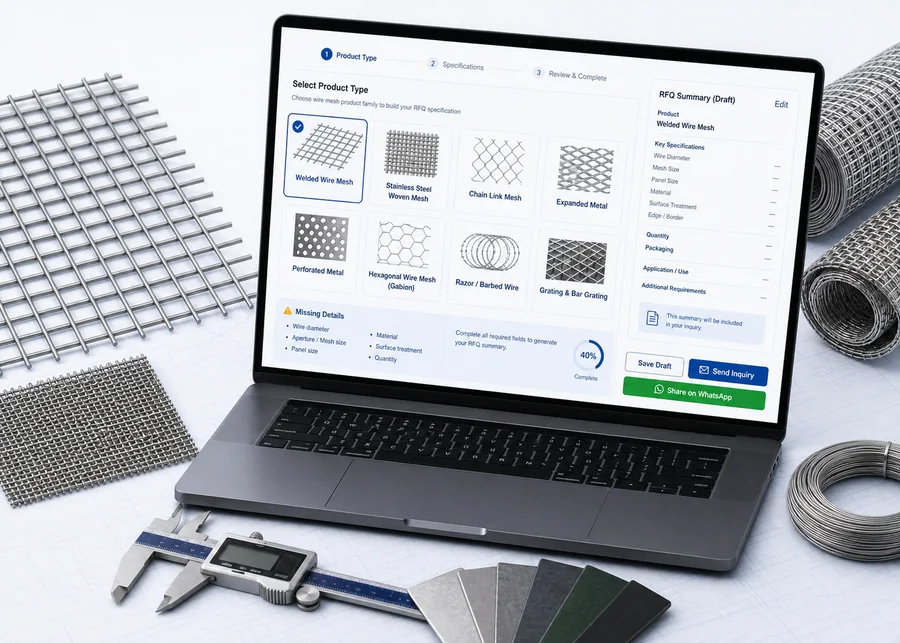
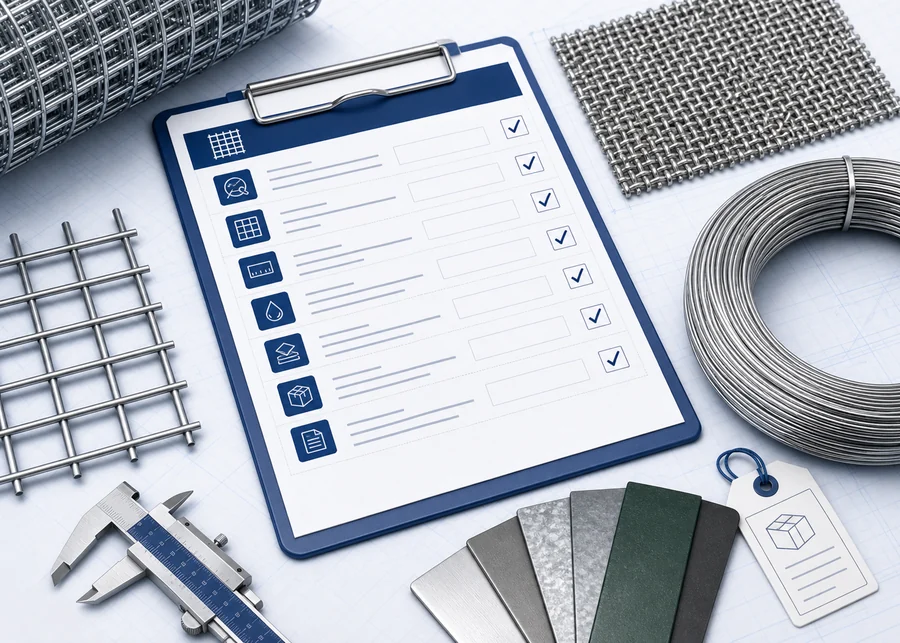
Before asking for price, prepare a compact RFQ table. This helps each supplier quote the same requirement instead of making different assumptions.
| RFQ field | What to send | Why it matters |
|---|---|---|
| Product format | Sheet, roll or both | Defines the production and packing route |
| Wire diameter | Millimeters or gauge, with tolerance if specified | Affects weight, rigidity and format feasibility |
| Mesh opening | Square or rectangular opening, with unit | Defines product use and weight calculation |
| Material and finish | Plain steel, galvanized, PVC-coated, stainless or other confirmed material | Affects coating route, packing and appearance control |
| Roll size | Width and length per roll | Allows the supplier to check line capability and handling impact |
| Sheet size | Width and length per sheet | Allows the supplier to plan cutting, stacking and pallet count |
| Edge condition | Trimmed or untrimmed | Prevents mismatch in appearance, overlap and installation handling |
| Quantity | Rolls, sheets, square meters or weight basis | Controls quotation comparison and production planning |
| Packing requirement | Pallets, wrapping, labels, SKU separation and loading proof | Supports shipment review and receiving checks |
| Destination and handling notes | Port, warehouse limits or unloading method | Helps avoid impractical package assumptions |
Frequently asked questions
Should welded wire mesh be ordered as sheets or rolls?
Choose sheets when the buyer needs defined panel sizes, controlled counts, flat stacks or less cutting at destination. Choose rolls when the buyer needs continuous material, field cutting flexibility or stock use. The final choice should be checked against wire diameter, mesh opening, coating, packing and handling limits.
Can every welded wire mesh specification be supplied in roll format?
No. Roll format depends on the mesh specification and factory equipment. Heavier, stiffer or wider specifications may need special checking or may be more practical as sheets. Confirm available roll width, roll length and expected roll weight before final quotation.
Are standard sheet sizes always available?
Not always. Some sheet sizes are easier to produce and pack because they match equipment and pallet planning, but each order should be confirmed with the supplier. Custom sizes may be possible when they fit the welding, cutting, stacking and shipping plan.
What is the difference between trimmed and untrimmed edges?
Trimmed edges give the mesh a cleaner outer line. Untrimmed edges leave extra wire length beyond the last cross wire, which may help when overlap is required. The buyer should state the required edge condition in the RFQ instead of assuming the supplier will choose the same edge style as a previous order.
Does roll format always reduce cost?
No. A roll may reduce some cutting work, but it can also create handling, storage or cutting waste at the destination. Sheets may add factory cutting and pallet planning, but they can make receiving and installation more controlled. Compare total use, packing and handling instead of only comparing unit price.
What photos should buyers request before shipment?
For size planning, useful photos include product format, sheet stacks, roll wrapping, labels, edge condition, mesh opening checks, wire diameter checks and pallet packing. Photos support review, but they should not replace inspection requirements, purchase order specifications or third-party checks when those are needed.
Prepare a clearer welded mesh inquiry
Before requesting a welded wire mesh quotation, define the format, dimensions, wire diameter, mesh opening, material, coating, edge condition, quantity, packing and destination handling notes. If some fields are open, mark them as questions so the supplier can respond with practical options.
ANJIA GROUP can review welded wire mesh sheet and roll requirements for order-specific discussion. Send your format, size and packing details through the ANJIA inquiry page before the quotation is finalized.
About ANJIA GROUP
ANJIA GROUP supplies wire mesh, fencing and related industrial products for global B2B buyers. Contact our team to discuss product specifications, matching accessories and export packing.
Discuss your sourcing requirements
Send your product requirements and any relevant drawings to our team.
Get a Free Business Quote Welded Wire Mesh
 Welded Wire Mesh Panel
 Wire Mesh RFQ Specification Builder
 Wire Mesh RFQ Checklist