
Welded Wire Mesh Pallet Packing: Panel Stacks, Roll Protection and Loading Checks
Updated Jun 24, 2026
Check panel stacks, roll wrapping, pallet straps, labels and loading photos before welded wire mesh shipment.
Table of contents
When importing welded wire mesh in panels or rolls, pallet packing is an important checkpoint before the container is sealed. Clear packing requirements help reduce avoidable handling problems, label confusion and receiving issues at the destination warehouse.
For B2B importers and distributors, this guide explains what to review before shipment: panel stacking, roll protection, strapping, edge protection, labels, packing photos and container loading checks. The aim is not to apply one fixed packing formula to every order, but to help buyers discuss practical requirements with the supplier before shipment.

Start packing checks before the container is sealed
Packing checks work best when they are discussed before production and confirmed again before loading. If the buyer waits until the container is already sealed, it becomes harder to correct label errors, missing protection, weak wrapping or pallet-count discrepancies.
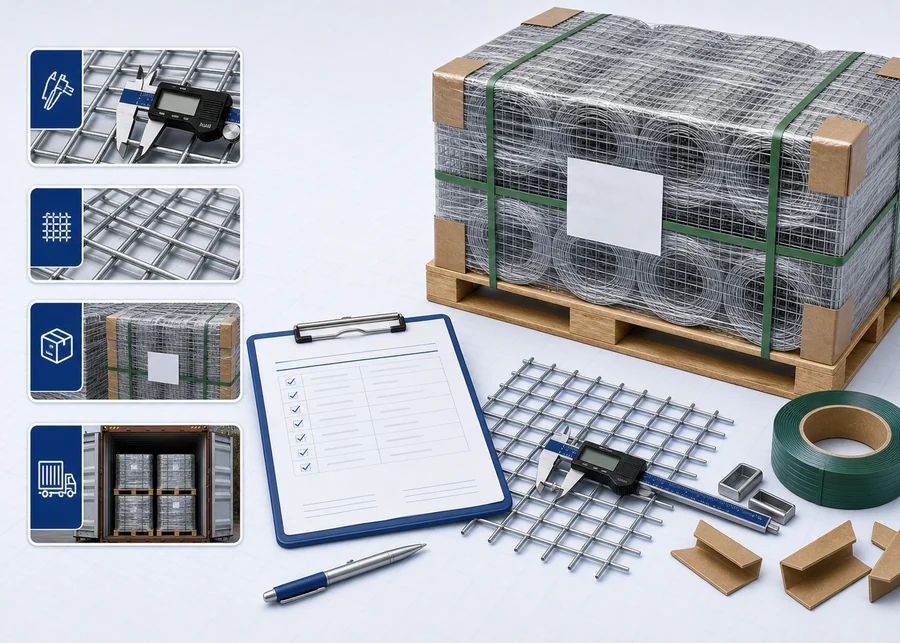
For welded mesh orders, the packing plan should match the product format. Flat panels need stable stacking and edge protection. Rolls need core support, outer wrapping and end protection. Mixed shipments need readable labels and clear separation between different specifications. Orders shipped with other wire mesh products may also need extra attention so heavier items do not damage lighter rolls or panels.
Buyers can ask the supplier to confirm three things before loading:
- How panels or rolls will be grouped on each pallet.
- What protection will be used between layers, around edges and over the outer surface.
- What photo record will be provided before the container is sealed.
Panel stacking: alignment, interleaving and pallet limits
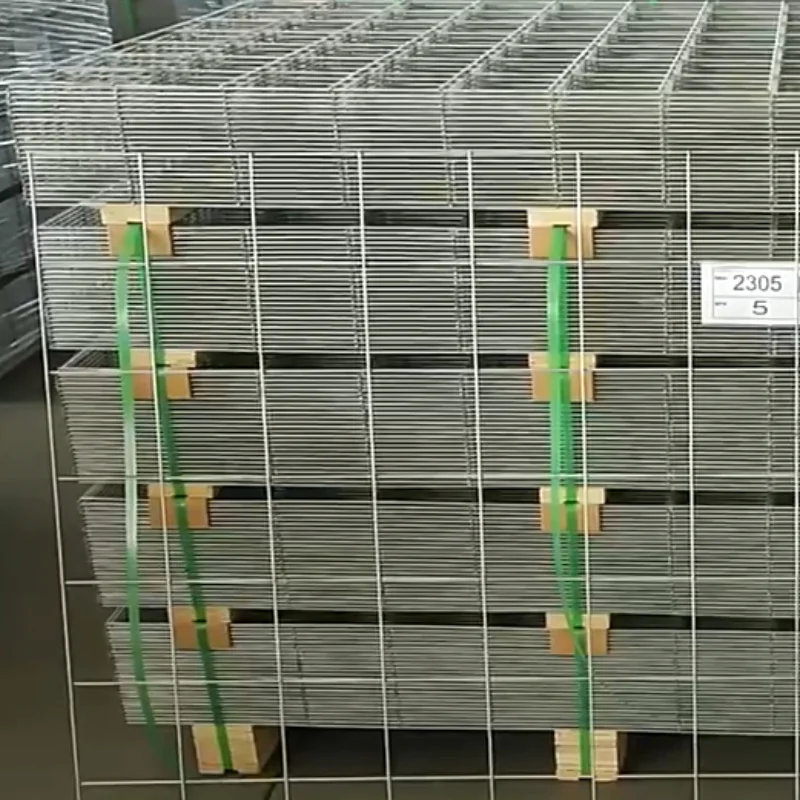
Welded wire mesh panels are usually packed flat and stacked on pallets. The stacking arrangement affects both handling stability and the condition of the panels when they arrive.
Level stacking is the first check. Panels should sit flat, with layers aligned as consistently as practical. A stack that shifts from one layer to another can create uneven pressure points, increase coating abrasion and make forklift handling less stable.
Pallet fit also matters. Panels that extend beyond the pallet edge are easier to bend or scrape during loading. The acceptable tolerance should be discussed order by order because panel size, pallet type and packing method vary.
Interleaving material may be used between panel layers to reduce surface contact. Kraft paper, foam sheet or corrugated board can help protect PVC-coated, powder-coated or other finished panels where surface appearance is important. For galvanized panels, interleaving may still be useful when the buyer wants to reduce contact marks or weld-point snagging.
Stack height and weight should match the pallet, forklift handling and container plan. A very tall or heavy stack may improve loading efficiency on paper, but it can put too much pressure on lower layers or become difficult to handle safely.
Buyers should request photos that show the stacking pattern, layer alignment, pallet fit and any interleaving material before the stack is fully wrapped.
Roll protection: core, wrapping and end protection
Welded mesh rolls need a different packing approach from flat panels. The roll shape can be affected by edge crushing, unwinding and surface abrasion if the roll is not supported and wrapped properly.
Core support helps the roll keep its shape. A paper, cardboard or other internal core may be used depending on roll width, wire diameter and roll weight. Heavier rolls normally need stronger support than light garden or screen-type rolls.
Outer wrapping helps keep the roll tight and protects it from dust and light moisture exposure during handling. PE film, stretch film, carton packing or woven bag packing may be discussed depending on the product and shipment plan.
End protection is important because roll edges are exposed. Cardboard end caps, extra film layers or edge guards can reduce edge crushing and snagging when rolls are stacked, moved or placed next to other cargo.
Cartons or bundles should prevent the roll from moving inside the package. Smaller rolls may be packed in cartons; larger rolls may be bundled or palletized. When multiple roll widths or mesh openings are included in one shipment, each package should be easy to identify without opening the wrapping.
For buyers comparing panels and rolls, the related guide on welded mesh panels vs rolls can help clarify the packing and handling differences before quotation.
Strapping, shrink wrap and pallet stability
After panels or rolls are arranged on the pallet, the whole stack needs to be secured so it can be handled during warehouse movement, loading and unloading. The exact method depends on pallet weight, product format and buyer requirements.
Strapping bands may be steel, PET or PP. The supplier should choose a strapping material and layout that holds the pallet firmly without crushing cartons, bending panels or cutting into the product edge. Instead of relying on a fixed band count, buyers should check whether the straps are evenly positioned, properly tensioned and suitable for the pallet weight.
Stretch film or shrink wrap provides a secondary securing layer and keeps the pallet cleaner during handling. The wrap should cover the exposed faces of the stack and connect the cargo to the pallet base when that packing method is used.
Corner or edge protection helps distribute strapping pressure. Without protection, straps can cut into cartons, leave marks on coated panels or concentrate pressure at a small contact point.

Buyers should read packing photos carefully. A finished pallet may look neat from a distance, but close-up images should show whether the straps sit straight, whether wrapping is continuous and whether the pallet base is still accessible for forklift handling.
Edge protection and overhang control
Edges and corners are common weak points in wire mesh shipments. They are exposed to strapping tension, contact with adjacent cargo, forklift pressure and handling movement.
Corner protectors can be placed at vertical edges before strapping. They distribute pressure and reduce the chance that straps cut into cartons, film or coated surfaces.
Edge boards may be used for larger or heavier pallet stacks. They add support along the long sides of a stack and can help protect against side pressure inside the container.
Overhang control should be checked visually. The goal is to keep panels and rolls within the protection area of the pallet as much as practical. If an order has long panels, special pallet size or extra edge treatment may need to be agreed before production.
Coated panels need extra attention because scratches and edge marks are more visible after unpacking. If the order includes PVC-coated or powder-coated welded mesh, the buyer should ask how the coating will be protected during stacking, strapping and loading.
Labels, item codes and warehouse readability
Labels are the receiving warehouse's main reference after the shipment arrives. A useful label helps the buyer identify product type, dimensions, quantity and order reference without opening every package.
Typical label content may include product name, material or finish, wire diameter, mesh opening, panel or roll size, quantity, gross weight, net weight, pallet number, purchase order number and buyer item code.
Placement is just as important as content. Labels placed only on the top face may become unreadable after stacking or warehouse storage. Labels on at least one front-facing side, and sometimes a second side, are easier to read during receiving.
Durability should match the shipment route. For ocean freight, buyers may request protected labels, water-resistant label material or clear film over the label if condensation or handling wear is a concern.
Buyer-specific labels should be provided before packing starts. Barcode labels, bilingual labels, private item codes or distributor branding are easier to handle when they are included in the quotation and production plan.

Packing photos buyers can request
Packing photos are useful because they let the buyer check packing quality before the shipment leaves the factory. The photo list should be agreed in advance, especially for repeat orders or private-label shipments.
Pre-packing photos show panels or rolls before they are covered. These help confirm product condition, format and quantity before wrapping.
Mid-packing photos show details that may be hidden later, such as interleaving material, roll end protection, corner guards and internal carton arrangement.
Finished pallet photos show the completed packing with straps, wrap, labels and pallet condition visible.
Loading photos show how pallets are arranged inside or near the container, and whether the pallet count matches the packing list.
Timestamped, watermarked or order-numbered photos may be requested when the buyer needs stronger order traceability. They should not be treated as a universal requirement, but they can be useful for higher-value shipments, new suppliers or shipments with mixed specifications.
The related guide on wire mesh export packing photos explains how importers can organize pre-shipment photo review across different wire mesh and fence orders.
Container loading checks before shipment
The final packing verification step is container loading. At this stage, the buyer or supplier should confirm that the loaded goods match the packing list and that the container condition is suitable for the cargo.
Pallet count should match the packing list. If the documents show more pallets than the loading photos, the discrepancy should be checked before sealing.
Arrangement inside the container should reduce avoidable movement. Depending on the load plan, the supplier may use tight placement, dunnage, air bags, bracing or other securing methods. The right choice depends on pallet size, cargo weight and the container layout.
Container condition should be checked for cleanliness, dryness, obvious holes, water marks, strong odor or residue. A damaged or wet container can create problems even when individual pallets are well packed.
Seal number should be recorded after loading. A clear seal photo helps connect the loading record with shipping documents and destination customs clearance.

Buyers placing bulk orders through the ANJIA inquiry page can include packing expectations, label requirements and photo review needs together with the product specification.
Connect pallet packing proof with receiving checks
The strongest pallet-packing review connects four records: the product specification, the packing list, the pallet photos and the receiving checklist. A neat pallet photo is useful, but it becomes much more valuable when the buyer can match it with panel size, roll width, pallet count, label information and expected weight or package quantity.
For welded wire mesh, weight and pallet loading are practical cross-checks because panels and rolls can be bulky and heavy. If the buyer knows the expected pallet weight, roll weight or total shipment weight, the supplier can compare it with the quoted wire diameter, mesh opening, panel size, roll length and packing method. If not, the quotation should still state the planned pallet count, units per pallet and accessory packing method clearly.
| Pallet proof point | What buyers should request | Receiving value |
|---|---|---|
| Product identity | Label close-up showing product name, size, quantity and protected buyer code if used. | Helps warehouse teams sort without opening every package. |
| Stack or roll condition | Pre-wrapping and finished-pallet photos showing edges, wrapping and pallet fit. | Creates a baseline before ocean freight and destination handling. |
| Weight or package count | Pallet count, units per pallet, estimated weight or packing-list match where available. | Supports receiving count and shortage checks. |
| Loading readiness | Container condition, loading sequence, final loaded view and seal photo when applicable. | Connects factory release with shipping documents. |
These records support shipment review, but they cannot guarantee what happens during ocean freight or destination unloading. Buyers should still record receiving photos and note any pallet or package damage before goods are moved into inventory.
Welded wire mesh pallet packing checklist
| Packing element | What to verify | Buyer note |
|---|---|---|
| Panel stacking | Flat alignment, practical pallet fit, interleaving where needed | Ask for photos before full wrapping when surface finish is important. |
| Roll protection | Core support, outer wrapping, roll-end protection | Match protection level to roll width, weight and surface requirement. |
| Strapping | Suitable strap material, straight placement, practical tension | Avoid relying on one fixed strap count for every pallet. |
| Wrap or film | Continuous outer coverage and stable connection to the pallet | Check whether labels remain visible after wrapping. |
| Edge protection | Corner protectors, edge boards or other pressure protection | Discuss extra protection for coated panels or long panel sizes. |
| Labels | Product specs, quantity, pallet number and buyer item reference | Confirm label artwork and item codes before packing starts. |
| Packing photos | Pre-packing, mid-packing, finished pallet and loading stages | Request traceability marks if the order requires stronger proof. |
| Container loading | Pallet count, container condition, load arrangement and seal number | Resolve count or condition discrepancies before container sealing. |
Frequently asked questions
Is interleaving material necessary for all welded wire mesh panels?
Not always. Interleaving is most important for coated panels or projects where surface appearance matters. For galvanized panels, it may still be useful when the buyer wants to reduce contact marks or weld-point abrasion. The buyer should confirm whether interleaving is included in the packing plan or requested as an order-specific requirement.
How many panels or rolls should be placed on each pallet?
There is no universal number. It depends on panel size, roll width, wire diameter, finish, unit weight, pallet capacity and container loading plan. Buyers should request the proposed units per pallet and total pallet weight before shipment.
Should buyers specify steel strapping or plastic strapping?
The choice depends on pallet weight, handling method and destination warehouse preference. Steel strapping can provide higher tension for heavy pallets, while PET or PP strapping may be easier to handle at the destination. Buyers with a clear preference should state it at the inquiry stage.
Can buyers request ISPM-15 pallets?
Yes, when wooden pallets are used and the destination market requires heat-treated wooden packing. Buyers should confirm this requirement before quotation so the supplier can include the correct pallet type and documentation where applicable.
What if the container arrives with damaged pallets?
Pre-shipment photos provide a baseline for comparison. If damage appears after arrival, the buyer can compare receiving photos with packing and loading photos to understand whether the issue may relate to packing, container condition, transit handling or unloading.
How does ANJIA GROUP handle welded wire mesh packing discussions?
ANJIA GROUP can discuss welded mesh panel or roll format, pallet grouping, labels, packing photos and loading checks based on the order requirement. Buyers can send dimensions, quantity, coating, destination and packing expectations through the products or inquiry pages so the team can review the packing plan before quotation.
Build packing verification into the order process
Packing review is most useful when it becomes a normal part of the order process. Buyers who define packing expectations at inquiry stage, review photos before loading and keep records from previous shipments can make future orders more predictable.
Welded wire mesh pallet packing is not only about appearance. It connects product format, coating protection, label accuracy, warehouse receiving and shipment proof. A clear packing checklist helps importers and suppliers resolve practical questions before the container leaves the factory.
About ANJIA GROUP
ANJIA GROUP supplies wire mesh, fencing and related industrial products for global B2B buyers. Contact our team to discuss product specifications, matching accessories and export packing.
Discuss your sourcing requirements
Send your product requirements and any relevant drawings to our team.
Get a Free Business Quote Welded Wire Mesh
 Welded Wire Mesh Panel
 Factory, QC & Packing Reference Pack
 Wire Mesh RFQ Checklist